
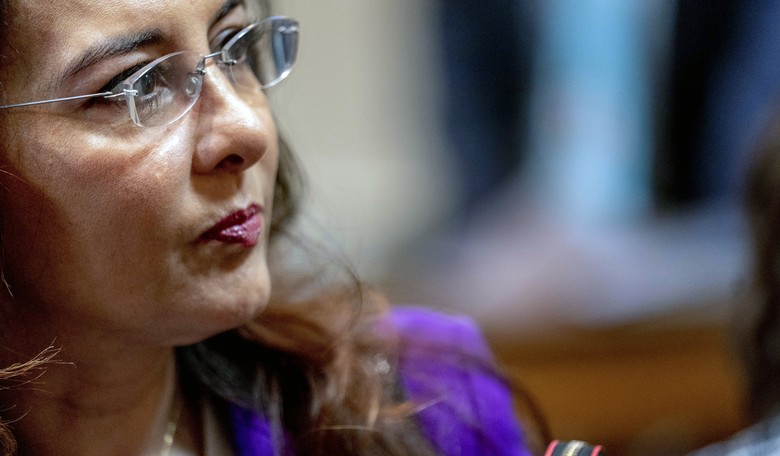
The city of Glendale, California is the latest locale to draw the attention of the DOJ's Civil Rights Division and its Second Amendment Section. Assistant Attorney General Harmeet K. Dhillon says city officials have been informed that a lawsuit is incoming unless they act quickly to reduce the sky-high fees that are currently charged for anyone applying for a concealed handgun license.
The City of Glendale, California, cannot impose unconstitutional $2,000 costs to obtain a concealed carry permit for lawful firearms. We @CivilRights gave them one week to fix it. Tick tock! https://t.co/xXFyHeerCv
— AAGHarmeetDhillon (@AAGDhillon) October 28, 2026
Dhillon says the city recently increased its application fee from $100, which is downright reasonable by California standards, to $1,078. Adding in the cost of training, fingerprinting, and a psychological evaluation brings the total closer to $2,000 for a permit that's good for just three years.
In her letter, Dhillon reminded the Glendale mayor, police chief, and city attorney that in the United States, "keeping and bearing arms is not a privilege enjoyed by the privileged few," but a right enjoyed by "law-abiding, responsible citizens."
In addition to its excessive fees, some aspects of Glendale's CCW license process allow open-ended discretion of licensing officials and therefore transform the process into the sort of "may-issue" scheme prohibited by Bruen.
Dhillon's letter doesn't identify what practices make Glendale's scheme "may-issue," but I hope that if and when the DOJ files its lawsuit it will challenge the mandatory psych evaluation the city requires before approving permits.
California law allows for cities to impose a mandatory psych evaluation, though there's no similar mandate in place for Californians who want to keep but not publicly bear their arms.
There's a difference between disqualifying someone because of a demonstrated mental-health-related legal disability and requiring everyone to undergo a psychological examination simply because they want to carry a firearm. There is a national tradition of denying gun ownership to those who've been committed or confined to mental institutions. There is not, however, a national tradition of forcing would-be gun owners to demonstrate their of sound mind before exercising an enumerated right.
Psychological evaluations introduce subjective discretion into the permitting process. Bruen distinguished objective licensing requirements from schemes that give officials broad discretion to decide who deserves to carry a firearm. A psychological evaluation might depend on an examiner's personal judgment, the questions asked, or criteria that have little to do with an applicant's actual dangerousness. And an evaluation is not an adjudication of mental illness, so it doesn't satisfy the federal statute for disarming the mentally infirm.
The mandatory psych evaluation that California law allows licensing authorities to impose is already being challenged by the California Rifle & Pistol Association and Second Amendment Foundation in a case called Blank v. Santa Clara County, which was filed last September. It's also one of the complaints in the DOJ's lawsuit against the concealed carry licensing scheme in San Jose, California that was filed late last month.
Forcing people to pay four figures to exercise a constitutionally protected right is utterly reprehensible, and treating them as too dangerous to carry a gun unless they prove otherwise is constitutionally untenable. It's great to see the DOJ so vigorously defending the right to keep and bear arms and challenging so many of California's unconstitutional schemes, and I have a feeling it won't be long before yet another locale is feeling the heat from Dhillon and her team of attorneys.