
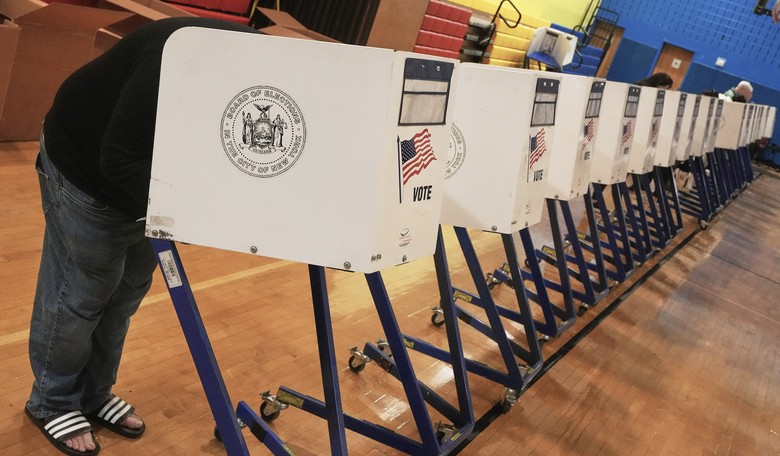
If you're a gun owner who's thinking about sitting this election out, I've got a request: don't.
I know. You're probably tired of hearing that every election is the most important election of our lifetime. I'm tired of hearing it, too. But there are some genuinely important decisions being made at the polls, and Second Amendment supporters have an awful lot riding on the outcome.
Start with Congress. Control of the House and Senate is up for grabs, and the results will determine what President Donald Trump can accomplish during the second half of his term.
If Republicans maintain control of both chambers of Congress, there's at least a possibility of advancing legislation that strengthens the right to keep and bear arms. National concealed carry reciprocity, for example, has been a goal of gun-rights advocates for years. Whether Congress would actually deliver is another question, but divided government would make passage virtually impossible.
And there's an even bigger issue involving the Senate: the Supreme Court.
Clarence Thomas is 78 years old. Samuel Alito is 76. Neither has announced any plans to retire, and I hope they're both healthy and happy centenarians a couple of decades from now. But if a vacancy arises over the next two years, the party controlling the Senate will decide who gets confirmed to fill it.
Think about the dozens of Second Amendment cases currently making their way through the courts. Yes, the Supreme Court has already taken a challenge to bans on commonly owned semiautomatic firearms, but they've set aside cases involving bans on commonly owned ammunition magazines. We have lawsuits over sweeping restrictions on where concealed carry permit holders can exercise their rights. There are cases involving young adults who are legally old enough to vote and serve in the military but are still denied the ability to purchase certain firearms.
The Supreme Court could settle some of these questions in the next couple of years, and its makeup could shape Second Amendment jurisprudence for decades.
Then there are the state elections, where the consequences of voting or staying home can be even more immediate.
We've seen what happens when anti-gun politicians gain complete control of state government. In Virginia, Democrats passed more than a dozen gun control bills last session once they had the power to enact them into law. Bans on semiautomatic firearms, magazine restrictions, new carry restrictions, storage requirements, and even things like a state-funded center for "gun violence prevention" (otherwise known as a jobs program for anti-gun activists). Next session we're likely to see permit-to-purchase schemes, waiting periods, and increasingly expansive lists of places where lawful carry is prohibited.
All of those gun control laws are on the table in states where Democrats gain a governing trifecta.
That's why state legislative races deserve your attention, even if the candidates aren't getting much coverage outside their districts. A handful of seats can determine whether a governor has the votes to enact a sweeping gun-control agenda or not, and those handfuls of seats can be decided by an incredibly small number of voters.
Your vote might not decide a presidential election. It absolutely could make the difference in a competitive state legislative race.
There are also ballot measures that deserve a close look. Unlike ordinary legislation, some of these proposals can change state constitutions or establish policies that are difficult to reverse. Gun owners should know exactly what's being proposed, what a yes or no vote would accomplish, and how those changes might affect their rights. A "no" vote on Question 9 in Massachusetts, for example, could help repeal the state's latest version of its restrictive gun laws.
Have Republicans delivered everything they've promised on the Second Amendment. No, but we have seen remarkable gains, starting with the One Big Beautiful Bill Act and the zeroing out of making and transfer taxes on most NFA items, which in turn led directly to the DOJ's recent decision not to enforce registration requirements as well.
That alone was a huge victory, but successes like that stop if Democrats take charge of one or both chambers.
If you don't like the choices on your ballot, make that dissatisfaction known. Ask candidates hard questions. Hold elected officials accountable after the election. Support better candidates in the next primary.
But in the meantime, remember that the people who want to restrict your Second Amendment rights aren't going to stay home because they're frustrated with their own side. They're going to vote. They're going to organize. And if their preferred candidates win, they're going to demand results.
Gun owners need to be every bit as engaged.
I'm not suggesting you vote blindly for any candidate who claims to support the Second Amendment. Do your homework. Look at voting records, not just campaign promises. Pay attention to what candidates say about self-defense, public carry, gun bans, and the role of the courts. Treat any candidate who says "I support the Second Amendment, but..." with skepticism, if not outright contempt.
We spend a lot of time here writing about the importance of defending our rights in courtrooms, state capitols, and on Capitol Hill. Tomorrow will determine who's writing the laws, who's enforcing them, who's appointing judges, and who's deciding whether the government should defend or restrict the exercise of our constitutional rights, at least for the next two years.
Tomorrow is your chance to help decide who those politicians will be. Don't leave that decision entirely up to the gun control lobby. Vote like your rights depend on it, because they absolutely do.