
An Illinois man who shot and killed a woman last July has been cleared of murder after a judge ruled he acted in self-defense. But he's still headed to prison for the crime of having the gun that saved his life.
36-year-old Edward Massey was acquitted of second-degree murder but convicted of possessing a firearm as a felon. He now faces between two and ten years behind bars, though Illinois law allows him to serve just half his sentence. Judge John M. "Mo" Madonia will sentence Massey in mid-January, with credit for time served.
ReKeea T. Jackson-Mason, a 36-year-old mother of three, was fatally shot by Massey in July 2025. According to testimony, Jackson-Mason was part of a group that included Massey, who left a bar and headed to Massey's home. On the way, Jackson-Mason allegedly stood up through the sunroof in Massey's vehicle, and when he told her to get down she attacked him.
Jackson-Mason threw a drink at Massey and then struck Massey in the head. Later, Jackson-Mason contacted her husband, Mark Mason Jr., who she also had seen earlier at Bourbon Street.
While Mason said he drove across town to help "deescalate" the situation, he didn't come "waving the flag of Switzerland," Madonia said. "He arrived with ill intent in mind and that triggered the fatal scene."
Massey's wounds, including a gash on his arm, a contusion on his lower back, a busted nose and a cut lip that had to be stitched, "weren't superficial," Madonia said.
In that "violent encounter" with Mason and Jackson-Mason that ended up in the next block, "(Massey's) belief that he needed to defend himself was reasonable," Madonia concluded. "Firing one shot to end that threat, I don't think, was excessive and...the use of force was justified."
I don't think it was ever established where the gun came from. According to one police detective who testified, Massey said that it was a “gift from God" at the scene.
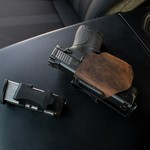
When Massey testified, he claimed that Mason had a gun in his hand when the assault began. Massey says he ended up holding a gun after it fell to the ground and he and his assailants fought for it. That suggests that the gun didn't belong to Massey, but the judge also said that before the altercation escalated, Massey had the opportunity to go into his home and arm himself with the Kel-Tec .380 that he later surrendered to police. That sounds like the gun did belong to Massey.
If Massey grabbed Mason's firearm and used it in self-defense, should that have made a difference in the judge's decision? Under state and federal law, Massey isn't allowed to touch a gun or ammunition, so it's easy enough to argue that it shouldn't have an impact. Still, it's one thing to grab your attacker's gun and use it in self-defense. Having a gun in your home that you're not allowed to possess, though, is a different scenario entirely.
Massey's attorney told reporters he was disappointed that his client was convicted for illegally possessing a gun, which is another hint that Massey maintains the gun wasn't his. Regardless, under Massey's circumstances he still had the right to act in self-defense. He just didn't have the right to do with a gun.
If Massey doesn't have any prior violent felonies to his name, I'd say a sentence on the low-end of the spectrum is appropriate. And I'd encourage Massey to take advantage of the DOJ's rights restoration portal once it re-opens to new applicants. If his sole prohibiting factor is a drug conviction, it sounds like he should be able to have his rights restored. Hopefully he won't ever need to use any tool to protect his life going forward, but if he does, he shouldn't have to choose between surviving a violent attack and going back to prison.