
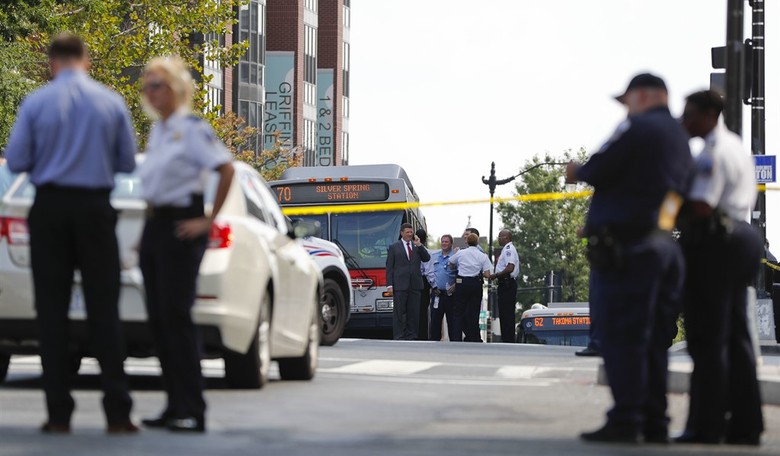
A gun control activist from Minnesota who traveled to Washington, D.C. for her daughter's wedding was one of those shot by a deranged doctor in Washington, D.C. last week.
Susan Thurston Hamerski decided to stay in town a few extra days to watch her daughter's dog while the newlyweds were off on their honeymoon, and taking the pup for a morning walk last Thursday put her in the line of fire of a doctor who opened fire on passerby outside of the condo building where he lived.
Hamerski was shot in the face by her assailant and suffered extensive injuries. Family friend Tina Wilcox says the gun control activist is spreading her message from her hospital bed.
In her hospital bed Hamerski wrote this message 'Gun control is a public health crisis'.
“She's focused on a larger issue and an issue that encompasses everyone,” Wilcox said.
Wilcox said Hamerski hopes sharing her experience will encourage others to get involved, speak with lawmakers and recognize gun violence as a public health concern.
“It's not a political issue. It's not a criminal justice issue or an issue of individual tragedy. It's a public health crisis,” Wilcox said. “And she's making this issue meaningful out of an absolutely horrible, horrible situation.”
I'm thankful that Hamerski survived her encounter with the dangerous doctor, and I hope that she's able to fully recover from her injuries.
As far as her message goes, though, I think she's drawing exactly the wrong conclusion from what happened to her.
Hamerski is the victim of a violent crime, committed by an individual who made the decision to shoot innocent people. We can talk about whether there were warning signs that might have allowed authorities to intervene before he opened fire, whether he was legally eligible to possess a firearm, and the D.C. gun laws that he broke (apparently none of the guns discovered in his condo were registered in D.C.).
But declaring that gun control is a public health crisis raises a big question: What, exactly, does Hamerski want lawmakers to do?
Washington, D.C. already has incredibly restrictive gun laws. There are bans on so-called assault weapons and large capacity magazines, gun registration requirements, built-in waiting periods to purchase firearms since D.C. has no gun stores, universal background checks, a "red flag" law, and a host of other restrictions on folks trying to exercise their Second Amendment rights.
It also has a criminal justice system that grants probation to individuals who shoot and injure others, ensuring that at least some violent offenders are quickly returned to the streets.
If Hamerski believes we should make it harder for ordinary Americans to purchase or possess firearms, then she needs to explain how those restrictions would have prevented her attacker from pulling the trigger. Simply labeling shootings a public health crisis doesn't mean that another gun control law would have stopped this one, and it definitely doesn't mean that the rights of millions of peaceable Americans should be treated as obstacles to public safety.
I don't expect Hamerski to abandon her beliefs because she was shot. She's entitled to advocate for whatever policies she believes will make Americans safer. But surviving a horrific crime doesn't automatically make place her comments beyond criticism.
I hope Hamerski gets to go home soon, spend time with her family, and enjoy many more walks with her daughter's dog. I also hope that as more details emerge about her attacker, the public conversation focuses on what actually might have prevented his actions.
Because that's where the questions should begin. Was this man legally allowed to possess a firearm? Were there warning signs that went ignored? Did anyone have reason to believe he posed a danger to himself or others?
Those questions matter more than whether we call what happened a public health crisis.
Hamerski was nearly killed by a man who tried to execute innocent strangers. Whatever else we learn about his motivations or mental state, we already know that he committed a horrific act of violence.
Hamerski and the other victims deserve an honest examination of what happened, what could have stopped this attack, and whether the people responsible for protecting the public missed their chance to prevent it.
But the man who pulled the trigger is responsible for this crime, and D.C.'s restrictive gun laws failed to stop him. Any serious conversation about how to prevent future shootings needs to start by acknowledging that simple fact.