
Most of my genetic makeup comes from the British Isles. English, Irish, Scottish, mostly, with a smattering of Norwegian and a dash of Nigerian, of all things. Coupled with my love of history, I have long held a certain amount of affection toward the UK, even if the government there has always been way too left-wing for me. It wasn't until recently, though, that I began to legitimately worry about the land of my ancestors. We know about their immigration woes, and we've seen what happens to someone who posts something on social media that's considered too mean by someone else.
It's not a good look.
Over at the Australian version of The Spectator, though, an op-ed argues that Britain needs something the United States has.
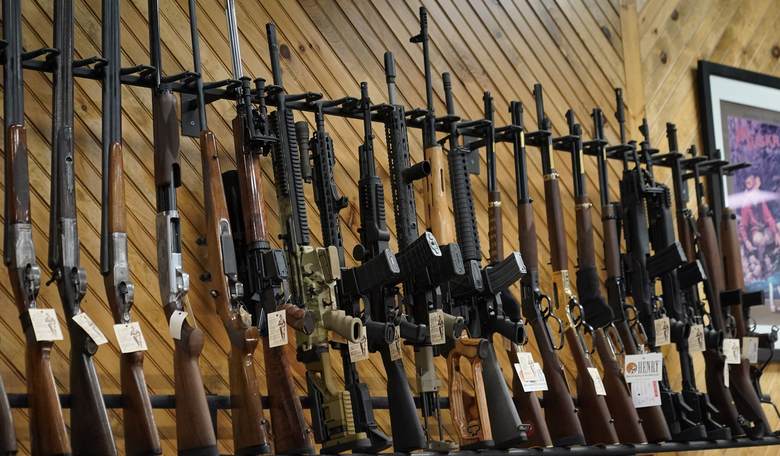
In the US, constitutional history allowed for The Second Amendment. This was conceived for the eventuality of the ’social contract’ breaking down; an authoritarian government abusing its limited powers. It allowed for the citizens, as the founders of the political community, to intervene with arms. Britain has never possessed an exact equivalent of the American Second Amendment, but English constitutional history contains a recognisable ancestor. Medieval laws such as the Assize of Arms 1181 and the Statute of Winchester 1285 required subjects of appropriate wealth and status to possess weapons for the defence of the realm. This was principally a public obligation connected with the militia, rather than a modern individual right to possess weapons for personal protection.
During the 19th and 20th centuries, Britain moved steadily from a qualified right towards licensed possession. The Gun Licence Act 1870 introduced a revenue-based licensing requirement, while the Pistols Act 1903 regulated the sale and possession of handguns. The decisive change came with the Firearms Act 1920, which required a police certificate for many firearms and demanded that an applicant demonstrate a legitimate reason for possession. The Firearms Act 1968 consolidated the licensing system that remains the basis of British law. After the Hungerford killings, the Firearms (Amendment) Act 1988 prohibited most semi-automatic and pump-action rifles; following Dunblane, the 1997 Acts effectively prohibited private handgun ownership.
But taking away the right to keep and bear arms, particularly in a place like the UK, is a lot easier than bringing it back, right? Especially for there to be something on par with a constitutional amendment here in the United States.
Well, yes and no. The UK's entire system is very different from ours, without a hard and fast constitution to be referred to.
However, that doesn't necessarily mean there's nothing that can be done.
Parliamentary sovereignty means that a new Parliament could enact a Second Amendment Bill for the UK, under a Reform or Restore government, such is the breakdown between government and the indigenous civil society. There needs to be a powerful buffer to the errant Police force of the UK. They now act immune to consequences with the biased system rubber-stamped by Labour. Structural reforms are needed across the board. Britain is in a dangerous social and fiscal morass. This stems from deindustrialisation, bizarre green policies, and out-of-control spending on immigration infrastructure. Fiscal policy, managed by the incompetent Treasury has discouraged productive public investment. Since 2010, debt as a proportion of GDP had almost doubled while the public sector’s net worth had declined. Successive chancellors protected arbitrary debt targets by cutting investment and research spending, the very expenditure most likely to increase long-term economic growth. The fiscal framework consequently prioritised the appearance of controlling debt over strengthening the country’s productive capacity. Public expenditure under Labour is ‘unproductive’. It goes on quangos and civil servants and illegal immigration. Investment to increase GDP must be productive, encourage SME’s and control wasted taxpayers money.
Yet the only way we will get there is to take away the left’s monopoly on the institutions. And that means a Second Amendment. John Locke had anticipated the terror of democracy and the need for a counter-balance:
While democratic methods are certainly an ideal, there is always a danger in true majority-rules democracy. That's why preserving rights is so absolutely important and why simple laws are never enough. A parliament that passes something enshrining the right to keep and bear arms today could take it all away tomorrow. That's not how you preserve rights.
Still, it's better than nothing, and when you look at the state of the United Kingdom, it needs some kind of bulwark against what's happening. Police are running roughshod over the populace, all over matters of things like free speech, and aren't even doing the job correctly. I'm sorry, but when a kid who has been stabbed was the person arrested on the scene, at least at first, then there is something horrifically wrong.
And you know I'm not making up that example, either.
Europe is an absolute disgrace these days. The desire to play nice with everyone, to be welcoming to all and not ask too much of anyone lest they assimilate and forget their native culture, has become a death sentence for the once great nations of the continent. Whereas they once were the world powers, today they're a shadow of themselves and can't even manage to control their own cities.
Meanwhile, who gets the brunt of law enforcement's displeasure? Not the grooming gangs that wander all over the United Kingdom, but the people posting stuff on social media about them.
Yeah, they need a Second Amendment. They need it badly.
The problem is that there's no one in power over there who will give it to them and no one with the testicular fortitude to take it.