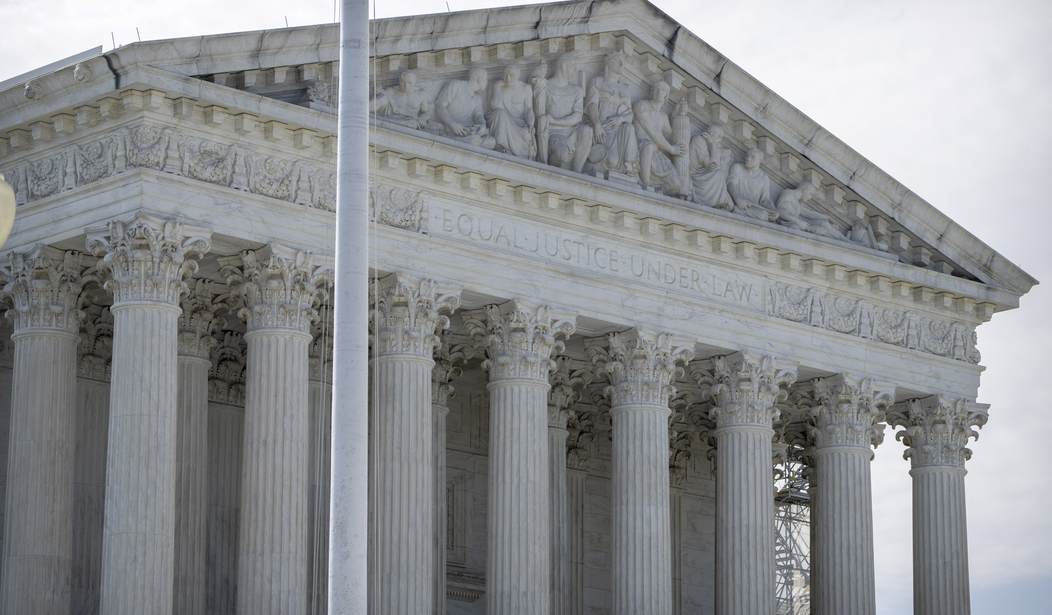
The Supreme Court didn't grant cert to any Second Amendment cases in its orders list released on Monday, but they did keep ahold of several challenges to state-level gun and magazine bans as well as several prohibited persons cases.
The justices also denied cert to a pair of challenges to the National Firearms Act's restrictions on short-barreled rifles, as well as the appeal of a Pennsylvania father who was hoping to revive a lawsuit against a gun maker and gun seller holding them civilly liable for the death of his son.
Robinson v. U.S. and Rush v. U.S had drawn attention from a number of Second Amendment groups including Gun Owners of America and Second Amendment Foundation, which filed amicus briefs in support of the cert petitions urging the Court to take one or both cases. The groups obviously were hoping that the Supreme Court would declare that short-barreled rifles are arms protected by the Second Amendment, but also pointed out multiple flaws in the rationale deployed by lower courts in upholding the NFA's restrictions.
The brief filed by GOA and a number of state-level 2A groups in Robinson, for instance, noted the lower courts' description of the NFA as a "shall issue" licensing system akin to concealed carry regimes.
Likening the NFA’s ban o nunregistered possession to a “shall-issue licensing regime[]” for carry, the panel was willing to invent a theory of conclusive constitutionality based on this Court’s refusal to “suggest …unconstitutionality” in an inapposite case. Not only does that approach contravene Bruen’s methodological holding, but also it misreads the NFA which, by its plain terms, is not a “shall-issue licensing regime.” Rather, the statutory provision the panel cited, 26 U.S.C. § 5812(a), provides that “‘[a]pplications shall be denied if the transfer, receipt, or possession of the firearm would place the transferee in violation of law.’” The related statutory provision on “making” NFA firearms is similarly worded. Of course, these provisions contain no directive that applications “shall be approved” if an applicant meets the statutory criteria. Rather, they simply direct what must happen if an applicant is ineligible. As the D.C. Circuit once explained, “[b]oth sections provide that applications ‘shall be denied[,]’ … but neither restricts the Secretary’s broad power to grant or deny applications in any other respect.” “Broad power to grant or deny” is irreconcilable with the “‘narrow, objective, and definite standards’ guiding licensing officials” in quintessentially “shall-issue” licensing regimes.
The brief went on to point out that there's a circuit court split on the description of the NFA as a "shall issue" scheme, but apparently the justices are willing to let that split develop before taking up an NFA case.
The 2A groups also argued that the lower courts are misapplying the Miller decision from the 1930s. The Second Amendment Foundation's brief in Rush, joined by the 2A Law Center and several other pro-2A organizations, contended that Miller is no longer controlling after the Bruen decision, but even if its still legally valid "the Petitioner should have prevailed below under its framework too."
In its own way, United States v. Miller implicitly confirmed that the Second Amendment recognizes an individual right, because “[h]ad the [Miller] Court believed that the Second Amendment protects only those serving in the militia, it would have been odd to examine the character of the weapon rather than simply note that the two crooks were not militiamen.” Miller ultimately concluded only that “in the absence of any evidence tending to show that possession or use of a ‘shotgun having a barrel of less than eighteen inches in length’ at this time has some reasonable relationship to the preservation or efficiency of a well regulated militia, we cannot say that the Second Amendment guarantees the right to keep and bear such an instrument.”
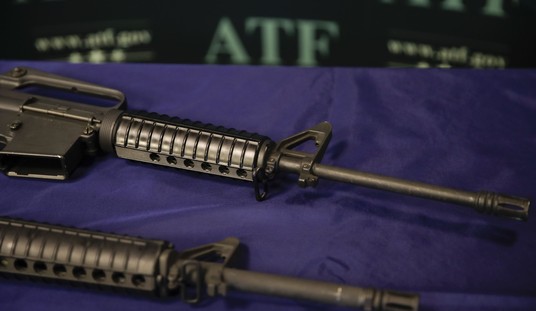
Here, there is no such absence of evidence. Not only are many SBRs combat arms of the kind that would be useful to a militia, but they are the main firearm in that role; the M4 carbine is our military’s most common service rifle, and it has a barrel length of 14.5 inches. In the civilian context, where it would be sold in a semiautomatic form, that would make the most common military rifle an SBR subject to the NFA’s tax, which applies to rifles that have barrels under 16 inches in length.
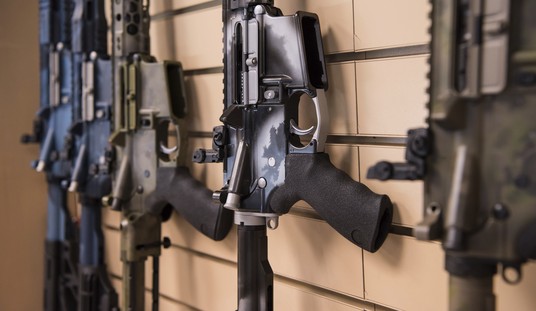
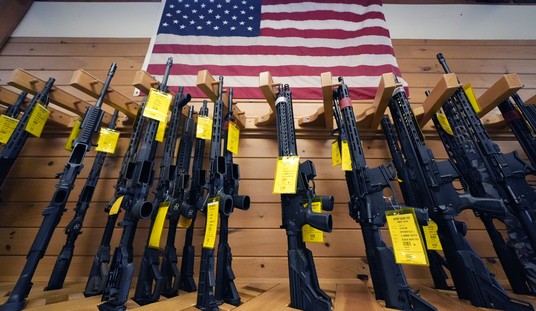
Both briefs make good arguments in favor of the Court granting cert, but as I wrote last week, I don't think SCOTUS is going to take up an NFA case before it decides the constitutionality of bans on semi-automatic rifles like the AR-15 and "large capacity" magazines. And to that end, the justices took no action today on Gator's Custom Guns v. Washington, Duncan v. Bonta, or Viramontes v. Cook County; all cases challenging semi-auto and magazine bans. Those cases, along with the three cases challenging the ban on gun possession for those convicted of a crime punishable by more than a year in prison, will most likely be relisted later today for the Court's next conference scheduled for January 9, 2026.
There are already a trio of 2A-related cases calendared for discussion at that conference; Schoenthal v. Raoul's challenge to the concealed carry ban on public transportation in Illinois and Chicago, Marquis v. Massachusetts (which asks "whether Massachusetts’ firearms licensing regime, which grants a police colonel the power to deny any nonresident traveler a temporary firearms license based upon that officer’s judgment of “unsuitability,” violate nonresident travelers’ constitutional rights to keep and bear arms and to interstate travel"), and Harris v. United States.
That last case is another 922(g)(3) challenge to the ban on gun ownership for "unlawful" users of drugs. The Court has already granted cert to another 922(g)(3) case in Hemani, and I suspect that the justices will simply hold on to Harris until Hemani has been decided.
The real question is what will the Court do with the gun and magazine ban cases in the new year? We're getting to the point in the Court's term that any case they decide to take up would most likely be heard next fall. Last term Justice Brett Kavanaugh predicted that SCOTUS would take up a hardware ban case "in the next term or two", and the trio of gun and magazine ban lawsuits give the Court the opportunity to do just that.
Editor’s Note: The radical left will stop at nothing to enact their radical gun control agenda and strip us of our Second Amendment rights.
Help us continue to report on and expose the Democrats’ gun control policies and schemes. Join Bearing Arms VIP and use promo code FIGHT to get 60% off your VIP membership.








Join the conversation as a VIP Member