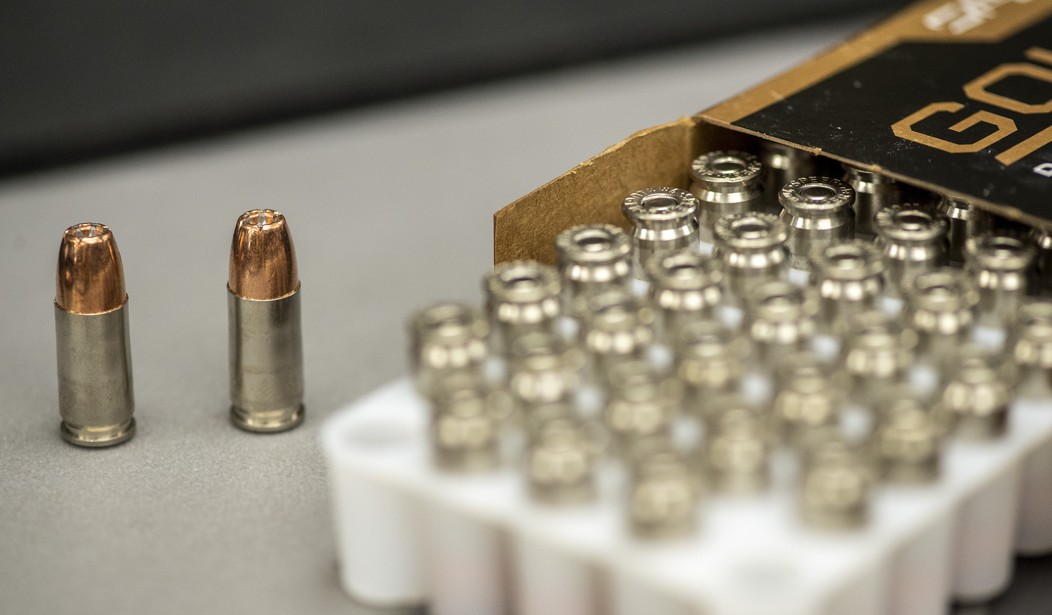
After a three-judge panel of the Ninth Circuit concluded that California's ammunition background check scheme violates the Second Amendment, California Attorney General Rob Bonta asked for an en banc review by the appellate court. That request was granted, and oral arguments in Rhode v. Bonta will take place in late March.
Ahead of that hearing a number of interested parties are filing amicus briefs in support of the plaintiffs and defendants. The Department of Justice filed a brief siding with Kim Rhode and her fellow gun owners on Monday (more on that in an upcoming post), as did 25 Republican attorneys general and the Arizona legislature.
The brief of the attorneys general is straightfoward in its arguments. California's background check scheme on ammunition purchases intrudes on the right to bear arms in multiple ways. The background check system itself is so flawed that at least 11% of checks result in false denials, according to the brief, but California also bars residents from avoiding the error-plagued scheme by purchasing ammunition out of state and then bringing it back home.
Because both the ammunition background-check provisions and the anti-importation provisions burden individuals’ ability to obtain ammunition, the provisions are presumptively unconstitutional.
Petitioners cannot skirt that simple conclusion by coloring California’s regulation as a de minimis burden. According to petitioners, the newly required “background checks impose only minor fees and do not impose significant delays.” At the same time, they recognize that this law is among those that “govern[] the acquisition of arms or ammunition.” Pet.13. So it “regulates arms-bearing conduct.” Characterizing the regulation as de minimis accomplishes nothing more than it would to characterize a regulation of speech as too small to call for any scrutiny. A burden, however small, is just that: a burden on a constitutionally protected right.
For that reason, the ammunition background-check provisions burden Californians’ Second Amendment rights because they make the protected conduct of purchasing ammunition for use with lawfully owned firearms more difficult for Californians. They make that conduct harder by prohibiting all ammunition purchases except those made through a California-licensed seller and subject to an unreliable background-check system that the State makes more costly and time-consuming for individuals who do not submit to the State’s registry of firearm owners. And the anti-importation provisions make it illegal for anyone in California to possess ammunition sourced from another State unless it was delivered by a California-licensed seller. These requirements notably prohibit direct-delivery internet sales, imposing inconvenience and expense on Californians who wish to access the unmatched selection that the multi-billion-dollar internet ammunition market offers. California’s laws burden the fundamental right to armed self-defense by introducing obstacles to obtaining the ammunition necessary to exercise that right. So, the laws are unconstitutional unless California proves that they are in keeping with historical tradition.
The attorneys general assert that California has failed to come up with any appropriate historical analogue to its ammunition background check scheme. Obviously background checks weren't a thing in either 1791 or 1868, so coming up with a statute that's a dead ringer for the law in question is impossible, but the attorneys general note that California has failed to find any prohibitions on mail order ammunition or statute that "required individuals to get government permission or prove their good character and pay an administrative fee for every ammunition-related purchase."
Instead, Bonta cites 18th century loyalty oaths, 19th century concealed carry regulations, Founding-era surety laws, and "licensing and record keeping requirements imposed on vendors of gunpowder and firearms"; none of which remotely suffice as appropriate comparisons.
The panel majority correctly held that the government failed to prove that its regulation was consistent with historical tradition. The district court aptly described the ammunition background-check and anti-importation regime as an “extensive and ungainly” “first-of-its-kind sweeping statewide restriction” of fundamental rights that is “unprecedented” in all American history. For that reason, the challenged provisions violate the Second Amendment and should remain enjoined.
Only two states have imposed background checks on ammunition purchases, and both New York and California's schemes are being challenged in court. If the en banc panel of the Ninth Circuit concludes that California's law is constitutional we could see other blue states like Washington and Oregon soon follow suit despite the documented problems with the systems in both states. I don't have a lot of hope that the Ninth Circuit will make the right call here, but we'll have a better idea of where the panel might come down after oral arguments take place in March.
Editor’s Note: President Trump and Republicans across the country are doing everything they can to protect our Second Amendment rights and right to self-defense.
Help us continue to report on their efforts and legislative successes. Join Bearing Arms VIP and use promo code FIGHT to get 60% off your VIP membership.








Join the conversation as a VIP Member