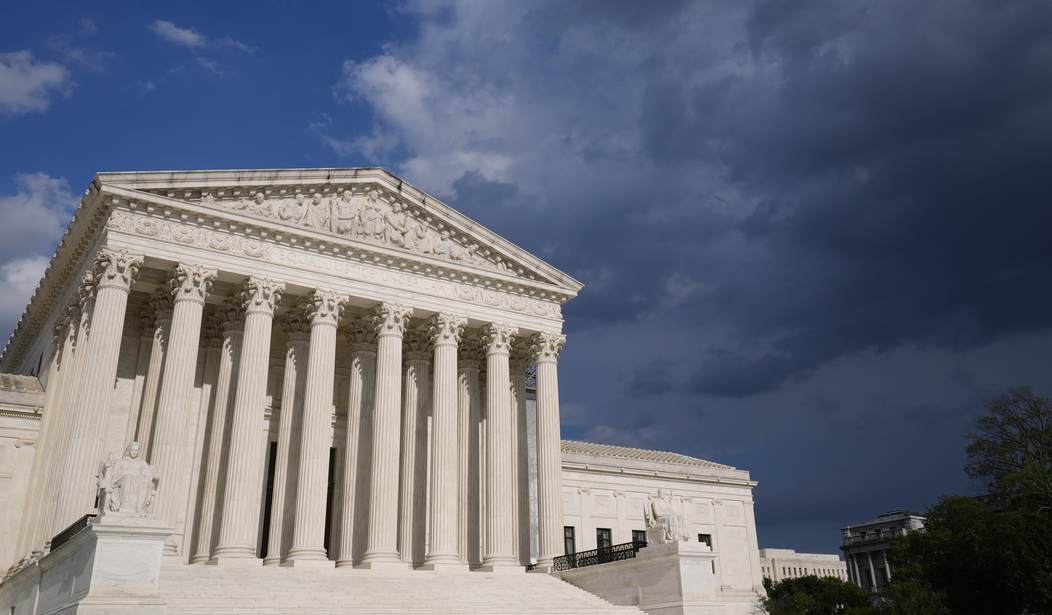
The Supreme Court is holding its first conference of 2026 today, and among the Second Amendment cases the justices are considering is one that could have far-reaching implications for the right to carry across state lines.
Marquis v. Massachusetts is a challenge to the state's ridiculous laws regarding non-residents and their ability to legally bear arms once they cross the state line. Massachusetts doesn't recognize any permits issued by other state; instead, non-residents are supposed to apply for a non-resident permit from the state police. Philip Marquis, a New Hampshire resident who was arrested for carrying without a license, contends that Massachusetts has an unconstitutional "may issue" permitting regime for non-residents, because the law allows the colonel of the state police discretion to deny permits without any objective criteria or standard of proof if he deems the applicant "unsuitable."
The law states that "[a] determination of unsuitability shall be based on reliable, articulable and credible information that the applicant or licensee has exhibited or engaged in behavior that suggests that, if issued a license, the applicant or licensee may create a risk to public safety or a risk of danger to self or others.”
Compare that to a "shall issue" system, where authorities must issue a permit so long as the applicant meets all of the objective criteria; typically, providing proof of training and passing a background check. A non-resident can apply for a permit in Massachusetts and check all of those boxes, but still be denied because the colonel of the state police decides they're not suitable anyway.
Because the legislature’s amorphous suitability standard permits (indeedrequires) the colonel to appraise “credible” and “reliable” facts and then judge an applicant unsuitable upon mere suggestion of perhaps a public safety risk, the standard fails both as a matter of law and as a matter of practice. For example, it is still good law in Massachusetts that a person may be deemed unsuitable simply when he “invoked his constitutional rights and refused to cooperate with the police”in an investigation the police deemed serious. Furthermore, the determination about whether one achieves “suitability” before exercising one’s Second Amendment rights rests with the Executive Branch. No due process exists at that stage, and the burden apparently remains upon the applicant to show that he or she is not unsuitable.
Marquis says the justices should take his case "to affirm that the Second Amendment sets a floor by which no state may fall below."
Law-abiding citizens like Marquis enjoy a presumptive right to keep and carry a firearm unless and until a judge or other neutral arbiter finds them dangerous. Their right to interstate travel must likewise not be burdened or deterred as a result of an ahistorical licensing scheme. Otherwise, travelers who possess firearms must trade one constitutional right for another before embarking to a state like Massachusetts.
This is one of the first cases to reach SCOTUS post-Bruen that deals with the right to carry outside of the state where a gun owner lives. The Court may want to wait for the issue to develop further in the lower courts before it takes a case, but if they deny cert to Marquis they'll be leaving what is essentially a "may issue" permitting scheme in place despite the unconstitutionality of those regimes. For that reason I'm hopeful that the Court will take up this issue sooner rather than later.
Two other 2A-related cases under consideration today are likely to be held by the justices until they've issued their decisions in U.S. v. Hemani and Wolford v. Lopez later this year.
Harris v. United States is another 18 U.S.C. § 922(g)(3) case like Hemani, involving a 21-year-old who was charged with possessing firearms while unlawfully using drugs after he admitted to smoking marijuana every three days or so.
Picon v. United States is a challenge to the District of Columbia's prohibition on adults younger than 21 carrying a handgun. Emanuel Leyton Picon was arrested and charged with carrying a handgun without a permit in D.C. when he was 20 years old, but there was no way for him to have acquired a permit given his age and District law. SCOTUS has already considered several other cases involving the Second Amendment rights of young adults this term, but so far has held on to all of them without granting cert or denying them outright. My guess is that SCOTUS will add Picon to that growing list, and will GVR (grant, vacate, and remand) all of those cases after Hemani and Wolford are decided.
There are more Second Amendment cases in the SCOTUS pipeline that will be discussed in conference later this month, and it's entirely possible that the justices will re-list one or more of the three cases above as well. With any luck, though, the Court will grant cert to Marquis and strike down the "may issue" permitting system that's standing in the way of non-residents' right to carry in Massachusetts.
Editor's Note: President Trump and Republicans across the country are doing everything they can to protect our Second Amendment rights and right to self-defense.
Help us continue to report on their efforts and legislative successes. Join Bearing Arms VIP and use promo code FIGHT to get 60% off your VIP membership.






Join the conversation as a VIP Member