In 2012, the Chavez regime in Venezuela effectively ended the ability of Venezuelans to legally own firearms. At that point Caracas was one of the most violent cities on the planet, and the country overall had 18,000 homicides in 2011. As you might expect, the ban had virtually no impact on violent crime. Five years after it took effect, the nation's homicide rate had climbed to an estimated 89 per 100,000 (compared to a U.S. homicide rate of 5.3 per 100,000 people).
In recent years the Maduro regime has touted success in bringing down the homicide rate, which was still reported to be about 26 per 100,000 in 2024. Maduro has claimed he essentially eradicated the criminal gangs that held sway over large parts of the capitol and surrounding countryside, while President Donald Trump has accused Maduro of exporting Venezuela's most violent criminals to the United States.
If Maduro has been offshoring the country's worst offenders, he clearly hasn't done that great a job, because the U.S. is now warning citizens to get the heck out of Venezuela as soon as they can because of the threat posed by pro-Maduro "militias" who are believed to be targeting Americans.
In a security alert issued Saturday by the U.S. Embassy in Caracas, officials warned that the situation on the ground has become increasingly dangerous. The alert advised U.S. citizens to depart the country immediately by commercial flight and cautioned against road travel due to armed groups operating checkpoints.
“Before departure, U.S. citizens should take precautions and be aware of their surroundings,” the State Department wrote. “There are reports of groups of armed militias, known as colectivos, setting up roadblocks and searching vehicles for evidence of U.S. citizenship or support for the United States.”
Since Maduro’s arrest, groups of rifle-armed civilians have been canvassing the streets of Caracas, intimidating those perceived to support the U.S. action, CBS News reported.
The State Department continues to list Venezuela at its highest travel warning level, citing “the high risk of wrongful detention, torture in detention, terrorism, kidnapping, arbitrary enforcement of local laws, crime, civil unrest, and poor health infrastructure.”
The colectivos are essentially quasi-government paramilitary groups, many of which were supplied with weapons by Chavez himself. In the years since his death, the colectivos have expanded their footprint and now operate as the de facto security forces in Venezuelan slums, while also engaging in a variety of criminal enterprises.
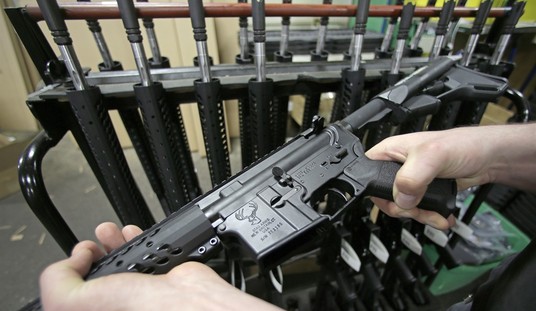
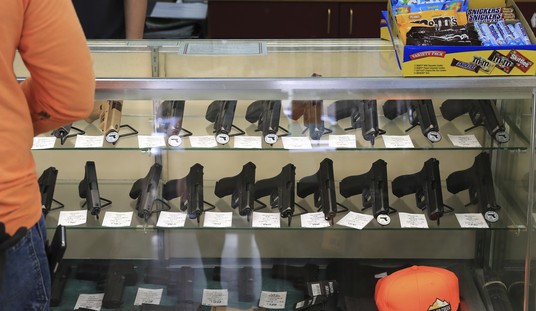
It's impossible for the average Venezuelan to get ahold of a firearm legally, and it's incredibly difficult for them to do illegally given the reign of the colectivos, who have a vested interest in keeping the civilian population disarmed. The colectivos, though, still have access to government-supplied weapons. Even with their primary patron sitting in a New York jail, the gangs appear to be continuing in their role as enforcers of the regime.
In Caracas, three days after the attacks, a cautious return to normalcy is beginning to emerge. Businesses have reopened and public transportation is running. The rush to stockpile supplies has subsided and the lines at supermarkets have disappeared. Movement is slow, as on a holiday. The return to classes, scheduled for January 12 before the attack, remains on.
In working-class neighborhoods, however, tension persists due to the deployment of the colectivos: armed civilians who control the territory for the regime, often in alliance with the security forces. Control is everything: ensuring that services function, preventing merchants from price gouging, and keeping opposition members identified, monitored, and silenced. “You can’t say anything because they’ll grab you and make you disappear,” says a resident who wishes to remain anonymous. “The day of the attack, they unleashed the colectivos, and they’re everywhere; they’re the government’s shadowy hand.”
In the 23 de Enero neighborhood, a working-class area and historical stronghold of Chavismo right across from Miraflores Palace, residents have witnessed these groups handing out weapons to other civilians. The same has been reported in Antímano and Carapita. “They carry them around like it’s nothing, men who probably don’t even know how to shoot,” says a resident from the west of the city.
Over the weekend, President Trump shared a picture of a fake Wikipedia page that listed him as "acting president" of Venezuela, most likely to troll critics of his decision to remove Maduro from power. In truth, though, Maduro's number two is running the country, and for the Venezuelan people not much has changed. The Chavistas are still in power, the colectivos are still serving as their henchmen, and the average citizen still has no voice... and most likely, no means to fight back.
I'm not in favor of putting U.S. boots on the ground in Caracas or anywhere else in Venezuela, but short of that I don't hold out much hope that things are going to substantively improve for the vast majority of those who've lived under authoritarian rule for decades. Reformers can take to the streets in protest, but doing so carries a gamut of risks; from being snatched and held in prison to being slaughtered by the colectivos and government security forces.
Tyranny demands a disarmed populace, and what we're seeing in Venezuela is just the latest example of that truism. Maduro may not be in charge, but that doesn't mean the people he ruled are now free.