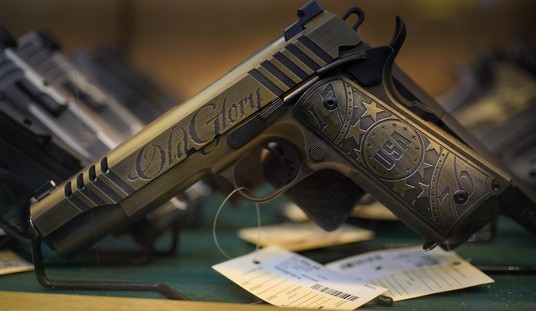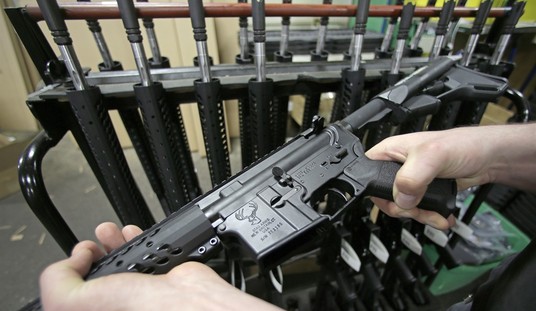
Australia's Parliament approved another nationwide "buyback" of firearms this week in response to the Bondi Beach terror attack, but unlike the first compensated confiscation program launched three decades ago, this time there are signs of resistance from several Australian states.
On Wednesday, Queensland Premier David Crisafulli made it clear that the state will not participate in the "buyback" scheme, declaring that the gun confiscation effort "doesn't address antisemitism and hate and it doesn't focus on keeping guns out of the hands of terrorists and criminals."
Earlier that morning, Prime Minister Anthony Albanese had said that Mr Crisafulli's position wasn't "in the interests of Queenslanders or the nation".
In a late-night sitting on Tuesday evening in Canberra, the federal government passed new laws targeting hate groups and paved the way for the national gun buyback scheme.
... Queensland has the second-highest rate of gun ownership in the country.
Asked how a national gun buyback scheme could be effective without Queensland's participation, the prime minister said that was a question for Queensland.
"I disagree with his position, respectfully, and I don't think it's in the interest of Queenslanders or the nation to not have national uniform laws," Mr Albanese said.
Queensland isn't the only state declining to participate in Albanese's gun roundup. Tasmania's Police Minister Felix Ellis has made comments indicating that Australia's southernmost state will also take a pass.
In a social media post on Wednesday evening, Ellis said the government supported laws “to take firearms out of the hands of criminals and terrorists”.
“I don’t think you will meet an Australian that doesn’t,” he said.
“But any caps or restrictions on law-abiding Tasmanians are for Tasmanians to decide.”
“We won’t rush this. We will listen to our community, not rubber-stamp Canberra’s agenda.”
Ellis hasn't completely shut down the idea of supporting the federal compensated confiscation scheme but wants to know first “[w]hat restrictions do they want placed on law-abiding farmers, recreational hunters and sporting shooters?”
What about resistance from Australian gun owners themselves? Part of the federal response to the Bondi Beach attack is to place limits on the number of guns that can be owned, with city dwellers limited to just four firearms but rural farmers and ranchers allowed to own up to ten. I have a feeling that the number of unlicensed firearms in Australia is about to soar skyward; not because of any influx of illicit arms but because current gun owners simply decline to participate in the compensated confiscation scheme.
We're seeing even more resistance to the Liberals' "buyback" in Canada, where to date the only province that's declared it will participate is Quebec. Officials in provinces like Alberta, Saskatchewan, and Manitoba have made it clear that it will be up to the RCMP to collect now-banned firearms, and some are openly questioning how many gun owners will choose to participate.
Robert Freberg, commissioner for the Saskatchewan Firearms Office, said there is a lack of facilitators to collect the banned firearms across Canada.
“As recent as last week, Manitoba indicated that they didn’t have any interest, nor did they want to divert law enforcement folks away from their important work to be couriers picking up firearms,” Freberg said.
On Thursday, Matt Wiebe, Manitoba’s minister of justice, declared that Manitoba will join other provinces in pushing back against the program after only 25 guns were collected and destroyed during the pilot phase.
During a news conference on Saturday, federal Public Safety Minister Gary Anandasangaree said the buyback is a national program and RCMP has a nationwide presence.
“We have the capacity, we have the ability to ensure we have nation-wide coverage, with the exception of Saskatchewan and Alberta where there are some technical, legal challenges that we’re working through,” Anandasangaree said.
Freberg said it’s concerning to hear that despite provinces voicing clear objections to the buyback, the federal government is planning to move forward using the national police service.
Freberg said there isn’t enough money in place to purchase all the firearms the federal government is hoping to take in.
“There’s no guarantee if you register that you’re going to get paid anything, other than the fact that they’ll know now that you have the firearm, so I’m concerned about all that,” Freberg shared.
“There’s a lot of contradictions that I saw that I found quite concerning.”
Freberg also rightfully criticized the Liberals for calling the banned semi-automatic firearms "battlefield weapons," noting that the Ukrainian government expressed little interest in accepting the Liberals' offer to turn collected arms over to the nation's military (which is something U.S. gun owners should point out the next time an anti-gunner calls their AR-15 a "weapon of war").
It's heartening to see these signs of resistance in places where there is no right to own a firearm enshrined in law, and I hope officials in places like Queensland and the Canadian heartland will go a step further and declare that these federal-level bans will not be enforced by local law enforcement either. There's a great deal of power in simply saying "no" to anti-gun authoritarians, and hopefully our own local elected officials here at home will do the same as Democrats veer wildly beyond the boundaries of the Constitution in support of their gun ban agenda.