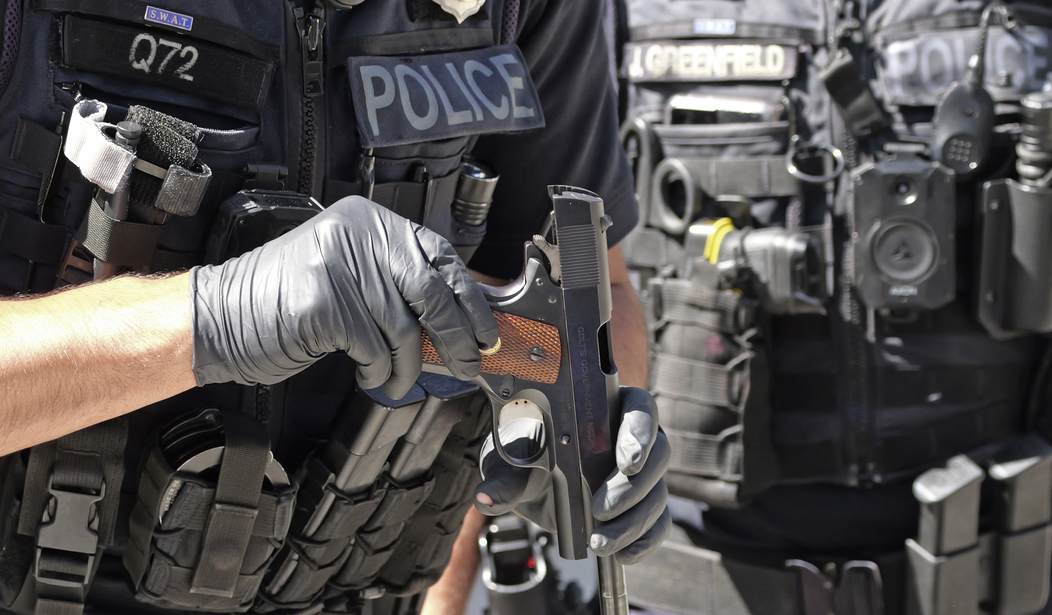
The Liberal government in Canada is continuing its nationwide gun "buyback" of banned firearms, though we haven't heard many Liberal politicians touting its success as of late.
Instead, most of the recent headlines about the compensated confiscation effort have centered around localities refusing to participate. Most recently, the police department in Kingston, Ontario declared it won't be involved in the federal effort, citing "concerns related to the program’s design, implementation, and potential impacts on local policing resources and public safety priorities,” identified by both the Canadian Association of Chiefs of Police and the Ontario Association of Chiefs of Police.
The "buyback" is off to such a rough start that even CNN is reporting on the criticism, though its report studiously avoids calling the effort a failure.
In January, Canada began implementing one of those reforms: a long-awaited, hotly debated program to compensate the country’s gun owners for their now-banned firearms. Yet the buyback program has suffered yearslong delays and pushback from police, provincial officials and gun owners.
In September, audio emerged of Canada’s Minister of Public Safety Gary Anandasangaree, the official responsible for implementing the legislation, questioning the ability of police departments to enforce the buyback. Anandasangaree later said the recording was made without his knowledge, and said the comments were “misguided.”
Complicating the buyback is the fact that Canada has plenty of guns, more than the program alone can collect. The federal government estimates that it has the funds to buy 136,000 firearms, but Canada has roughly 2 million registered and 10 million unregistered guns, according to a 2017 release from the Small Arms Survey, an independent research group based in Switzerland.
Now, not all of those firearms have been banned by the Canadian government, at least not yet. But it is fair to say that the Liberals have been targeting the country's legal gun owners, while the vast majority the country's gun-involved crime is committed by individuals who've acquired their guns through illicit means. I doubt many violent offenders, gang members, and drug dealers are going to participate in the compensated confiscation efforts.
A number of provinces have declined to participate as well, though the Liberal government is still talking tough about collecting firearms in those locations.
The buyback has also been met with friction in western Canada. The province of Alberta has said it won’t participate in the buyback and barred its police forces from taking part. Saskatchewan and Manitoba have also said they won’t participate.
“We’ve made it clear from the beginning,” said Teri Bryant, Alberta’s Chief Firearms Officer, who spoke to CNN from the sidelines of a weekend gun show.
“We weren’t gonna participate in this scheme,” Bryant said. “And they’ve had six years: if they really thought this was so important, they would have set up some kind of a mechanism.”
In a statement to CNN, the Ministry of Public Safety said that in the absence of provincial approval and police cooperation, the federal government will be sending “mobile collection units” (MCUs) to retrieve prohibited firearms from their owners.
“The decision of local police forces to not administer the collection of firearms will not prevent the federal government from collecting them through these MCUs,” said spokesperson Simon Lafortune.
But Bryant said she doesn’t know how those MCUs will operate in Alberta.
“Those mobile collection units would need a seizure agent license from us,” Bryant said. “They haven’t applied for one.”
CNN claims that "Studies have shown... that buybacks account for significant declines in mass shootings," citing a 2021 report by RAND Corporation that focused solely on Australia's compensated confiscation effort 30 years ago. That report, though, noted that while there were no incidents of mass shootings in Australia in the 23 years after the "buyback", "low numbers of such events, coupled with challenges inherent in studying a nationwide policy on national outcomes, limit strong conclusions and raise skepticism by critics."
That same report notes that there's no real indication Australia's "buyback" had any positive effect on the homicide or suicide rates, which were already declining before the compensated confiscation began, but it did reduce the number of legal gun owners in the country by about 50%.
Canadian gun control activist Wendy Cukier told CNN that the "buyback" is attempts to address a very specific issue, “which is that Canadians do not feel civilians should have access to semi-automatic military-style firearms, period."
The same law instituting the "buyback" also imposed a halt to sales of handguns as well, which neither Cukier nor CNN bothered to mention. If they had, then Cukier's justification for the "buyback" would have fallen apart. It's not about getting "military-style" firearms off the streets. It's about blocking civilian access to the most common and popular firearms across the globe... which is one reason why so many localities have decided they want nothing to do with the government's gun grab.
Editor's Note: The gun control lobby and their media allies continue to lie about gun owners and the Second Amendment.
Help us continue to expose their left-wing bias by reading news you can trust. Join Bearing Arms VIP and use promo code FIGHT to get 60% off your membership.








Join the conversation as a VIP Member