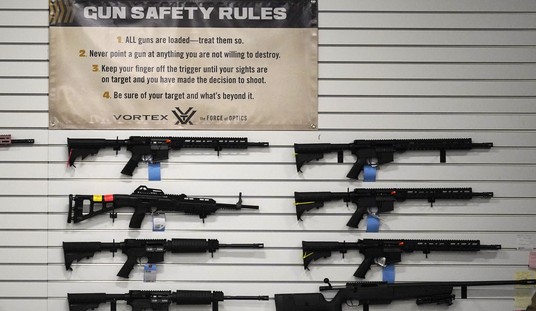
A bill banning the sale, manufacture, and transfer of "assault weapons" and "large capacity" magazines could soon receive a vote in the Minnesota Senate, and anti-gun activists are doing everything they can to push it over the finish line.
Democrats have a one-seat majority in the chamber, but there are two Democrat senators who haven't said how they'll vote on the gun control package. Anti-gunners need both of them to back the bill in order for it to be sent to the House, where Republicans and Democrats are equally divided. Even if the bill doesn't ultimately pass the House, gun control activists want to be able to point the finger solely at Republicans, and if the bill fails to make it out of the Senate because of a lack of Democrat support that would make their preferred political narrative moot.
The Minnesota League of Women Voters is making its argument to the public and lawmakers, claiming an "assault‑weapons ban fits squarely within" the nation's tradition of gun ownership, though they don't provide any evidence to back up that claim. They point to to the ten-year ban that Congress allowed to expire in 2004, which is hardly an example of a longstanding law, much less one that dates back to the Founding.
The group also misses the mark when it tries to reassure gun owners that the ban on commonly-owned arms would still leave their Second Amendment rights intact.
It does not confiscate a hunter’s rifle, a homeowner’s shotgun, or a citizen’s handgun for personal protection. What it does is limit civilian access to weapons designed around battlefield features — rapid semiautomatic fire combined with detachable high-capacity magazines and tactical configurations meant to maximize lethality against groups of people. Removing those weapons from public circulation every day is not the same thing as eliminating the right of self-defense.
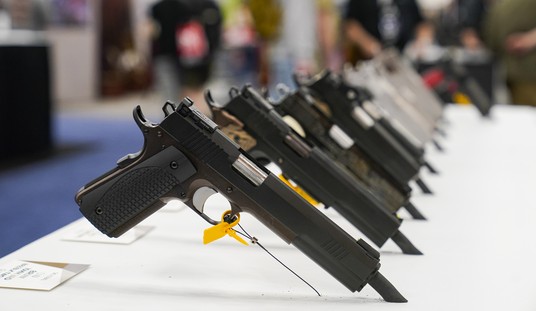
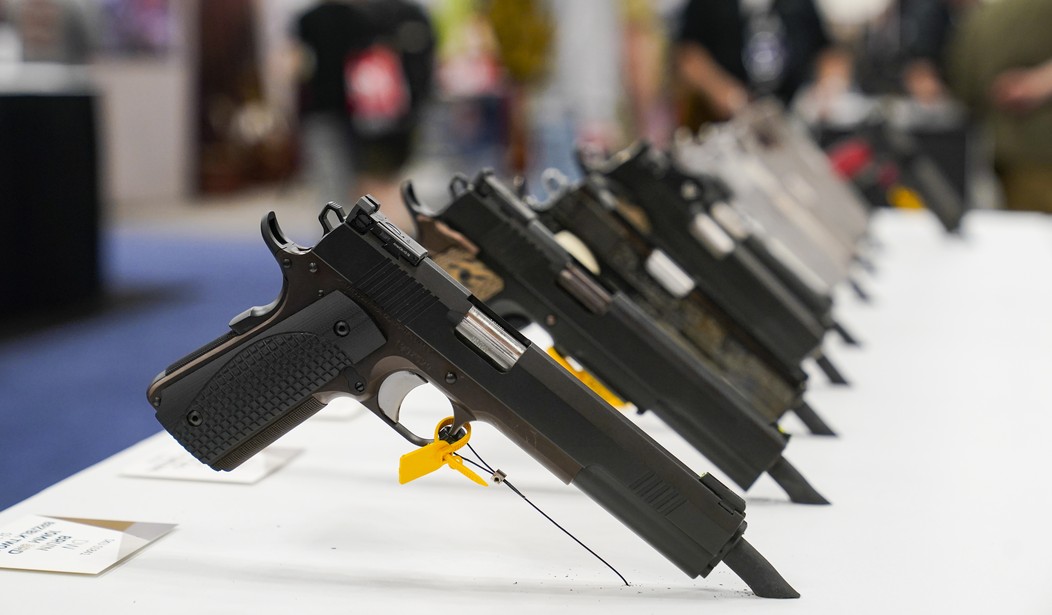
Sorry ladies, but if you think that "rapid semautomatic fire" makes a gun ban-worthy, then you're going after far more than AR-15s and other rifles that also aren't used by our military. The vast majority of handguns sold in the United States are semi-automatic and can accept detachable magazines, so while this particular bill might not outlaw a citizen's handgun for personal protection, under your logic and reasoning the legislature could come back next session and impose a ban on all semi-automatic firearms.
And as we recently reported, the gun control lobby is making the argument that the only firearms protected by the Second Amendment are those in common use for self-defense. That would certainly exclude the hunter's rifle, and most likely shotguns as well. What would we be left with then? Revolvers, basically.
Framing the issue as a choice between “doing nothing” and “taking away the right to bear arms” oversimplifies the debate. In reality, most proposed legislation leaves intact the core right recognized in Heller: the ability of law-abiding citizens to possess firearms for lawful purposes. The question is whether weapons engineered for combat should be treated the same as firearms traditionally used for hunting, sport shooting or home defense.
It's not a choice between doing nothing and taking away the right to keep and bear arms. It's a choice between restricting the right to keep and bear arms or addressing violent crime by focusing on the criminals themselves. It's a choice between banning popular firearms and spending money to address the lack of security in schools, or the lack of mental health resources. As to the question they pose, of course weapons "engineered for combat" should be treated like every other firearm. For hundreds of years there was no difference between military and non-military arms, after all. But in this case we're not talking about the select-fire rifles used by the military. We're talking about guns that fire one round of ammunition for every pull of the trigger, just like a bolt-action rifle or a over-under shotgun.
There is also a civic dimension to this discussion. Communities are not asking legislators to eliminate firearms entirely. They are asking whether weapons capable of firing dozens of rounds in seconds — tools repeatedly used in mass-casualty attacks — belong in the ordinary public square. Answering that question in the negative does not nullify constitutional liberty. It reflects a judgment about what kinds of weapons are compatible with civilian life.
Gee, how big of these communities to not ask legislators to ban all guns. And again, under the definition provided by the League of Women Voters, most handguns could be banned. They are more commonly used than "assault weapons" in mass shootings, and they have the same rate of fire as an AR-15 or AK-47; just as fast as someone can pull a trigger.
What kinds of weapons are compatible with civilian life? Well, at the time of the Founding muskets, pistols, and even cannon were all available for civilian use. Heck, you can buy a tank today if you've got the cash. But semi-automatic firearms have been on the civilian market for over a century now, and it wasn't until the late 1980s that we started to see a push to ban those arbitrarily designated as "assault weapons."
Banning assault weapons does not dismantle the right to bear arms. It preserves that right while drawing a line between firearms suited for lawful civilian purposes and weapons designed for the battlefield. That distinction is not only constitutional, it is necessary if we hope to balance personal liberty with the safety of the communities in which we all live.
If you live in the United States and you're under the age of 60, you have never been less likely to be murdered than you are today. We are balancing personal liberty with the safety of our communities, and we can successfully do so without banning popular firearms or turning lawful gun owners into criminals committing victimless crimes. And if we followed the demands of these gun control advocates, we would most certainly be dismantling the right to bear arms. After all, their logic doesn't end with "assault weapons." Or rather, their definition of an assault weapon is so broad that it would scoop up every semi-automatic rifle, shotgun, and pistol... no matter how often they're used for lawful purposes... including our right to self-defense.