I had a conversation with a pro-Second Amendment public official in Virginia recently who jokingly said that the one silver lining for gun owners in the Commonwealth is that it's Attorney General Jay Jones who's tasked with defending the gun control laws signed by Gov. Abigail Spanberger.
He's not wrong, though I'm sure that Jones is getting plenty of legal advice from the folks at Everytown Law, Giffords Law Center, and other anti-gun advocacy groups to aid in his defense of the ban on "assault firearms" and "large capacity" magazines set to take effect on July 1. In a recently filed motion arguing against an injunction on the new law, Jones offered up a smorgasbord of reasons why a judge should let the law be enforced, including his contention that the Virginia Constitution doesn't protect an individual right to keep and bear arms at all.
The plaintiffs in Crump v. Katz are not making a claim under the Second Amendment. If they did, a judge would likely tell them to move their complaint to federal court. Instead, the plaintiffs argue that the new gun and magazine ban run afoul of Article 1, Section 13 of the Virginia Constitution, which reads:
That a well regulated militia, composed of the body of the people, trained to arms, is the proper, natural, and safe defense of a free state, therefore, the right of the people to keep and bear arms shall not be infringed; that standing armies, in time of peace, should be avoided as dangerous to liberty; and that in all cases the military should be under strict subordination to, and governed by, the civil power.
In his motion to dismiss, Jones maintains that the language, adopted in 1971 (not 1791, like the Second Amendment), clearly confers a collective right to serve in a militia, not an individual right to keep and bear arms.
The text and ratification history of § 13 differ markedly from the Second Amendment and support a collective, militia-tethered right rather than an individual one enforceable against the Commonwealth. Instead of analyzing § 13 based on its plain language and history, Plaintiffs press the federal Bruen framework.
In the end, it does not matter which framework this Court applies, because SB749 readily survives both. Under Bruen, the arms and accessories that SB749 regulates are not in common use for lawful civilian self-defense; they are the dangerous and unusual weapons that fall outside the constitutional right to keep and bear arms, and the Commonwealth’s restrictions are fully consistent with the principles underlying this Nation’s, including Virginia’s, historical tradition of firearm regulation. Under the Virginia methodology, SB749 does not implicate any right § 13 confers, but even if it did, any reasonable consideration of the Commonwealth’s substantial public safety interest against the modest burden on the asserted right resolves in favor of the law.
There are a lot of issues in those two paragraphs, starting with the fact that multiple circuit courts in Virginia have held that Article 1, Section 13 does protect an individual right to keep and bear arms. Jones bizarrely maintains that if that is the case, then the right suddenly has no relationship at all to a militia, and is instead solely about the right to armed self-defense.
He's wrong on both counts. The Virginia constitution makes clear that the "militia" is compose of every Virginian "trained to arms," and as such, the right of the people to keep and bear arms shall not be infringed. Self-defense is presumably protected under that right as well, but the language clearly indicates that there is an individual right to possess arms that would be useful and beneficial in a militia.
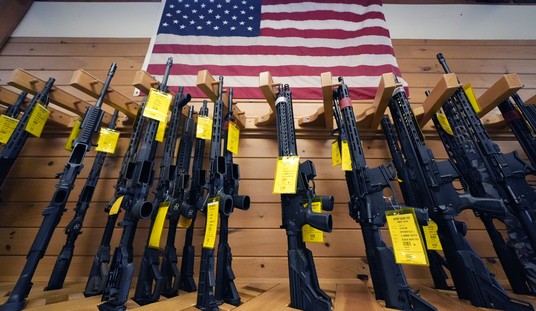
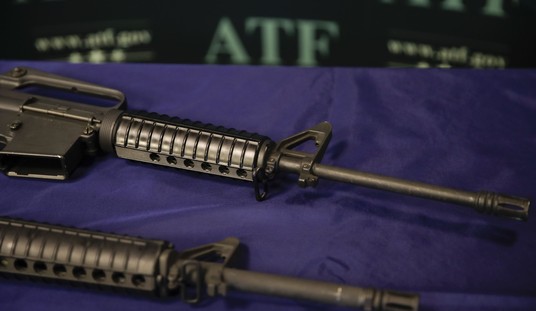
That would certainly include AR-15s and other "military style" weapons, but Jones argues that those arms are completely unprotected by the state constitution because they're not in common use for self-defense. The AG claims that only guns commonly used for self-defense are protected by the text of the Second Amendment, even though the Supreme Court has repeatedly stated that arms that are in common use for "lawful purposes", including (but not limited to) self-defense fall under the protection of the Second Amendment.
Jones's argument would allow Virginia to ban almost every firearm except handguns, which is completely contrary to the plain text of the Second Amendment. Jones is parroting the Fourth Circuit Court of Appeals in its ruling upholding Maryland's ban on so-called assault weapons, but that ruling should have no bearing on a case involving the Virginia constitution.
Jones also claims that Virginia banned firearms that could hold more than seven rounds back in 1934, though a quick read of the statute in question makes it clear that the limitation was part of a broader definition of "machine gun", not "firearm". The statute also didn't prohibit the manufacture, sale, or transfer of machine guns, unlike the ban on "assault firearms" and "large capacity" magazines that's being challenged today.
Every assertion Jones makes in defense of the ban is provably false. The Virginia constitution protects the right of the people to keep and bear arms while recognizing that the body of the people comprise the state's militia. Arms are not required to be in common use for self-defense in order to be protected by the right to keep and bear them. As for Jones's public safety argument, the guns in question are rarely used in crime, and are possessed by tens of thousands (if not hundreds of thousands, after months of soaring sales) of Virginians for lawful purposes. Prohibiting their sale and manufacture is not a modest burden. It denies Virginians the opportunity to lawfully purchase and possess these arms going forward, and that is an infringement that cannot be squared with Article 1, Section 13 of the Virginia constitution.