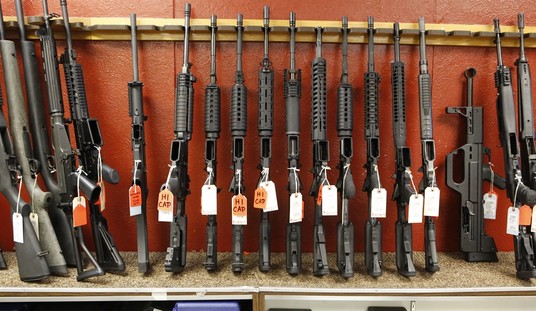
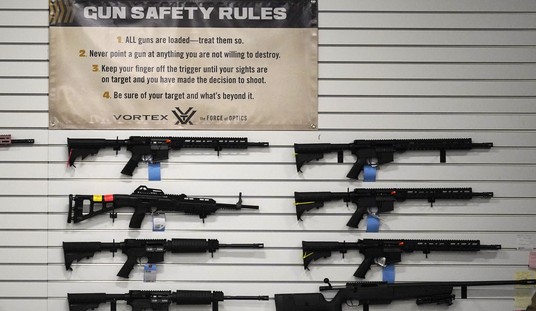
Virginia Attorney General Jay "Two Bullets" Jones blasted out a press release on Wednesday arguing that the two injunctions against the state's ban on so-called assault firearms and large capacity magazines are only in effect against the Virginia State Police and the Commonwealth's Attorneys who were named in the injunction issued by a Washington County judge.
Jones maintains that "[o]therwise, the new laws remain in force, and these injunctions do not bind individuals not named in those suits, such as non-defendant Commonwealth’s Attorneys or local law enforcement agencies."
That doesn't provide much clarity, though. Will the VSP, which administers the state's background check system, deny checks conducted on now-banned firearms, for instance? That wouldn't just apply to new sales. For instance, gun owners who are trying to pick up firearms that they pawned ahead of the ban would also have a background check run before taking possession of their firearms, and they could be prevented from regaining possession of their legally-purchased rifles, shotguns, or pistols.
Can a manufacturer ship a now-banned firearm to one of the counties where the Virginia State Police and Commonwealth's Attorneys are prohibited from enforcing the law? Companies like Palmetto State Armory have said they're "pausing" sales over a lack of clarity over the scope of the injunctions, but Jones is providing no answers.
Instead, he's telling "[i]ndividuals and other private parties with questions on how these injunctions may impact their activities or business interests" to "seek legal advice regarding their specific circumstances."
I'm sure that FFLs and many gun owners would like to hear what the AG's legal advice is, given that he's newly empowered to file civil suits against any entity in the firearms industry alleging that they've violated a vague "code of conduct" regulating their transactions.
The lack of clarity from the attorney general is all the more reason for a federal judge to grant the DOJ's request for an injunction that would block the new gun and magazine ban from being enforced while the Justice Department's lawsuit against the commonwealth is ongoing. Injunctions that provide no meaningful relief to gun buyers, sellers, and makers may be useful from a legal standpoint, given that the indicate the judges who issued them believe the plaintiffs will ultimately win their cases. From a practical standpoint, though, if the sale of AR-15s and 20-round magazines are now halted, even in those counties where local prosecutors and the state police have been told they can't enforce the law, then there's not much benefit to the plaintiffs (or other gun owners).
Again, that's not to take away from any of the work being done by Second Amendment organizations. individual 2A advocates,, and their attorneys. I'm very grateful for groups like GOA, NRA, VCDL, and VSSA taking the fight to the anti-gunners at the state capitol, just as I'm hugely appreciative of the DOJ's Civil Rights Division doing the same. And I have no doubt that ultimately, these challenges will be successful. But with the Supreme Court agreeing to take on an "assault weapons" case next term, Virginia gun owners should not be subject to a law that, by the Court's own metrics, must be presumed to be unconstitutional unless and until the State proves otherwise.
The majority opinion was clear: "If a challenged law falls within the plain text, it is presumptively unconstitutional— which means that it may violate the preexisting right that the Amendment codified. But the government may show that its challenged law did not infringe the historical understanding of the codified right.
Judges are supposed to weigh four factors when deciding whether an injunction should be granted: Likelihood of Success on the Merits, Irreparable Harm, Balance of Hardships, and Public Interest. We already know that two circuit judges have concluded the plaintiffs meet those conditions, and it should be just as easy for a federal judge to do the same.
The plaintiffs are likely to succeed because there are no similar bans of entire classes of arms around 1791 or 1868. The entire history of technological development of firearms in the U.S is one of that paired progress and availability, at least until the 1930s. But even the NFA didn't ban ownership of machine guns, much less semi-automatic rifles. It restricted full-auto and firearms based on barrel length, but semi-automatic rifles, shotguns, and pistols were not singled out in the National Firearms Act.
Irreparable Harm is being done to Virginians by denying them the ability to purchase or receive some of the most popular guns in the country, as well as magazines that are common use for lawful purposes. It doesn't matter that other arms and smaller magazines remain available to them. If you can still use your freedom of speech, but the government restricted it only to particular viewpoints on particular subjects, you'd have a hard time finding anyone who would say that doesn't violate our First Amendment rights. The same is true with the arms in question here.
The balance of hardships similarly falls on the plaintiffs. What happens to the state if it cannot enforce a law that took effect less than 24 hours ago? Nothing. The status quo remains in place. Gun owners and gun sellers, though, will face hardships almost immediately because of the law.
Finally, the public interest in banning firearms that are rarely used in crime in Virginia in order to promote public safety is far outweighed by the public interest in preserving the exercise of our most fundamental liberties. The fact that sales of these firearms have soared throughout the state over the course of this year just buttresses that argument. If sales had remained stagnant or even slumped ahead of the ban, anti-gunners could plausibly claim that no one in Virginia wants these guns. Instead, the exact opposite has happened. Sales boomed ahead of the ban. Crime involving so-called "assault firearms" has not, or if it has no law enforcement agency in Virginia has mentioned it. There is a negligible impact on public safety by banning these commonly-owned guns, but the same can't be said for the impact on our civil rights.