In the four years since the Bruen decision and the subsequent passage of New York's deceptively named Concealed Carry Improvement Act, there have been multiple legal challenges to the gun control laws put in place after the state's "may issue" carry laws were struck down. Some of them have actually reached the point where the Supreme Court will soon consider granting cert or not, while others have taken a more circuitous route.
One of the latter cases is called Antonyuk v. James, which was filed back in September of 2022. The case has bounced between district court, the Second Circuit, and SCOTUS ever since, with the Supreme Court granting cert, vacating the Second Circuit's decision upholding most of the CCIA, and remanding the case back to the lower courts two years ago.
Today, U.S. District Judge Glenn Suddaby released his response to the dueling requests for summary judgment filed by the plaintiffs and defendants, and gave gun owners as much of a win as Second Circuit precedent allows.
LEGAL ALERT: A New York federal judge has struck down the state’s ban on firearms in unsecured areas of airports while upholding multiple other location carry bans, saying that while “it is conceivable or even likely that certain rulings of the Second Circuit” will not hold up to… pic.twitter.com/Rrn8fXuzSQ
— Firearms Policy Coalition (@gunpolicy) September 30, 2026
Suddaby concluded that "it is conceivable or even likely that certain rulings of the Second Circuit in Antonyuk II may be overruled by the Supreme Courtbased on its intervening decisions," not just for the reasons cited by the plaintiffs but for three other reasons.
First, the challenged provisions discussed in this Decision and Order do not exist in a vacuum but together with numerous other provisions banning concealed carry. As a result, it is difficult for the Court to logically conclude that the CCIA is complying with the Supreme Court’s pronouncement that a state law cannot ban firearm carriage “too broadly” so that it “would eviscerate the general right to publicly carry arms for self-defense,” when the CCIA bans concealed carry in so many discrete locations that together the bans constitute a ban that exists nearly everywhere.
Zing!
Suddaby's second reason why many of the "gun-free zones" that have been upheld by the Second Circuit may be struck down by the Supreme Court is that the "Defendants seem to forget that the test in question is essentially a proportionality one (analyzing whether the modern regulation is comparable to its relevantly similar historical analogues in that it imposes a comparable burden for a comparable reason or justification)."
With regard to the prong of the test considering the reason for the modern regulation, little if any admissible record evidence has been presented that law-abiding individuals who otherwise have satisfied the requirements of receiving a concealed carry permit in New York State – including but not limited to the requirements of “good moral character,” an in-person interview, and 18 hours of in-person and “live-fire” firearm training – pose any regulation-warranting threat whatsoever to the safety and tranquility of others in the challenged locations.
Finally, Suddaby argues that when presenting their historical analogues, the defendants "readily rely on laws from territories and/or from eras far afield of 1791 and 1868 without properly discounting their weight."
Despite those flaws, Suddaby acknowledged that they're right in line with the Second Circuit's previous decisions, and until the Supreme Court weighs in, he's bound by the appellate court's precedent.
That means that Suddaby upheld New York's ban on concealed carry in public parks, establishments where alcohol is served, theaters, and zoos. The judge did, however, find for the plaintiffs when it comes to lawfully carrying in the unsecured portions of airports, largely because the "defendants [did] not challenged this Court’s reasoning in support of prior ruling preliminarily enjoining the enforcement of this provision."
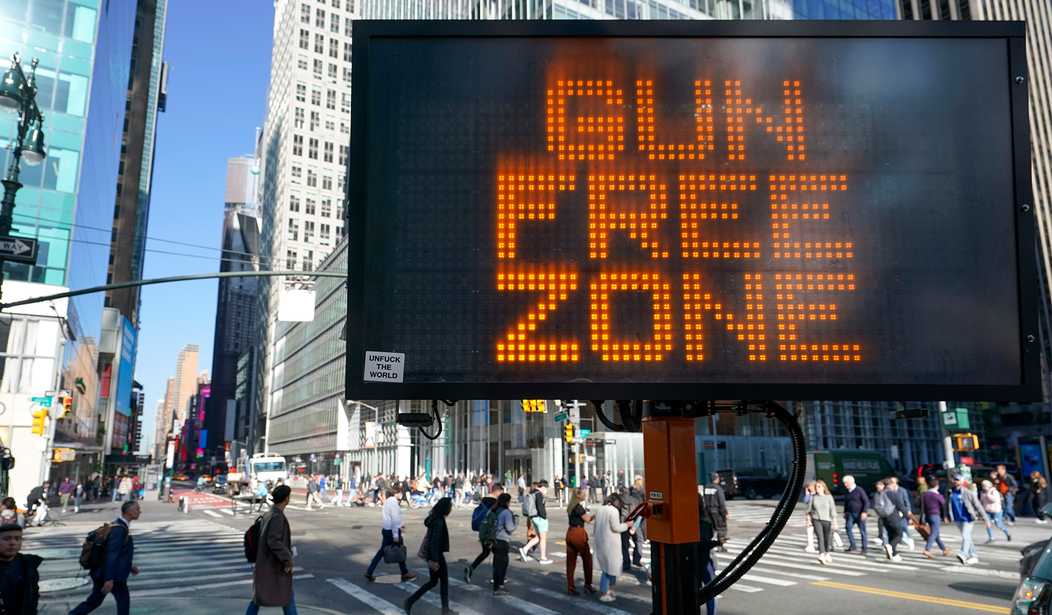
Suddaby's decision all but begs the Supreme Court to address the extent of New York's "gun-free zones," since when taken as a whole they result in an almost complete prohibition on lawful carrying in public.
I would have preferred the judge cite Wolford in striking down these bans, even if they've previously been upheld by the Second Circuit, but Suddaby's rationale was that he was unable to find that the Supreme Court’s "decisions (in Rahimi, Hemani, and Wolford) so undermine the Second Circuit’s rulings in Antonyuk II" regarding those bans that the appellate court will “almost inevitably” be overruled by the Second Circuit in the future.
Suddaby has certainly indicated that he thinks the Second Circuit should reverse itself, but I have to agree with him that nothing SCOTUS has said makes it inevitable that the appellate court will actually do so. That's why it's so important that the Court take up a challenge to "gun free zones" at the earliest opportunity.
That opportunity may come from the Second Circuit, in a case called Christian v. James, which is a separate challenge to New York's ban on concealed carry in parks. A cert petition has already been filed, and a response is due in early December.
The Third Circuit could provide another opportunity when it releases its en banc decision in the Koons and Siegel cases challenging New Jersey's multitude of "sensitive places" adopted after Bruen. I'm kind of surprised we haven't seen that decision already, but it could come out at any time. Antonyuk itself is another vehicle, but it will probably be a year or more before the Second Circuit weighs in on today's decision by Suddaby.
Justice delayed is justice denied, and right now there are hundreds of thousands (if not millions) of concealed carry licensees who are living with the injustice of not being able to bear arms in scores of places that are sensitive in name only. Suddaby clearly sees the problem with this. Let's hope a majority of Supreme Court justices are ready to do the same.