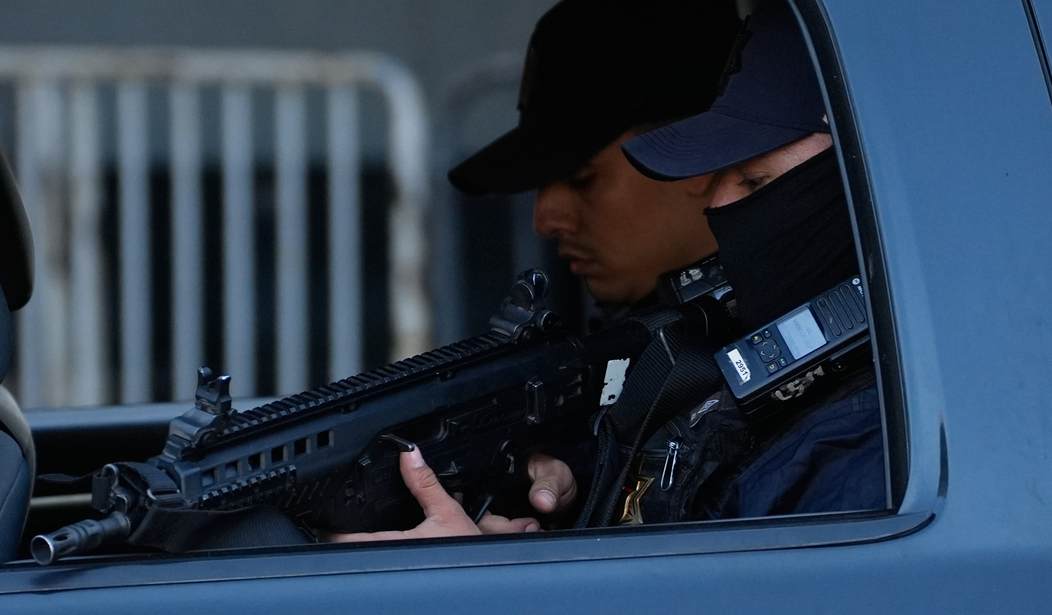
The New York Times has a big expose on Arizona teens who are illegally arming cartels south of the border. It's pretty clear the paper's editors want readers to see this as a story about how easy it is to get a gun in America. I came away wondering why it's apparently so easy to become a gun trafficker for a Mexican drug cartel while you're still in high school.
Some of the traffickers the Times spoke to are 18 or a little older, but several got involved in the gun trade while they were still minors, when federal law barred them from buying firearms from licensed dealers. So how are they getting ahold of the guns they're selling to the cartels?
In repeated interviews, four weapons traffickers ages 16 to 19 — all current or former high school students in west Phoenix — allowed me to observe how they buy firearms and sell them to the highest bidder. Sometimes, they said, they steal the guns and then resell them. They aren’t loyal to one criminal group or another; instead, they say, they are motivated by making money, gaining status and having a sense of belonging.
... Students who are old enough to buy firearms purchase some from licensed dealers, the teenage traffickers said. They said others stole guns by breaking into homes and vehicles, and, at times, stealing them from their own parents. Many scour WhatsApp and Telegram gun trading groups, El Flaco said, arranging meetings and at times purchasing weapons with counterfeit cash. When they obtain firearms, the traffickers said, they often remove the serial numbers with nail drills, making the weapons harder to trace.
The teenage traffickers said they typically kept the weapons in stash houses, storage units or even their own apartments until cartel operatives pick them up. Sometimes they pay other students to drive the guns across the border and deliver them to designated locations in Mexico, they said.
Jason Red, a former Homeland Security Investigations agent who worked with the ATF in investigating gun trafficking networks from 2015 to 2020, told the Times about 5 percent of gun trafficking arrests involve individuals under the age of 18. That doesn't sound like a lot, but Red also claims that "every multi-person trafficking case he had handled involved at least one teenager, often a high school student."
Theft is one avenue for these teens to get ahold of guns, but they're also using the black market to acquire them cheaply. Using platforms like WhatsApp and Signal, the teens can talk with other interested buyers and sellers and suss out where they can purchase firearms or offload them to cartel members.
Meta, the owner of Facebook and WhatsApp, says it does not allow the purchase, sale or trade of weapons on any of its platforms, though the boys demonstrated just how easily those rules can be bypassed. Arizona allows private gun sales without background checks or record-keeping, which makes it even easier for traffickers to source weapons without getting caught.
To avoid detection by both the authorities and companies like Meta, the smugglers said, they routinely create and delete group chats, avoid sharing personal information during conversations or gun transactions and admit new members only through referrals.
Of course the Times threw in that bit about Arizona's lack of "universal" background checks, but remember, many of these guns aren't legally purchased to begin with. Arizona's private-sale laws might matter when one of these traffickers purchases a firearm from an otherwise lawful owner. They don't explain the stolen guns, purchases made with counterfeit cash, obliterated serial numbers, stash houses, cartel pickups, or teenagers carrying guns across an international border. Even if Arizona had universal background checks in place, you'd have to be high on the cartels' supply to think that would stop this trafficking.
In fact, one trafficker, identified by the Times as J.M., actually talked about how he uses another law pushed by the gun control lobby to help him cover his tracks.
As J.M. took on larger deals, seasoned traffickers taught him the tricks of the trade, including how to avoid liability if a firearm he had legally purchased was later recovered at a crime scene. The simplest trick, he said, was to report the weapon stolen soon after buying it.
“All you have to do is call 911, say it was stolen, give a location, give the serial number and that’s it,” he said. “Legally, that gun was no longer under your possession.”
I remember when "lost or stolen" legislation was first being introduced around the country, and this was one of the arguments groups like NRA raised in opposition. Lawful gun owners are already going to report a gun that's lost or stolen, but by mandating that reporting states are giving traffickers an easy way to absolve themselves of any criminal responsibility.
These teens are already circumventing federal and state law, not to mention the policies of companies like Meta. Why would anyone think another gun control law is going to magically solve this problem? Honestly, why would anyone even offer that as a serious suggestion?
The Times alludes to the fact that the cartels are happy to use underage traffickers, who are less likely to face stiff punishment from the criminal justice system. If that's become part of the cartels' business model, policymakers need to act to get rid of the perverse incentive to recruit minors into gun trafficking. The juvenile justice system is aimed at reformation, not incarceration. But when teens don't want to be rehabilitated, when they don't see a problem with arming cartels, there's not much the juvenile justice system can currently do about it.
The lack of parenting appears to be another problem. One of the teen traffickers the Times spoke with lives on his own in Arizona, while his parents live in Sinaloa, Mexico. The Times never gets into the relationships that the other traffickers they spoke with have with their parents, but it seems like these teens are basically running wild.
The paper explicitly pins the blame for this trafficking on "America's expansive gun rights and the permissive firearms laws of border states like Arizona," ignoring the fact that the right to keep and bear arms does not encompass a right to sell guns to the Sinaloa cartel. The activities described by the paper aren't protected by the Second Amendment. They're criminal enterprises that use an otherwise lawful commodity. If these same teenagers were illegally purchasing or stealing vehicles before selling them to cartel smugglers, I don't think the paper would say those activities are “fueled by America's permissive automobile laws.”
The Times has uncovered something genuinely disturbing. American teenagers are being recruited into international criminal organizations, trafficking firearms to some of the most violent people on earth in exchange for money, status, and a sense of belonging.
That's a serious problem. Pinning the blame on the Second Amendment, though, is the wrong diagnosis.
The teenagers profiled by the Times aren't exercising their Second Amendment rights. They're breaking federal and state laws over and over again. And if authorities already know cartels are deliberately recruiting teenagers as disposable gun runners, the question really isn't what new restrictions Congress can impose on tens of millions of lawful gun owners. It should be why teenagers who can't walk into a gun store and legally buy these firearms are apparently able to build an illicit pipeline that moves them all the way from Arizona to a Mexican drug cartel, and what law enforcement can do to shut that pipeline down.
The Times has done an admittedly impressive job documenting the problem, but its diagnosis is wildly off-base.