
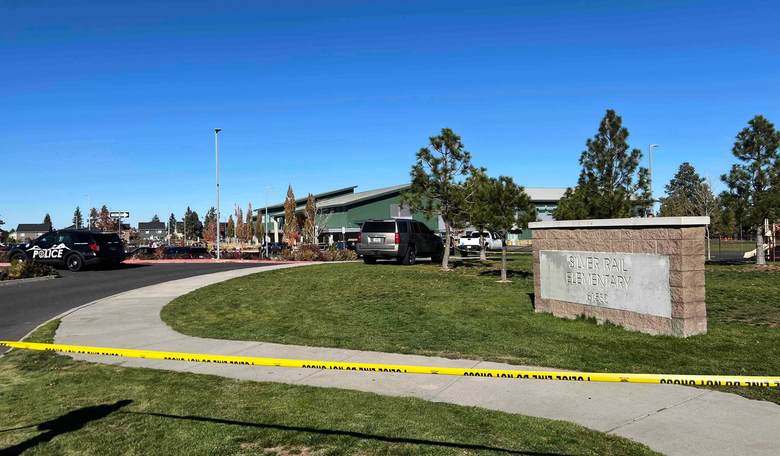
Kaylub Giamanco, the man who shot and killed the 16-year-old engaged in a murderous rampage at Silver Rail Elementary School in Bend, Oregon, has shied away from the press in the wake of that horrific incident.
Giamanco has now broken his silence in an interview with Oregon Public Broadcasting, and in doing so has dispelled some of the myths created by the media about him. One "expert," for instance, claimed that the "average" gun owner couldn't have responded the way Giamanco did, declaring that his actions were the result of extensive training.
Giamanco, though, says that the gun he used to stop the attack had been "collecting dust" in his truck's console.
When he saw the shooter throw the gun over the school fence before climbing it, “that’s when panic fled into my brain, and that’s when I opened my center console.”
His “heart dropped” for a second, he said, as he wondered if the .40 caliber handgun he rarely used would be there. It was. He got the magazine from a separate compartment and drove into the school parking lot while watching the shooter walk across the school grounds.
“I just was in full panic, like, ‘No, there’s children, there’s babies in there.’ I told my Siri to call 911,” he said. The dispatcher had questions for him, but he didn’t stay on the call to answer them.
“I said, ‘I’m sorry, I have to go in. People are going to die.’”
So how much experience does Giamanco have with firearms? Honestly, it sounds like he really is a fairly typical gun owner. He tells OPB that his grandfather bought him his first gun (a shotgun) when he was seven, and he would go hunting with his grandfather and even helped him teach classes on gun safety, archery, and wilderness survival.
He stopped hunting when he was about 18, and didn't pick up a firearm for years. Giamanco shared a Facebook post in 2018 that talked about shooting with a group of Iraq veterans, and he told OPB that he was introduced to the group when he was building a restaurant for an Iraq War veteran, who reintroduced him to shooting.
“He was highly decorated. He’s had multiple tours in Iraq and he is an amazing gentleman,” Giamanco said. “His platoon would come out to Bend and I built targets and walls for them.”
The veterans offered to train him on using military drill and weapons, and the experience inspired him to own guns again.
“I felt like if I didn’t have that training, I probably wouldn’t be alive today,” he told OPB.
That experience was clearly important to Giamanco and stuck with him, but he didn't speak to OPB about how often he's shot or trained in the years since. I think it's fair to say that he's knowledgeable and proficient with firearms, but nothing in the interview suggests that he's been spending every weekend at the range since he got back into shooting eight years ago.
Giamanco says he plans on teaching his two daughters how to shoot safely and responsibly, telling OPB that “It’s more dangerous to be afraid of a gun than it is to just be comfortable with one and know that they’re there to either provide you food or to provide you protection.”
He also wants to use his position to help make schools safer.
An idea has taken hold in the days since the Silver Rail shooting: a motocross race that donates all proceeds to schools for improving their safety. That could mean funding bulletproof glass on the doors, better locks, and better research to make these kids feel safe at school. He also wants school resource officers at every school.
“We have AI. We are in a world of technology right now. We have smart homes. We have smart cars. Why can’t we have smart schools?”
The shooting at Silver Rail Elementary was traumatic for everyone, including Giamanco, who struggles with not being able to save everyone in the classroom targeted by the killer. He told OPB that he wanted to "apologize for not saving their babies,” and called the unarmed teacher who fought the attacker before he stepped into the classroom a "real true hero."
Giamanco's entire interview is worth reading, and I appreciate him sharing his story.
I also hope he comes to realize that he has nothing to apologize for. He didn't the deadly circumstances for those children and teachers. He simply refused to stand by when he realized what was happening, even though he had no way of knowing whether he'd survive his attempt to stop the killer.
Kaylub Giamanco couldn't save everyone. But because he was there, because he was armed, and because he was willing to act, there are children alive today who otherwise might not be.