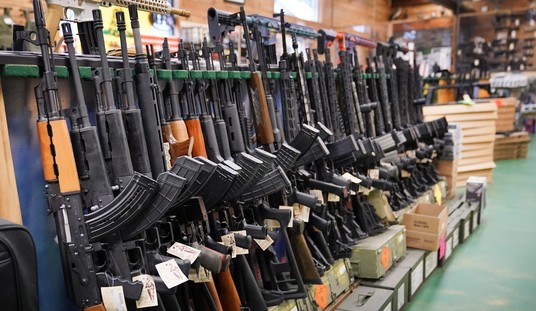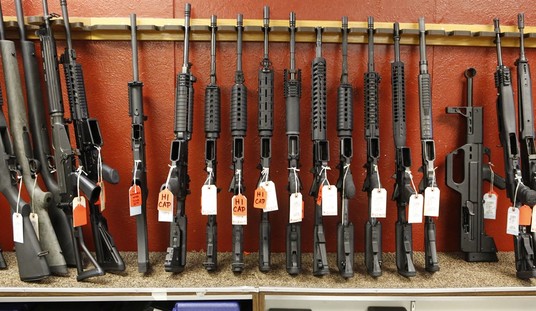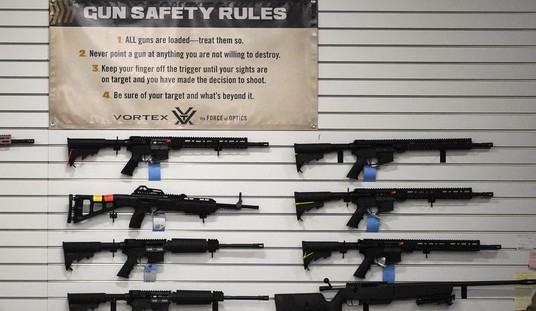

One of the things that's striking about the arguments in favor of "assault weapon" bans offered by Cook County, Illinois and the state of Connecticut is that they don't get into point-by-point arguments about why particular features turn ordinary semi-automatic centerfire rifles into "assault weapons."
Instead, the briefs basically argue that all centerfire, semi-automatic rifles can be prohibited without violating the Second Amendment. Those same arguments could be used to ban semi-automatic handguns as well, though I don't think the Supreme Court is going to be persuaded by either brief.
If the Court does nix the idea of banning semi-automatic rifles, where does the gun control lobby go from there? Handgun bans are already off the table, thanks to Heller, but we've previously discussed the likelihood of anti-gun states imposing new permit-to-purchase requirements on some or all firearms. Another possibility is that the gun control lobby will start to focus more on ammunition and not just guns.
California and New York have already taken steps in that direction by requiring background checks on all ammunition sales, but Massachusetts attorney Robert D'Alessandro has an even bolder idea: limiting the amount of ammunition gun owners can possess at any given time.
D'Alessandro laid out his scheme in the Cardozo Journal of Equal Rights and Social Justice earlier this year, though I only ran across his article a few days ago. He claims that modern limits on ammunition have historic analogues in Founding Era restrictions on gunpowder storage, and that "minimizing the number of bullets individuals can keep in their possession would limit the killings and injuries that mass shooters can inflict."
D'Alessandro proposes that individuals should be prohibited from possessing more than 20 rounds of ammunition at a time. He doesn't describe separate allowances for different calibers, different firearms, or different purposes. His discussion treats 20 rounds as a general individual possession cap.
His rationale is that 20 rounds should be enough for lawful self defense, while restricting the ammunition available to someone planning a mass shooting.
This isn't merely a proposal to restrict how much ammunition you can buy in one transaction. It's a limit on how much you can physically possess.
Under his plan, states would establish public ammunition magazines. Basically, government-operated ammunition warehouses. If you owned 1,000 rounds, you could keep 20 with you at home, but the other 980 would have to remain in an approved facility.
He also proposes allowing private businesses to serve as approved ammunition repositories, with gun stores and shooting ranges specifically mentioned as potential operators who could give owners alternatives to storing ammunition directly with the government.
D'Alessandro proposes an interconnected recordkeeping system to track how much ammunition an individual buys, owns, possesses, and uses. He points to historical recordkeeping requirements for gunpowder deposited in public magazines as justification, with modern implementation dependent on ammunition dealers and storage facilities recording transactions in a shared system.
He doesn't explain how the government would independently verify how many rounds someone has fired, privately transferred, or retained at home, nor does he discuss making your own ammunition (presumably, reloading supplies would be off-limits to the average citizen). Now, I think his idea is patently unconstitutional, but even if we want to play along for funsies, that's a glaring problem.
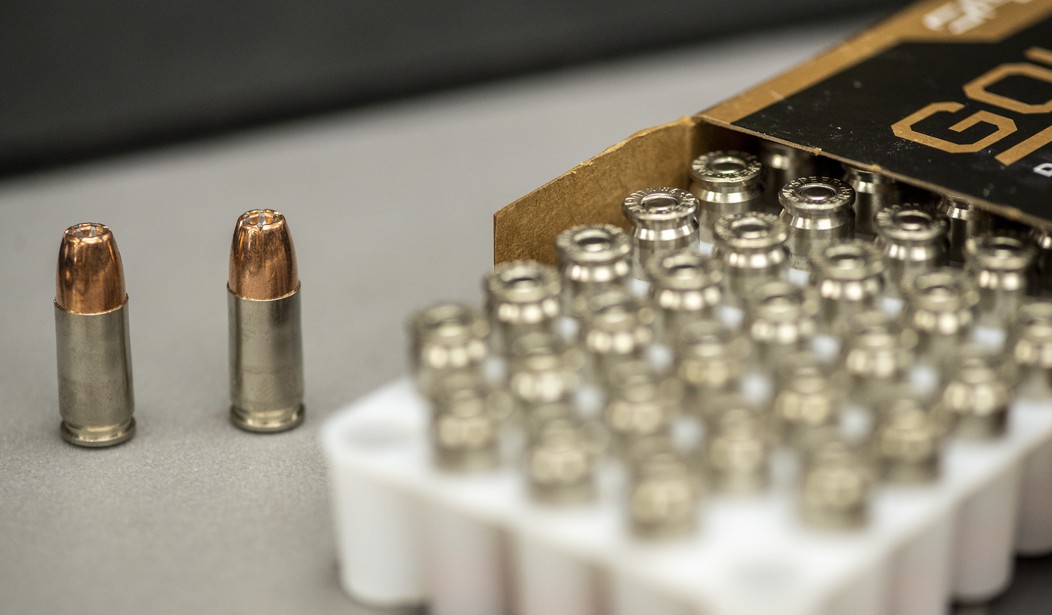
Say I purchase a box of 50 rounds of 9mm. I take 20 rounds home with me, leaving 30 rounds at the gun shop. I can shoot on my property, so I could easily burn through those 20 rounds the same afternoon I purchased them. I could also, however, squirrel them away in my home for safekeeping. What's stopping me from going back to the gun store the very next day to acquire another 20 rounds of the 30 that are being stored there?
The surveillance state required to implement D'Alessandro's plan would make Joseph Stalin blush. Just how would police enforce the 20-round cap without turning ordinary ammunition purchases into an excuse to investigate what gun owners keep inside their homes?
D'Alessandro characterizes his proposal as a public-health approach, but he also vaguely contemplates civil or criminal penalties for violating ammunition restrictions. So what happens when police discover that someone has 40 rounds instead of 20? Is that person facing a fine, the confiscation of their ammunition, or a criminal charge?
Like I said, I don't think his big idea is even remotely constitutional. D'Alessandro ignores the fact that the Second Amendment isn't solely about self-defense, but for "lawful purposes." That includes training, hunting, competitive shooting, and even plinking with family and friends. A 20-round possession limit would be a significant imposition on many lawful activities involving firearms. You couldn't even go shoot a round of sporting clays without having to run back to the government's ammunition warehouse or a local FFL to restock.
Just as importantly, while D'Alessandro says modern laws don't have to be a dead ringer to Founding Era laws to suffice as historical analogues, the gunpowder regulations he uses as the basis for his ammunition rationing scheme have both a different "why" and "how." Those Founding Era-limits on gunpowder possession were meant to protect the public from the dangers of explosions and fires, not mass shootings. And while D'Alessandro would limit us to 20 rounds of ammunition, early Americans could keep enough gunpowder on hand for hundreds if not thousands of shots.
Will gun control groups and anti-gun politicians be desperate enough to embrace D'Alessandro's insane plan if and when the Supreme Court strikes down bans on commonly-owned firearms? I doubt it. But I wouldn't be surprised to see some less extreme version of his proposal emerge if the Court takes bans on commonly owned firearms off the table. The gun control lobby isn't going to abandon its efforts to restrict the right to keep and bear arms just because the Supreme Court closes one avenue of attack. And if they can't ban the guns Americans own, you can bet they'll keep looking for ways to make those guns harder to use.