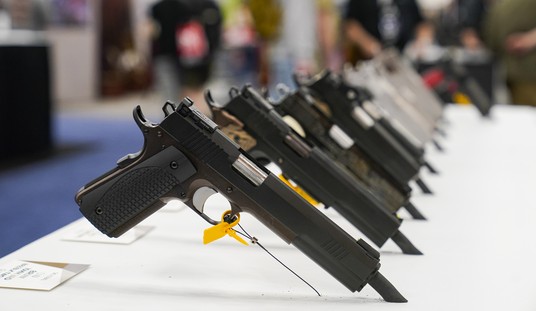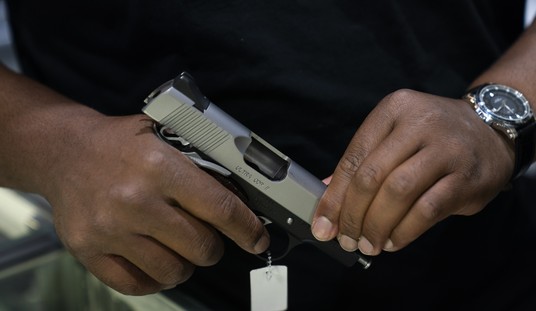
There are somewhere between 80 million and 100 million gun owners in the United States, and between them they own somewhere around 500 million firearms. Those are daunting numbers for gun prohibitionists, and at The Hill, attorney Eric de Moya argues that with mass confiscation off the table, at least from a logistical standpoint, the gun control lobby is fighting a losing game and would be better off moving on "to what can actually be done, such as encouraging gun safety training."
I appreciate de Moya's views, and I agree with him that, from a practical perspective, an Australian-style compensated confiscation scheme would be unworkable in the United States. But I've covered the fight for our right to keep and bear arms long enough to know that the gun control lobby doesn't need mass confiscation to win. They just need to make it untenable to exercise our Second Amendment rights.
Even among gun control activists, the idea of outlawing all guns isn't exactly mainstream. The modern gun control movement was birthed on the proposition of a nationwide ban on handguns, but even in the glory days of the gun ban movement, activists were careful to note that they weren't calling for prohibitions on guns that were suitable for hunting. Today the prohibitionist movement has shifted towards centerfire semi-automatic rifles and striker-fired pistols, but the anti-gun movement still argues that even with those bans in place there are still plenty of other guns for Americans to keep and bear.
The Supreme Court is likely going to declare bans on so-called assault weapons unconstitutional, and I expect they'll do the same for the bans on Glocks and other striker-fired pistols when and if they grant cert to a lawsuit challenging one of the state-level prohibitions. The gun control lobby isn't just going to give up, or even adopt a posture of encouraging gun safety training. Michael Bloomberg has billions of dollars at his disposal. If he was interested in that, he could build a publicly accessible range in every state and staff it with instructors offering subsidized training at no cost to gun owners.
We're more likely to see Elon Musk get a vasectomy than Michael Bloomberg donate a dime to promoting actual gun training. It's just not going to happen.
The fundamental premise of the gun control movement is that more guns makes us less safe, and if outright bans and confiscation are pipe dreams, then the strategy shifts to raising the barriers to gun ownership. We see this happening in a variety of ways; sky-high application fees for concealed carry licenses, training mandates that require would-be gun owners to fork over hundreds of dollars and give up 16 hours or more of their time, live-fire testing where new gun owners are expected to hit targets well beyond what is needed in typical self-defense situations, "suitability" laws that allow for applications to be denied based on a police chief's gut feeling, and more.
Anti-gunners have proposed (and in some cases, implemented) taxes on firearms and ammunition, insurance mandates for gun owners, fees for keeping a gun in the home, and other Second Amendment "sin" taxes.
Those willing and able to persevere and obtain a permit to own or a license to carry are then confronted with a plethora of places where they're not allowed to bring their firearms, as well as storage requirements that make it almost impossible to have a firearm at the ready for self-defense if needed.
Many of these mandates come with criminal penalties, some misdemeanors and others felonies, but all designed to have a chilling effect on gun ownership.
The gun control lobby would love to ban gun ownership outright, but activists know that's a pipe dream at the moment. Right now their goal is to get the number of legal gun owners to go down, to restrict what arms they can own and where they can be carried, and to denormalize gun ownership throughout polite society.
Everything de Moya said about the impracticality and impossibility of mass gun confiscation is true. It's also completely irrelevant to gun control groups like Brady, Giffords, and Everytown. They're willing to play the long game when it comes to destroying the right to keep and bear arms, and they're able to easily move their goalposts when needed. The fight over our Second Amendment rights in the years ahead isn't likely to be centered around gun bans. Instead, the ideological battles that will be fought in the legislative, legal, and cultural arenas will revolve around webs of red tape, onerous fees, and vaguely-written laws designed to make it difficult to own and carry guns rather than prohibit ownership outright.