
The Supreme Court has put a challenge to many of Maryland's "gun-free zones" on its schedule for this Friday's conference, and maybe this time the justices will actually keep it there. Novotny v. Moore would have huge implications if the Court grants cert, but first the members of the Court actually have to discuss it.
For reasons unknown, the justices have scheduled Novotny for conference three times since late September, only to postpone its consideration each time. That's different from relisting a case, which happens when the justices discuss a petition at one conference but decide to revisit it at another. The challenge to Maryland's "assault weapon" ban, for example, was relisted more than a dozen times before SCOTUS granted cert earlier this year. Rescheduling, by contrast, means the justices haven't formally considered the petition at conference at all.
So why reschedule a case? SCOTUS tells when that happens, but never provides an official explanation. It may be that one or more justices want more time to look at the petition and the reply. It could be that the Court is waiting for a similar case to reach its doorstep so the two lawsuits can be consolidated if cert is granted. And it could be as simple as managing the number of cases discussed in a particular conference.
The interesting thing about Novotny is the repeated rescheduling. One postponement is unremarkable. Three, though, raise questions about what's happening behind the scenes.
I don't think we can or should assume that if Novotny is actually discussed in conference this Friday, a majority of justices are ready to grant cert. It would be a natural follow up to the Wolford decision that struck down Hawaii's attempt to ban lawful carry on all private property open to the public, but that doesn't mean that a majority of the Court is ready to address "gun-free zones" no matter how much they need to do so.
There's a narrower question awaiting the Court later this term in Christian v. James, which argues New York's ban on lawful carry in all public parks violates the Second Amendment. Novotny contains a challenge to Maryland's ban on lawful carry in state parks and forests, but doesn't take on bans on carrying in urban parks.
Novotny, however, does challenge Maryland's ban on carrying on public transportation, within 1,000 feet of a public demonstration, healthcare facilities, places of amusement, establishments serving alcohol, government buildings, and school grounds.
The Fourth Circuit upheld all of those restrictions (while striking down Maryland's version of the "vampire rule" banning carry on private property open to the public) using a combination of three arguments. The appellate court declared that carrying firearms in "crowded locations,” or at “places where vulnerable populations may be found” fits within the history of gun ownership in this country. When those broad criteria still couldn't be met, the Court held that there were Reconstruction Era laws that were "dead ringers," though as the petitioners pointed out in their cert petition, some of those laws came post-Reconstruction and were only in place in a handful of states.
Maryland begins with the Statute of Northampton, but this Court has held that the Statute, and its later American analogues, forbade only terrifying carry, not peaceable carry, in places frequented by the general public. From there, it jumps to an 1817 New Orleans ordinance prohibiting firearms in public ballrooms. It claims that this local ordinance was similar to nine state and territorial restrictions that likewise banned arms in ballrooms, or places where people assembled for a variety of social or educational purposes. See id. (citing laws from the New Mexico territory (1853), Tennessee (1869), Texas (1870), Georgia (1870), Missouri (1874), Arizona territory (1889), Oklahoma territory (1890), Idaho (1901), and Montana (1903)).
These late-in-time laws are insufficient to establish a tradition of regulation that would help Maryland. Several are territorial restrictions, which Bruen discounted as “transitory.” There are zero state laws that predate adoption of the Fourteenth Amendment and just four that precede the end of Reconstruction. Those four were all adopted by former slave states in the wake of the Civil War. And even if those flaws are ignored, there were 45 states in the Union by 1900, so at best the pre-20th century laws represent a distinctly minority rule. That is not sufficient to establish a “widespread, well-known, and widely accepted” tradition.
The Fourth Circuit has been absolutely terrible on Second Amendment issues, and as a resident of Virginia (where the Fourth Circuit holds sway) I would love to see SCOTUS grant cert to Novotny and declare the appellate court's overly expansive view of what places are "sensitive" enough to ban the exercise of a fundamental civil right null and void.
But this isn't just about Maryland, or even the Fourth Circuit. If the government can declare an entire category of public places off-limits to lawful carry simply because crowds gather there, children might be present, or the property is owned by the government, then the Second Amendment's protection of the right to bear arms becomes virtually meaningless. After all, where in this country are we not likely to encounter other people, including children?
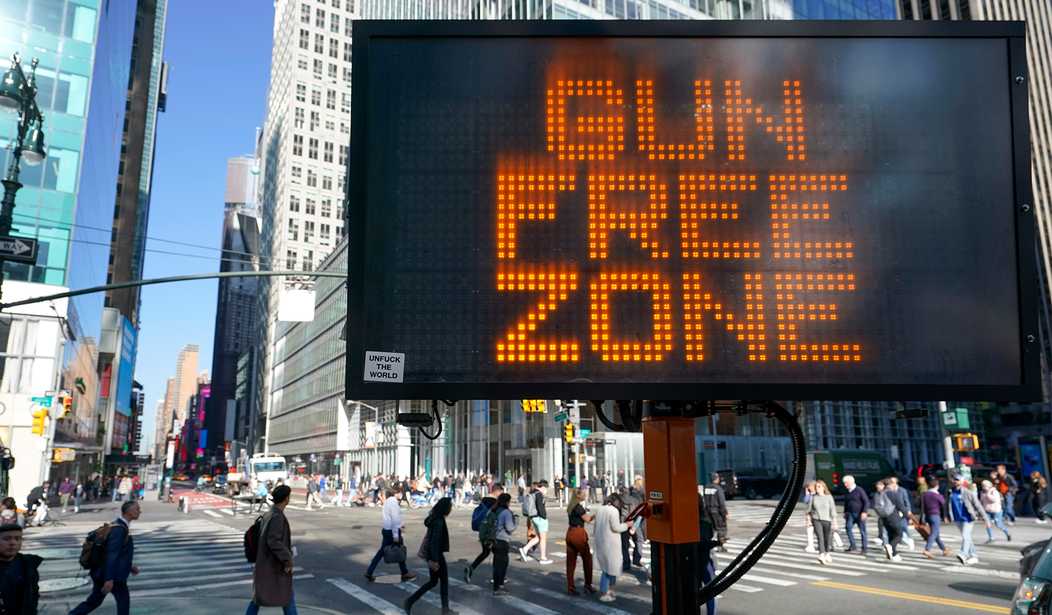
The Supreme Court warned about this kind of reasoning in Bruen, when it rejected the idea that Manhattan could be designated a sensitive place simply because it's crowded and generally protected by law enforcement. The Fourth Circuit, though, has essentially embraced that rationale, along with a handful of historical restrictions that were neither widespread nor representative of a national tradition. If that's enough to justify Maryland's sweeping prohibitions, it's hard to imagine what limits remain on a state legislature's ability to declare virtually any public location a gun-free zone.
Maybe the justices are preparing to address that problem. Maybe they're waiting for Christian or another case to present a narrower question. Or maybe Friday will come and go with Novotny once again pushed to a later conference. We won't know until next Monday.
What we do know is that the Supreme Court's sensitive-places doctrine is badly in need of clarification. The longer the justices wait to provide it, the more opportunities hostile lower courts have uphold sweeping prohibitions on the exercise of a fundamental right.
The justices have already warned against turning entire cities into gun-free zones. It's long past time they made clear that states can't accomplish the same thing one "sensitive place" at a time.