
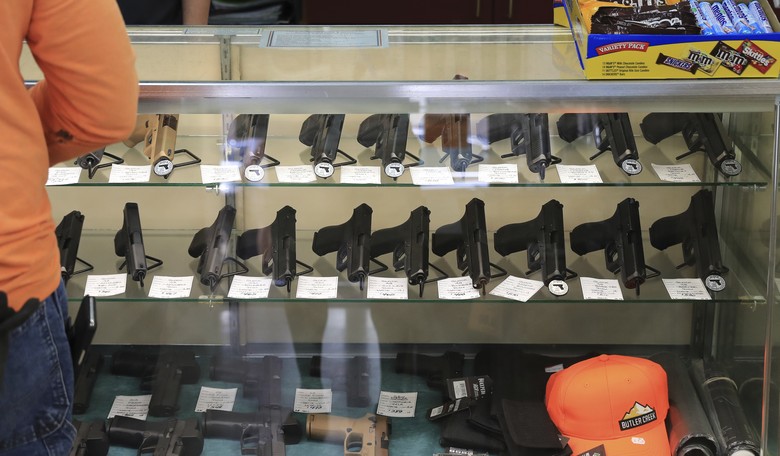
When is a victory for the Second Amendment not quite a victory? When the federal government agrees that a gun control law is unconstitutional and promises not to enforce it, but leaves the law itself on the books and potentially just one presidential election away from being enforced once again.
That's the predicament facing the Firearms Policy Coalition, Second Amendment Foundation, and Louisiana Shooting Association in the case Reese v. ATF, where the Trump administration's decision to stop enforcing the federal prohibition on handgun sales to adults under 21 has created an odd legal battle.
The DOJ contends that its change in policy has rendered the lawsuit moot, but FPC isn't taking yes for an answer. In a new brief filed Wednesday, the group argues that a promise from the executive branch is no substitute for a binding court order, especially when that promise could be broken by the next administration to occupy the White House.
From the brief:
The Government’s theory of mootness does not satisfy voluntary cessation doctrine. According to that doctrine, “[m]ere voluntary cessation of allegedly illegal conduct does not moot a case; if it did, the courts would be compelled to leave the defendant free to return to his old ways.” “The test for mootness in cases such as this is a stringent one.” “[A] defendant’s voluntary conduct moots a case only if ‘it is absolutely clear that the allegedly wrongful behavior could not reasonably be expected to recur.’”
The Fifth Circuit has already concluded that the federal law banning commercial handgun sales to adults under the age of 21 violates the Second Amendment, but a district court judge limited the scope of injunctive relief only to individuals who were members of the plaintiff organizations when the lawsuit was filed, and only those who reside within the Fifth Circuit.
DOJ's announced nonenforcement policy is nationwide in scope, but FPC argues in its brief that the government hasn't even demonstrated that ATF has implemented it. More importantly, that policy could be rescinded by a future administration hostile to the Second Amendment. FPC and its fellow plaintiffs understandably want an injunction that protects all of their eligible members, including those who joined after the lawsuit was filed. To get that relief, they need the Fifth Circuit to reject the district court's narrow approach. If the appellate court agrees with DOJ that the case is moot, the plaintiffs would lose their opportunity to secure that broader protection in this appeal.
The Justice Department definitely needs to provide evidence that the ATF has implemented its policy, but even that isn't enough to ensure that the plaintiffs will continue to receive the relief they deserve. Executive branch promises aren't a substitute for binding judicial decisions, and what's constitutional shouldn't depend on who's occupying the White House.
I understand why DOJ would want to limit the scope of injunctive relief as much as possible; not just in this case but more broadly. A good outcome for FPC and its partners could also lead to broader injunctions for progressive groups that are more hostile to the Trump administration in other areas of the law. But as much as it might want a narrow injunction, I don't the agency is entitled to one. In fact, I don't think the interests of justice would be served by letting the district court's decision stand, and I hope that the Fifth Circuit finds merit in the argument raised by the Reese plaintiffs.