[Editor's Note: The following article was co-authored by Gabor Nemeth and Arthur Schaper]
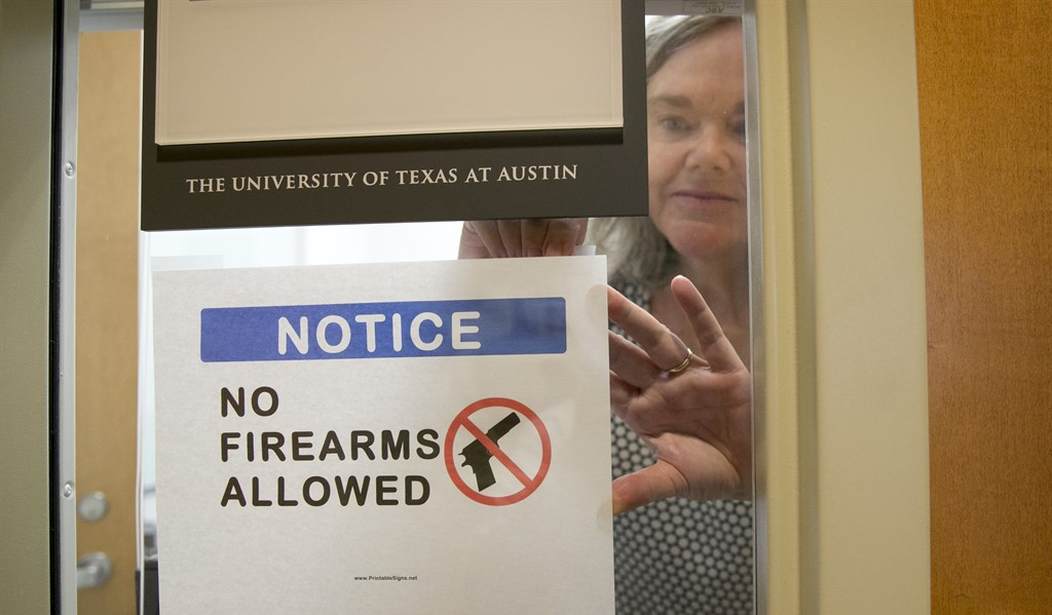
In recent years, the question of whether college students should be allowed to carry firearms on campus has sparked heated debate across the country. Opponents argue that guns and higher education don’t mix, that young people are impulsive, that firearms would increase accidents, and that academic environments should be sanctuaries free of lethal weapons. Proponents counter that campuses are not immune to crime and that denying adults their right to self-defense leaves them vulnerable. Both sides raise valid concerns, but the national conversation often misses a critical point: with training, vetting, and oversight, campus carry is not only feasible but essential to respecting students as citizens rather than wards of the state.
Colleges like to present themselves as ‘safe spaces’ insulated from danger. Unfortunately, the data tells a different story. According to RAINN, 13% of all college students experience attempted or completed sexual assault during their time at school, with rates rising to 26.4% for undergraduate women. Universities often respond with increased security patrols or counseling resources. While valuable, these measures do not change the fact that police response times average 7–10 minutes in urban areas, often stretching to 10–15 minutes in high-demand cities. For a student walking home alone at midnight, those minutes can feel like a lifetime.
Critics frequently claim that defensive gun uses (DGUs) are vanishingly rare. Yet the truth is more complicated. A 2021 National Firearms Survey estimated that 31.1% of gun owners have used a firearm defensively at least once in their lives. The same survey found that there were 1.67 million incidents of defensive gun use per year, with 81.9% involving no shots fired. Even accepting the lower estimates, DGUs number in the hundreds of thousands annually. At the same time, a 2025 Rutgers study emphasized that DGUs are far less common than exposure to gun violence, finding that fewer than 1% of gun owners report a defensive use in a given year, compared to 11.6% who report exposure to gun-related harm. The key point is that most incidents statistically end without a shot being fired. That deterrent effect could be invaluable on campuses, where many safety concerns involve harassment, stalking, or attempted assault.
College students can vote, marry, drive, pay taxes, and serve in the military. They should enjoy the right to carry a firearm. Survivors of stalking, sexual assault, or targeted harassment stand to gain the most from lawful carry, too. For everyone, a firearm is not about ideology; it is about dignity and survival. A 2025 peer-reviewed study in Injury Epidemiology analyzed crime rates before and after campus carry laws were enacted. The researchers found no significant increases in reported campus crime. States like Texas and Utah already allow some form of campus carry. Universities remain functioning, and crime rates on campus have not spiked.
Universities pride themselves on cultivating independent thinkers, yet their policies often reduce students to passive subjects who must wait for help rather than take responsibility for their own safety. Most criminals prefer soft targets. A firearm equalizes that power disparity. A rights-respecting, data-driven approach to campus carry offers a path that empowers students, equalizes power dynamics, and treats young adults as the full citizens they already are.
Some institutions of higher education fear liability claims. In such instances, universities could partner with private insurers to lower liability or health insurance premiums for students/faculty who complete certified firearm safety and de-escalation training, similar to how for drivers who take a defensive driving course get auto insurance discounts. Firearms Legal Protection (FLP) offers discounted rates for completing NRA/USCCA safety courses within 12 months, available in 40+ states. Similarly, the NRA's partnership with Lockton Affinity provides liability coverage as low as $50/year for trained members. Auto discounts (5–20%) for defensive courses are common, with studies showing 10–40% accident reductions. Universities could provide an official credential (digital badge, ID card endorsement) for those who complete voluntary training that signals competence and responsibility to peers, campus security, and law enforcement. The universities would not sell insurance or mandate participation. Providers set terms, and credentials remain revocable under the provider.
Campus carry will not prevent every tragedy, and it can be implemented with safeguards. However, current research does not suggest that campus carry inevitably increases violence, but rather that such defensive gun use often resolves threats peacefully. Furthermore, restrictive policies do not guarantee safety, and carefully designed laws can mitigate risks. By leveraging insurance, recognition, and privileges, voluntary training with incentives offers a middle path between coercive mandates and laissez-faire inaction. College students deserve more than slogans about “safe spaces.” They deserve the means to defend themselves quietly, lawfully, and effectively.
Works Cited
Campus Safety Magazine. (2024, April 26). An updated list of states that allow campus carry. https://www.campussafetymagazine.com/news/list-of-states-that-allow-concealed-carry-guns-on-campus/40287/
Centers for Disease Control and Prevention. (2025). Injury prevention & control: Firearm violence prevention. https://www.cdc.gov/firearms
Crifasi, C. K., et al. (2025). Defensive gun use and exposure to gun violence in the United States. Injury Epidemiology, 12(3), 201–212.
English, W. (2022). 2021 National Firearms Survey: Updated analysis including types of defensive gun uses. SSRN. https://doi.org/10.2139/ssrn.4109494
Firearms Legal Protection. (n.d.). Discounted pricing landing page. https://firearmslegal.com/special/
Giffords Law Center. (n.d.). Concealed carry. https://giffords.org/lawcenter/gun-laws/policy-areas/guns-in-public/concealed-carry/
Kleck, G., & Gertz, M. (1995). Armed resistance to crime: The prevalence and nature of self-defense with a gun. Journal of Criminal Law and Criminology, 86(1), 150–187. https://doi.org/10.2307/1143798
Langton, L. (2015). Campus law enforcement, 2011–12. Bureau of Justice Statistics. https://bjs.ojp.gov/content/pub/pdf/cle1112.pdf
Lockton Affinity Outdoor. (n.d.). NRA member benefits: Home. https://benefits.nra.org/
New York Department of Motor Vehicles. (n.d.). Point and insurance reduction program (PIRP). https://dmv.ny.gov/points-and-penalties/point-and-insurance-reduction-program
Rape, Abuse & Incest National Network. (2025). Campus sexual violence: Statistics. https://www.rainn.org/statistics/campus-sexual-violence
Rutgers Health. (2025, March 14). Defensive firearm use is far less common than exposure to gun violence. https://www.rutgers.edu/news/defensive-firearm-use-far-less-common-exposure-gun-violence
Rutgers Health. (2025). Lifetime and past-year defensive gun use. PMC. https://www.ncbi.nlm.nih.gov/pmc/articles/PMC11909608/
Rutgers University Gun Violence Research Center. (2025). Defensive gun use in the U.S.: Prevalence and implications. Rutgers University.
Siegel, M., et al. (2025). The impact of campus carry laws on reported crime at U.S. colleges. Injury Epidemiology, 12(1), 45–56. https://doi.org/10.1186/s40621-025-00512-0
U.S. Department of Justice. (2024). Campus safety and security data analysis cutting tool. Office of Postsecondary Education. https://ope.ed.gov/campussafety/
Wright, J. D., & Rossi, P. H. (2008). Armed and considered dangerous: A survey of felons and their firearms (Expanded ed.). Aldine de Gruyter.
Editor’s Note: The radical Left will stop at nothing to enact their radical gun control agenda and strip us of our Second Amendment rights.
Help us continue to report on and expose the Democrats’ gun control policies and schemes. Join Bearing Arms VIP and use promo code FIGHT to receive 60% off your membership.








Join the conversation as a VIP Member