








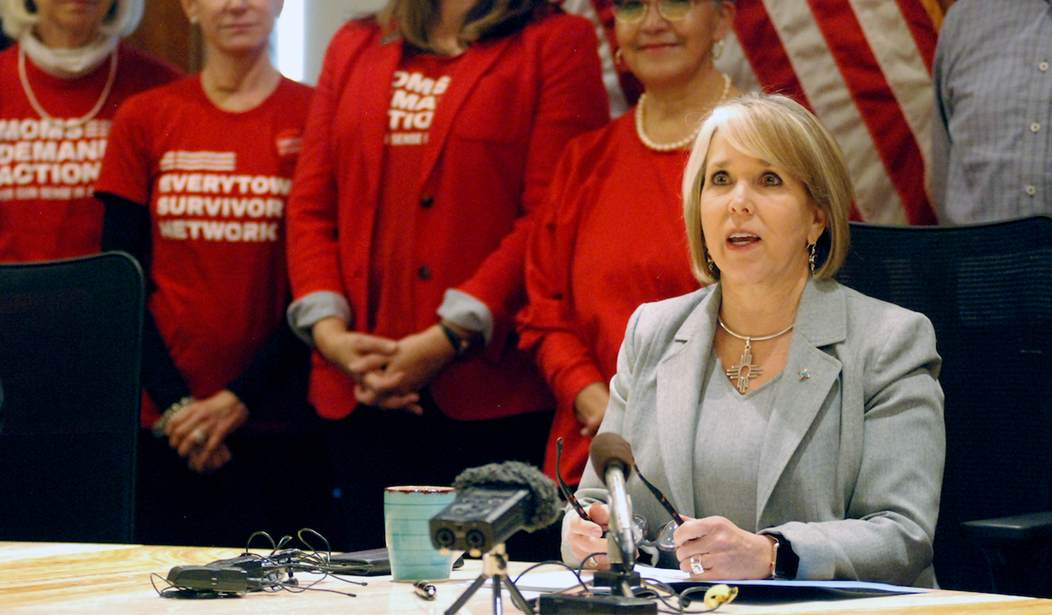
In the shadow of Albuquerque's bustling gun shops, where owners like Arnie Gallegos of ABQ Guns meticulously scrutinize every transaction, New Mexico lawmakers are pushing yet another layer of firearm restrictions. Gallegos, a 15-year veteran at ABQ Guns, embodies the diligence already in place: He flags "unusual patterns" like weekly AR-15 buys, rejecting suspicious customers outright to safeguard his federal license. "If they can't explain it convincingly, we're done," he says, echoing practices that could vanish under fear of retroactive prosecution. Yet leave it to anti-gun politicians to demand more infringements.
The latest anti-2A proposed bill, sponsored by Rep. Andrea Romero (D-Santa Fe) and Sen. Heather Berghmans (D-Albuquerque), would require enhanced training and state licensing akin to that for bartenders or cannabis sellers, mandatory inventory tracking, and employee protocols to flag "problematic" customers. With the fifth-highest homicide rate and a 35 percent surge in firearm homicides from 2019 to 2023 (reaching 11.1 per 100,000 residents), the fifth-highest in the nation, New Mexico's Democrat dominated government continues to blame the firearm, not the shooter.
Despite several gun control laws New Mexico has passed in the last three years alone, violent crime with guns has not been reduced; if anything, it has increased. Rather than focusing on stricter punishment for criminals, like its predecessors, this proposed legislation fixates on law-abiding dealers and buyers while ignoring how criminals actually arm themselves.
To understand the futility of this bill, we can look at New Mexico's track record. In 2017, Democrats championed universal background checks (UBC) for all gun sales, promising to block criminals from acquiring firearms. The law mandated checks through licensed dealers for private transfers, closing the so-called "gun show loophole."
Lawmakers hailed it as a game-changer, yet a Johns Hopkins study analyzing states like Colorado and Washington, which enacted similar UBCs around the same time, found no meaningful drop in firearm homicides. Additionally, even New Mexico's recent state law requiring a seven-day waiting period for firearm purchases has proven to be unsuccessful at reducing violent crimes committed with guns.
In 2023, the state's "straw purchase ban," which criminalized buying guns for prohibited persons as a fourth-degree felony, was lauded by Governor Michelle Lujan Grisham as a direct assault on trafficking, and empowered state enforcement alongside federal rules. But preliminary data show no reversal in trends. By 2024, gun-related deaths hit an estimated 563, with homicides comprising nearly 40 percent—a stark reminder that new laws haven't stemmed the tide.
Now, in light of the abject failures of previous legislation, lawmakers are targeting the legal firearms dealers themselves. The proposed bill would mandate "reasonable controls" like security audits and straw-purchase screenings, with criminal penalties for non-compliance if a sold gun later surfaces in a crime. This echoes "dealer accountability" laws in states like New York and California, which impose civil or criminal liability for negligent sales fueling trafficking.
However, critics, including legal scholars, denounce it as an "end run" around the federal Protection of Lawful Commerce in Arms Act (PLCAA), which shields manufacturers and dealers from suits over criminal misuse of lawful products. Dealers can already face ATF revocation for Form 4473 errors, but it bars blanket liability for what buyers do post-sale. New Mexico's push risks subverting congressional intent, inviting lawsuits that tie up courts without addressing root causes of violent crimes committed with firearms.
At its core, this legislation is useless, as it polices the 99 percent of legal transactions while criminals continue to operate in the shadows. ATF data reveals that only about 20 percent of guns used in crimes are traced to suspect initial sales; the rest stem from theft (over 380,000 firearms stolen annually nationwide), black-market deals, or interstate smuggling. But New Mexico's violence involving firearms isn't a supply problem. It's a problem with demand; one rooted in gang activity, a lax legal system, and underfunded enforcement.
New Mexico politicians should focus on the enforcement of current straw-purchase statutes by tracing and prosecuting traffickers rather than penalizing FFLs who act in good faith. As with prior legislation, this bill projects virtue rather than delivering any real solutions to violent crimes committed with guns.
As a staunch supporter of the 2A, New Mexico Representative Stefani Lord (R-22) states what her counterparts across the aisle can never seem to understand. "Gun store owners are already doing their due diligence to avoid selling to buyers they may suspect will resell the guns illegally. There is also a question on the ATF form that asks if the firearm is for someone else. I guess the Dems want FFLs to hire fortune tellers for every purchase now."
New Mexico's violent crime epidemic demands targeting perpetrators, not partners in lawful commerce. Until lawmakers pivot from punishing the compliant to pursuing the culpable, violent crime with guns will persist…another round fired into the wind.
Editor’s Note: The fight for our Second Amendment rights is never-ending, but we are resolute in defending and strengthening that right wherever possible.
Help us continue those efforts, and to provide in depth coverage of 2A advocates (and their opponents) around the country. Join Bearing Arms VIP and use promo code FIGHT to get 60% off your VIP membership.

Join the Conversation
VIP members get the ability to comment on articles.