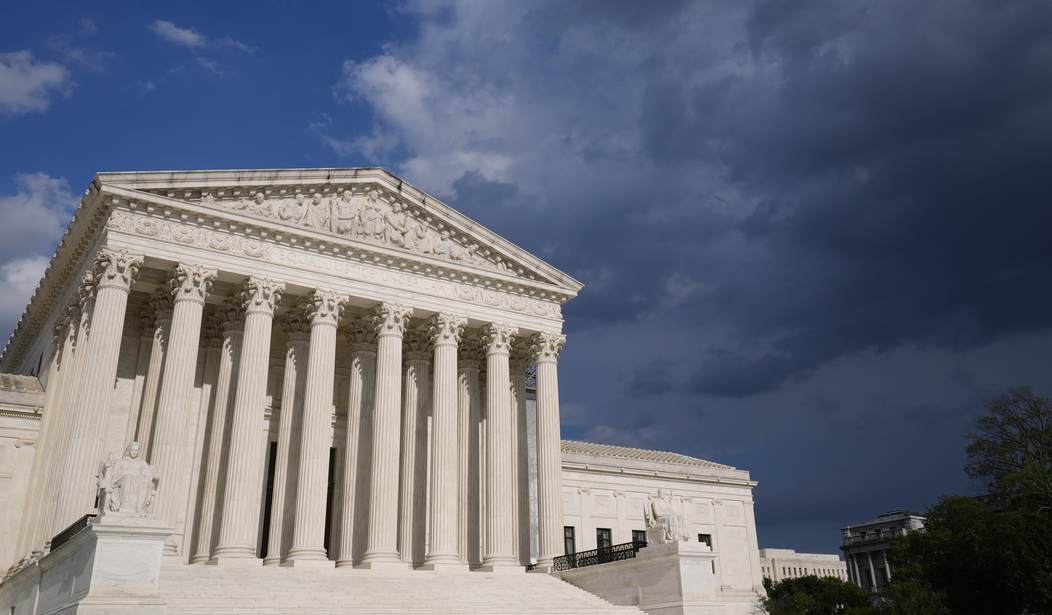
The Supreme Court may soon have an opportunity to answer one of the most consequential questions left unresolved by its modern Second Amendment cases: Can the government permanently strip someone of the right to possess a firearm simply because that person was once convicted of a felony, even when that felony wasn’t violent?
That question sits at the center of United States v. Hembree, a case currently pending before the Supreme Court. Charles Hembree was convicted in Mississippi in 2018 of simple possession of methamphetamine. It was a felony, but it wasn’t a violent crime. Four years later, Hembree was charged under 18 U.S.C. §922(g)(1), the federal law making it illegal for anyone convicted of a crime punishable by more than one year in prison to possess a firearm.
Hembree challenged the law as it applied to him and The Fifth Circuit Court of Appeals ultimately agreed. In January, the court reversed his federal firearm conviction, concluding that the government had failed to prove the historical justification necessary to permanently disarm Hembree based on his drug-possession conviction. Now the Justice Department is asking the Supreme Court to intervene. The Court has not yet agreed to hear the case; however, Hembree’s petition has been distributed for the justices’ September 28 conference, where they could grant review, deny it, or take another procedural route.
But Hembree represents a much larger constitutional dispute that is becoming increasingly difficult for the Supreme Court to avoid. Federal law doesn’t distinguish between someone convicted of a violent armed robbery and someone convicted of a nonviolent felony decades ago. Both can face the same lifetime federal prohibition on possessing firearms, and the federal appellate courts increasingly disagree over whether the Constitution allows that result.
The disagreement stems largely from the Supreme Court’s 2022 decision in New York State Rifle & Pistol Association v. Bruen. There, the Court made clear that when the Second Amendment’s plain text protects someone’s conduct, the government must justify its restriction by showing that it is consistent with America’s historical tradition of firearm regulation.That raised an obvious question about §922(g)(1):What historical tradition supports automatically and permanently disarming every person labeled a felon?
The answer has divided the federal courts. Some appellate courts have upheld categorical prohibitions on firearm possession by felons. Others have recognized that individuals may bring constitutional challenges based on the offense for which they were convicted. Hembree falls into the latter category, and this is where another Supreme Court case becomes particularly important: United States v. Rahimi.
I wrote about the Rahimi case in a 2023 Wall Street Journal op-ed titled “How to Handle Domestic Violence and Gun Rights.” As a domestic-violence survivor, I certainly wasn’t defending Zackey Rahimi’s behavior since according to the record before the Court, Rahimi was exactly the kind of violent individual society has every legitimate reason to fear. My concern was the constitutional principle involved. Government cannot treat constitutional rights as privileges that disappear whenever officials decide someone might be dangerous. Due process matters, and laws intended to protect victims shouldn’t become substitutes for prosecuting and incapacitating people who commit violent crimes.
The Supreme Court ultimately upheld the federal restriction at issue in Rahimi, but the way it did so matters enormously to the debate now developing around felons and firearms. The Court held that when an individual has been found by a court to pose a credible threat to another person’s physical safety, that person may temporarily be disarmed consistent with the Second Amendment. Notice what sits at the center of that reasoning: dangerousness. That principle creates an important question in cases such as Hembree.
A violent criminal who continues to present a credible threat to others is one thing. A person who committed a nonviolent felony years ago is another. The government may have powerful historical and constitutional arguments for disarming people who pose an actual danger to society. It is much harder to explain why every felony conviction, regardless of the crime, circumstances, passage of time, rehabilitation or present dangerousness, should automatically result in the permanent loss of a fundamental constitutional right. That doesn’t mean every convicted felon should automatically regain firearm rights. It means the government should justify taking those rights away.
Interestingly, the executive branch itself is beginning to acknowledge the distinction. The Justice Department recently completed a new federal firearm-rights restoration process under 18 U.S.C. §925(c). Individuals prohibited under federal law will be able to apply for restoration, while DOJ says there will be strong presumptions against relief for violent felons, sex offenders and others who present continuing public-safety risks. In other words, even the federal government is moving toward a system that asks a more individualized question: Is this person dangerous? That is vastly different from saying the word “felon” ends the constitutional inquiry.
The Supreme Court’s recent Second Amendment decisions have repeatedly forced courts to confront an uncomfortable reality: constitutional rights don’t become less constitutional simply because the person asserting them is unpopular. The First Amendment protects objectionable speakers. The Fourth Amendment protects people suspected of crimes. The Fifth and Sixth Amendments protect criminal defendants. The Second Amendment cannot be treated differently simply because exercising it involves firearms. Hembree therefore isn’t about whether drug possession is good, whether convicted criminals deserve sympathy, or whether society should ignore genuinely dangerous people. It is about something much more fundamental.
When may the government permanently extinguish a constitutional right? Rahimi demonstrated that the Constitution allows government to disarm someone judicially determined to pose a credible threat to another person. Hembree presents the other side of that principle. If dangerousness can justify disarmament, should the absence of dangerousness matter too? The Supreme Court may soon have to answer that question.
Editor’s Note: The radical Left will stop at nothing to enact their extreme gun control agenda and strip us of our Second Amendment rights.
Help us continue to report on and expose the Democrats’ gun-grabbing schemes. Join Bearing Arms VIP and use promo code FIGHT to receive 60% off your membership.











Join the conversation as a VIP Member