While the big players in the New York City media scene usually beat the typical drum of guns being bad, of gun control being good, and gun culture being responsible for all the ills of the world, it's easy to see that as universal.
And I'm not sure it's not. But it is nice to see it when someone actually gets it right.
It doesn't happen very often, unfortunately. The media doesn't seem to be that way, especially in the Big Apple. They have an ax to grind, and they're going to grind it until we lose our right to keep and bear arms.
Yet it did happen at least once, as we can see in this piece from a site called Vital City.
Gangs, drug-selling crews and other criminal organizations generate a disproportionate amount of gun violence in U.S. cities. While these groups drive much of the shooting and homicide plaguing urban neighborhoods, most people (including many policymakers) don't understand how these dangerous actors actually acquire their weapons.
City-level studies reveal the stark concentration of gun violence among criminal networks. Gang- and group-involved conflicts drive more than one-third of homicides in Chicago, half in Los Angeles' Boyle Heights area and nearly two-thirds in Oakland. A study of more than 20 cities found that less than 1% of a city's population was involved in gangs, drug crews and other criminally active groups, but they were connected to over 50% of shootings and homicides.
This concentration creates both a challenge and an opportunity. While a small number of high-risk individuals drive most gun violence, it also means that disrupting their access to firearms could have outsized effects on urban safety.
Contrary to popular belief, gang members, drug dealers and other serious criminals generally do not obtain their guns by purchasing them from licensed dealers. Instead, they acquire weapons through informal transactions in underground markets supplied by guns diverted from legal commerce.
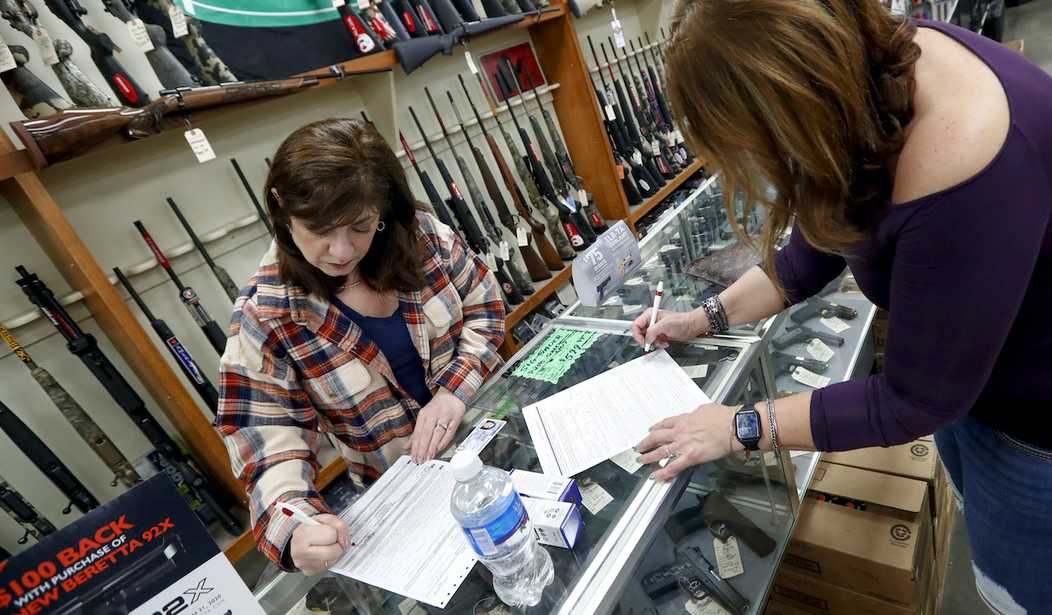
A 2016 federal survey of state prison inmates found that fewer than 10% purchased their last firearm at a gun store or pawnshop. Instead, gun criminals tend to acquire their firearms from family members, friends, acquaintances and connections to the underground economy such as fences, drug dealers and other "street" sources.
This reality points to a crucial fact: The primary challenge isn't stopping criminals from buying guns legally — federal law already prohibits most of them from doing so. The real challenge is stopping the flow of weapons from legal markets into illegal ones.
The writer, Anthony Braga, a criminologist at the University of Pennsylvania--which suggests his opinion on guns isn't like ours--but most of what I saw in that piece was information that I'm already familiar with and know to be accurate.
The issue with guns in criminal hands has nothing to do with gun control laws, as Braga noted above. It's criminals being criminals, and even then, it's just a small percentage of the entire population that causes the problems.
Gun control is, generally, a group punishment for the loud bully in the back of the room who isn't going to do it anyway.
The black market guns' mere existence proves that gun control will never be as effective as anti-gunners want us to believe. Criminals aren't buying guns at the gun store from licensed dealers who simply don't care. That's not how it works.
But people should be forgiven for thinking otherwise. After all, how much of the anti-gun groups' efforts have been directed toward licensed gun dealers? Didn't Mexico's entire lawsuit against the gun industry hinge on gun manufacturers supposedly knowing who the problem gun dealers were and still selling guns to them? Isn't the implication that those dealers are intentionally selling guns to criminals rather than literally any other explanation?
The media usually frames everything as if the gun industry is at fault.
For once, we're seeing someone out of New York City taking the time to say, "Actually, it's not. Here's what the real problem is."