While a lot of people latch onto the term "mental illness" and think those who suffer from it shouldn't be trusted with a firearm, the truth is that there's a broad spectrum of disorders that fall under that term. From mild depression to paranoid schizophrenia and a thousand points in between, not all mental illnesses are created equally.
As a New Jersey County was sharply reminded recently.
See, it's one thing if a law enforcement officer is having homicidal ideation. At a point like that, you take his gun at least until he gets an all-clear from a mental health professional. But one officer got his gun taken for something much milder, and the county paid for it.
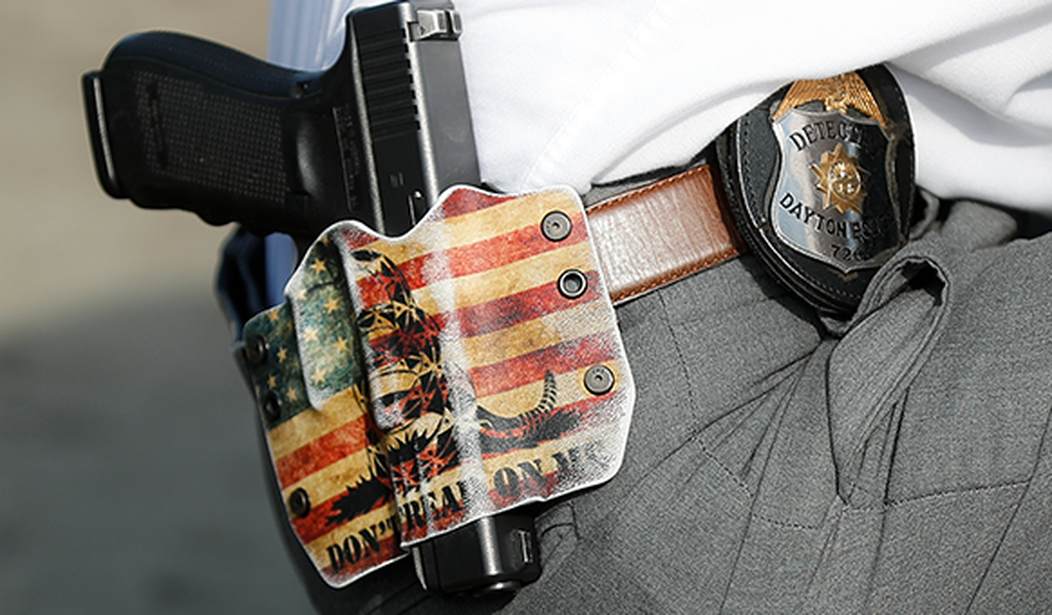
Sussex County has agreed to pay $250,000 to settle a lawsuit brought by a prosecutor’s office detective who claimed he was stripped of his gun and denied promotions after disclosing he suffers from panic attacks.
David Perez-Rueda, 47, claimed in a 2023 lawsuit against the county that he began experiencing “off-duty panic attacks and depression-related symptoms” in 2009 but kept details of his medical diagnoses private because he feared retaliation from supervisors.
Hired in 2005, Perez-Rueda previously served 11 years in the National Guard and investigated child exploitation and narcotics crimes for the prosecutor’s office, the lawsuit says.
According to his complaint, Perez-Rueda was diagnosed with multiple sclerosis and post-traumatic stress disorder, but neither condition affected his job performance.
...After disclosing his diagnoses and medication use to two supervisors the following year, he was transferred back to the High-Tech Crimes Unit to review old cases, the suit says.
Perez-Rueda objected because the assignment required him to revisit graphic images and videos of child sexual abuse. He suffered a panic attack that evening while driving to meet fellow narcotics officers but returned home safely after his symptoms subsided, according to the suit.
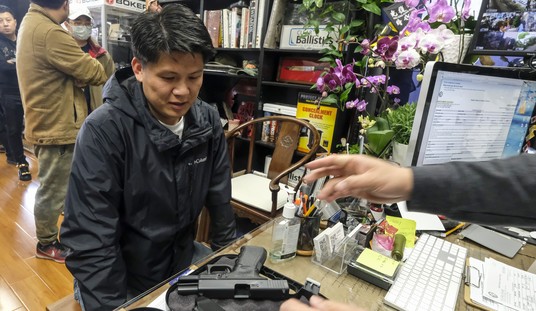
The next day, supervisors placed him on administrative leave and took his service weapon, saying he could not carry a gun while taking prescribed benzodiazepines to treat anxiety, the suit says.
Now, federal law says you can't carry a gun if you're using illicit substances, though Hemani threw that one on its head a bit. Prescribed anxiety medication, however, isn't the same category.
Plus, truth be told, I'd probably have a panic attack after looking at images and videos of child sexual abuse, too. Believe me, I have plenty of reason to have one just thinking about it, and that's without seeing anything so horrible.
The truth of the matter is that anxiety is a mental illness, but not one linked with violent behavior. Someone suffering from a panic attack feels like they're having a heart attack. They're not lashing out at anyone; they're just trying to survive, and the benzodiazepines aren't prescribed at a dosage that impairs judgment. Sure, they can be misused like many other prescription medications, but I wonder if they'd take a gun from an officer who was taking Oxycodone for injuries sustained on the job. Those can be inhibiting, after all, and are even at the minimum effective dosage, unlike benzodiazepines.
Frankly, this sounds like an excuse, but it pisses me off.
Our understanding of mental illnesses, as a society, is at this weird crossroads between people on the Left wearing diagnoses—even if they're not even real—like a badge of honor, a sign that they're also victimized to some degree, while others see everyone who has a mental health diagnosis as some crazy person who can't be trusted with a firearm.
It's two harmful extremes that need to be brought down a notch or 12.
If Perez-Rueda was disarmed by his supervisors because of legally prescribed medications, I have a problem with that. Especially because, as noted, a lot of officers take opioids for injuries while still carrying a firearm, despite the impairment caused by them.
I'm glad he got a payout, but since any such policy is still in place there, I'm not remotely satisfied.