
I fully understand that not everyone understands our Constitution. That includes a whole lot of Americans, for the record, so I'm completely unsurprised that people from other countries just can't comprehend things like our protection of civil liberties.
It's one reason why their opinions on American politics are completely irrelevant to me unless I can pick it apart for content or just for my own personal amusement.
And African nations are certainly among those. Often dealing with massive amounts of violent crime and a lot of politicians making promises about addressing it if people just restrict guns, a lot of Africans are absolutely baffled; we won't consider the same thing.
So imagine my surprise when I found one of the most salient points I've seen in ages at the start of an op-ed from a Nigerian site.
Unfortunately, it goes downhill right after that.
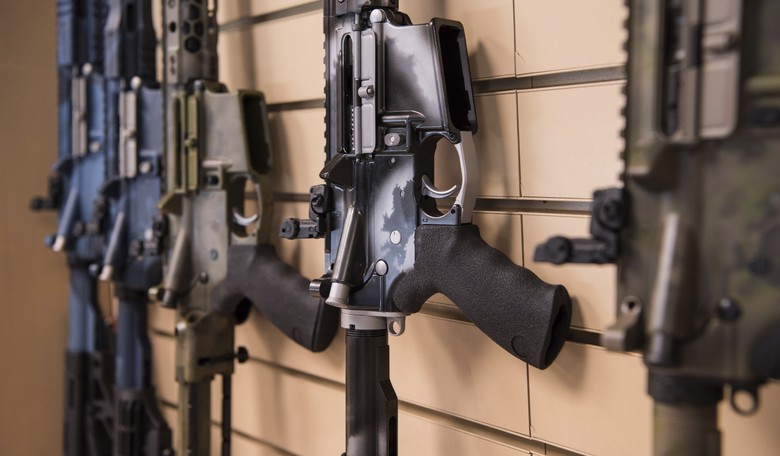
A constitutional right cannot depend on whether officials find its exercise reassuring. Public safety cannot depend on whether gun advocates find regulation objectionable. The Supreme Court’s forthcoming AR-15 case demands something harder than either slogan: a workable legal boundary.
The author here is absolutely correct. A constitutionally protected right cannot depend on whether officials actually like it when people exercise that right. If it were, then the right to freedom of speech would be meaningless, because I'm quite sure I've been less than reassuring to a number of lawmakers over the years, and I fully intend to continue.
And while I saw the handwriting on the wall with the second sentence, that's not incorrect, either. Public safety can't depend on whether we like a regulation or not.
Then again, none of us are arguing otherwise. This is a strawman in the making, because our issues with gun control aren't just that we find the regulation objectionable, but that we find it intolerable because of the plain text of the Second Amendment and because history has shown that gun control simply doesn't work as advertised.
That includes the federal assault weapon ban.
The author doesn't entirely seem to swallow the anti-gun Kool-Aid but instead expects plain language to be further clarified. "In common use," for example, is one he says needs to be explained better but ignores the phrase "shall not be infringed."
The author, despite his incredible start, thinks that the Supreme Court should clarify three specific points. One is what guns are actually protected arms. I guess that "all of them" is likely too broad for him, but the Second Amendment doesn't offer much leeway with regard to what arms count and what arms don't count.
His second point is that the court should somehow separate ownership of guns from ownership of essential accessories like magazines, etc.
Finally, this:
The third point is to identify the type of evidence that courts are required to look at and which party has the burden of proof. It’s important to provide a brief explanation of how historical examples can be used by courts. When making a technical claim, you must demonstrate a level of expertise to back up your claims. Finally, there are several different kinds of statistics regarding firearms (i.e. prevalence, use in crime, etc.), each answering a different question; therefore, these statistics cannot be interchanged.
They already did this with Wolford, for the record. They established the burden of proof just this year, and it's clear the proof is on the government to not just justify a regulation, but to establish the historical tradition. That even included at least some about what measures are permissible as justification for a gun control law, as Hawaii tried to use a Black Code measure to justify its vampire rule.
Honestly, that first line...that was just gold.
Everything after that just reminds me why foreign voices on American politics are irrelevant. They simply don't understand our nation enough to offer anything useful, even if they try their best to pen a thoughtful piece.