
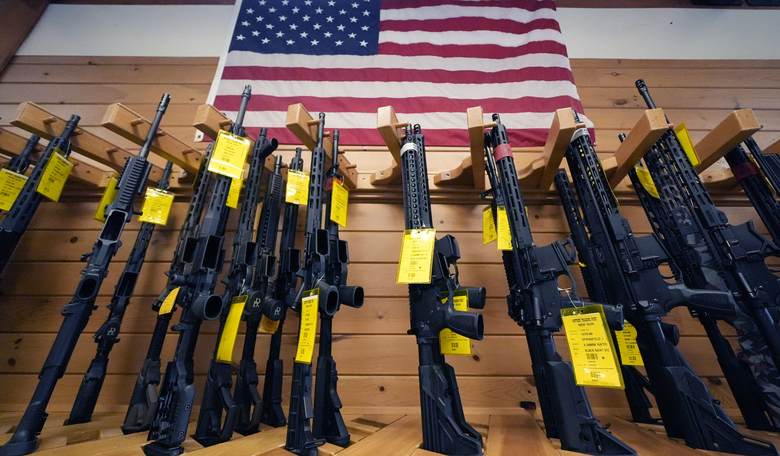
When President Bill Clinton set his sights on guns, he went after a target we all know and love these days. That was, obviously, the so-called assault weapon. The AR-15 was a primary target, though it was far from the only one.
The idea was simple. Ban the guns by restricting certain features that are common among so-called assault weapons and, by extension, ban the guns. Instead, what happened was that people flocked to the gun store to buy these now-forbidden firearms since there was a grandfather clause, and then the firearm industry started making ban-compliant weapons for sale.
As a result, the 1994 Assault Weapon Ban turned a once relatively obscure offering into the most popular rifle model in America.
Now, the question is being asked if the AR-15 is "too big to ban" by the Wall Street Journal.
Thanks to a series of government bans at the federal, state and local levels, the AR-15’s popularity took off with gun owners in part as a totem of resistance. The calls for new gun control after mass shootings, as well as the issue’s prominence in U.S. presidential elections, also created surges of demand.
Having conquered the market, the rifle’s enthusiasts have set their sights on the most audacious legal challenge that gun-rights advocates have brought to the Supreme Court. As if to underscore how much things have changed, part of the case stems from the 2012 Sandy Hook massacre, among the most notorious mass shootings in the nation’s history. Connecticut enacted an AR-15 ban in response and now is facing an uphill legal battle to keep it.
The case is a far cry from 18 years ago, when the high court first declared that individuals have a right to possess a firearm in the home for self-defense. That landmark ruling triggered other decisions that steadily expanded the reach of the Second Amendment into public places, onto commercial property and for at least some users of illegal drugs.
Along the way, the court has suggested that the Constitution protects weapons “in common use.” And so it is precisely the cultural mainstreaming of the AR-15 that could boost its legal chances.
Here is how a gun that nobody wanted has reached the precipice of receiving a constitutional endorsement.
I'm pretty sure the authors don't see this as a good thing, but the truth of the matter is that without the Clinton-era ban, it's entirely possible that we'd have a much harder time arguing that the AR-15 is "in common use." While that shouldn't matter one way or another — the Second Amendment doesn't read "the right of the people to keep and bear arms in common use shall not be infringed," now does it? — the truth is that it does.
The AR-15 is the most popular rifle model in the country. It's the epitome of the term "in common use," so if that term is going to apply to anything, it has to apply to modern sporting rifles like the AR-15 and similar weapons.
So, thanks, Bill Clinton. Without you, it's very possible none of this would have ever come to pass.