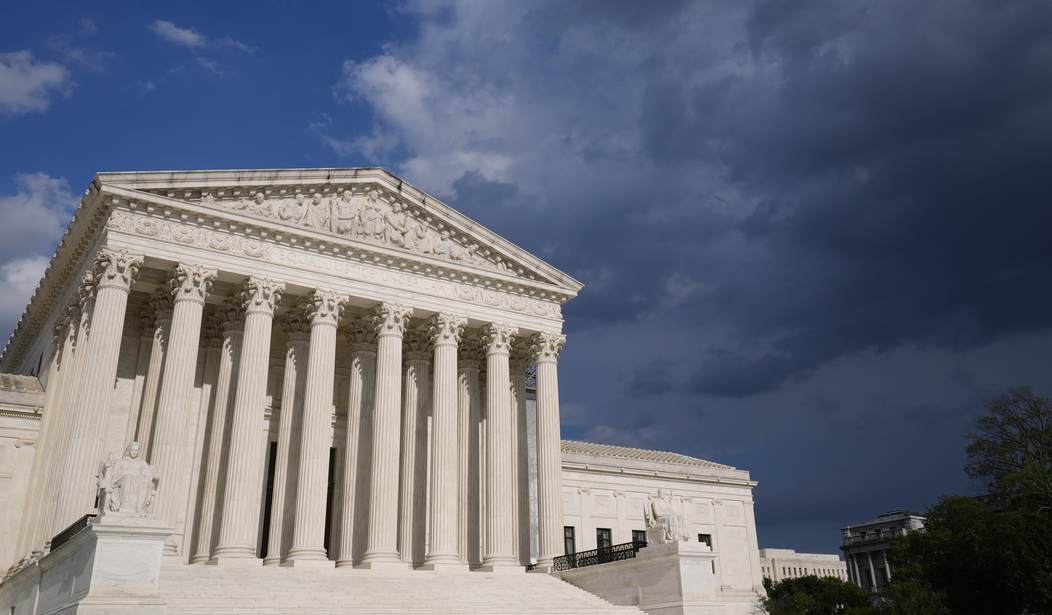
After listening to the full two hours of oral arguments in U.S. v. Hemani on Monday morning, I'm willing to make a couple of predictions. First, a majority of the justices will find in favor of defendant Ali Danial Hemani, who argues that Section 922(g)(3)'s prohibition on gun possession for "unlawful" users of drugs violates his Second Amendment rights, and that the majority will not be the same makeup as the majority in Bruen or even the Rahimi decision allowing individuals subject to domestic violence restraining orders from being temporarily disarmed.
Justice Clarence Thomas was the first justice to grill the DOJ's Deputy Solicitor General Sarah Harris, and took aim at the government's contention that 18th century laws dealing with habitual drunkards and vagrants provide an appropriate analogue to Section 922(g)3).
Thomas asks about vagrancy laws (implying, "can they be disarmed too?")
— SAF (@2AFDN) March 2, 2026
Govt says thats not a problem, can still be used as an analogue even if they were overinclusive.
Sonya Sotomayor grilled Harris about the broad nature of 922(g)(3), noting that different drugs have different effects, and wondering why someone who uses marijuana once a week outside the presence of a firearm should be considered dangerous.
Harris's response is that there was no individualized finding of dangerousness for "habitual drunkards" (which I think defendant's attorney Erin Murphy would disagree with), but also noted that according to the government the prohibition is "tailored and temporary" to those who are currently habitually using drugs.
Justice Neil Gorsuch then wondered; does this defendant qualify as a habitual user? Gorsuch pointed out that at the time of the Founding, one temperance society said that eight shots a day of whisky only made you a moderate drinker, and to be a habitual user required twice as much.
Gorsuch noted that Hemani admitted to using marijuana about every other day, but we don't know the quantity and wondered, what would the government's position be if he took one gummy bear with a prescription in Colorado to help him sleep. Disarm him for life?
Harris's answer was essentially "yes."
Gorsuch (I think) now pointing out that the founders knew how to party and drank a lot.
— SAF (@2AFDN) March 2, 2026
And Hemani only smoked "every other day." What if he just used one pot gummy per day?
Govt is flailing right now it seems.
A majority of the justices appear to disagree with that position, though the fracture doesn't fall along the usual conservative/liberal lines. Instead, Justice Samuel Alito and Chief Justice John Roberts appeared to be the most receptive to the DOJ's arguments, with Justice Clarence Thomas a bit of a cypher and the rest of the justices expressing skepticism about the government's position to one degree or another.
One of the other arguments raised by the government is that, unless the Court is willing to ignore Rahimi, it must conclude that the habitual drunkard statutes are appropriate analogues, because they're closer to the "going armed" and surety laws that the Court pointed to in upholding the ban on guns for those adjudicated as dangerous.
Govt kind of misleads about Rahimi. Ya, domestic violence was not treated as seriously, but Rahimi wasn't married to the girlfriend he assaulted. Nothing in the founding era allowed you to attack someone you weren't married to.
— SAF (@2AFDN) March 2, 2026
Attorney Erin Murphy, representing Hemani before the Court, argued that the habitual drunkard statutes aren't appropriate, though, because unlike 922(g)(3) they didn't punish people just for their habitual drinking. It was the nature of what intoxication did to them that triggered the laws.
The government contends, though, that habitual use alone is enough to disarm marijuana users.
Sotomayor says does govt think it can disarm someone who "takes a stick of marijuana" at a party (who left their gun at home)
— SAF (@2AFDN) March 2, 2026
Confirmed, Sotomayor's parents did an excellent job at making sure their daughter never dabbled in any drug use.
While the DOJ is relying on those drunkard statutes, the government also maintains that there's a big difference between alcohol and drug use.
Kavanaugh asks Govt to elaborate on difference between illegal drugs and alcohol for purposes of Bruen.
— SAF (@2AFDN) March 2, 2026
Govt says they are higher risk, and also there's notice (because you know it's illegal).
The obvious question here that isn't being asked: could you disarm someone if they…
The DOJ maintains that there's a similar history and tradition in identifying people who habitually use alcohol or drugs and pose a danger. but unlike booze, drugs are illegal, so the prohibition can be broader because of their inherent dangerousness and risk of abuse.
Barrett says she agrees dangerous people can be disarmed.
— SAF (@2AFDN) March 2, 2026
But is someone using robotussen, adderall, etc really a risk of violence? Adderall is even schedule 2.
What if a college student uses their classmate's ritalin? Are they dangerous and able to be disarmed?
Barrett…
Once again the DOJ resisted the idea that any kind of individualized finding like that would in appropriate and unworkable.
Justice Ketanji Brown Jackson, surprisingly, seemed to have a number of problems with Section 922(g)(3), at least when it comes to using the Bruen test to determine its constitutionality. But Jackson also admitted that her underlying problem comes from the Bruen test itself.
Jackson back to bashing Bruen and saying she wants to return to interest-balancing.
— SAF (@2AFDN) March 2, 2026
I could see her ruling for Hemani as a way to bash Bruen, actually.
Erin Murphy faced some tough questions from the justices as well, including some that drilled down on the nature of drug use and dangerousness.
Kagan asks, what if Congress rewrote the law and banned gun possession from particular drugs based on dangerousness. Imagine a long-lasting hallucinogen, if you used it once every two weeks, could you be disarmed?
— SAF (@2AFDN) March 2, 2026
Murphy says no, because the principle from the drunkard laws is…
Sotomayor and Jackson both referenced the vagueness of 922(g)(3), which doesn't define "unlawful" or "habitual" (which isn't even in the statute but part of the DOJ's definition of unlawful use). Murphy argued that even if you want to take the old tiered-scrutiny approach, the statute still fails to pass constitutional muster.
Murphy says even if you were doing means-end scrutiny and giving govt deference, this category is overbroad.
— SAF (@2AFDN) March 2, 2026
Jackson seems to agree.
(I expect a concurrence from Jackson on these grounds bashing Bruen but agreeing Hemani wins even under the old tiered scrutiny approach she…
Jackson's seeming position in favor of Hemani's Second Amendment rights was one oddity from today's oral arguments. So too, though was Justice Samuel Alito's blatant skepticism about the defendant's arguments. He repeatedly questioned Murphy about the nature of addition and whether or not individualized findings would have to take place if the justices side with Hemani. Murphy, for her part, argued that is already the case in order to determine whether someone is an addict under Section 922(g)(3).
Not recapping this whole chain of questions, but suffice it to say that Alito is really, really not on our side in this case!
— SAF (@2AFDN) March 2, 2026
During rebuttal, Harris really leaned in to Alito's line of thinking.
Govt back up, and says no actually habitual users are all dangerous.
— SAF (@2AFDN) March 2, 2026
Govt now desperately urging the court to leave 922g3 alone because it would be hard for the government to defend it against as-applied challenges (basically)
My prediction is that a majority finds in favor of Hemani, though it may be a very narrow ruling.
I second Kostas here. Based on what we heard at oral argument, probably a win for Hemani.
— Amy Swearer (@AmySwearer) March 2, 2026
Key question will be whether 5 Justices have the same reasoning for why he wins, and I'm not remotely confident in a majority consensus there. https://t.co/0d4MSzRCeP
If Swearer thinks it'll be 5-4 and Moros believes it will be 7-2, I'm gonna take the middle ground and predict a 6-3 verdict in favor of Hemani, with Roberts, Alito, and Thomas taking the DOJ's position. I agree, though, that the reasoning deployed by the justices are likely to wildly vary, and I wouldn't be surprised if Jackson does end up writing a concurrence that bashes the Supreme Court's Second Amendment jurisprudence while siding with Hemani.
Editor's Note: The mainstream media continues to lie about gun owners and the Second Amendment.
Help us continue to expose their left-wing bias by reading news you can trust. Join Bearing Arms VIP and use promo code FIGHT to get 60% off your membership.








Join the conversation as a VIP Member