We've written before about Illinois' "RIFL" Act, which would likely result in a massive reduction in the number of firearms available for purchase in the state by requiring gun makers to pay a yearly fee based on an estimate of how much "gun violence" is committed by individuals criminally misusing their products.
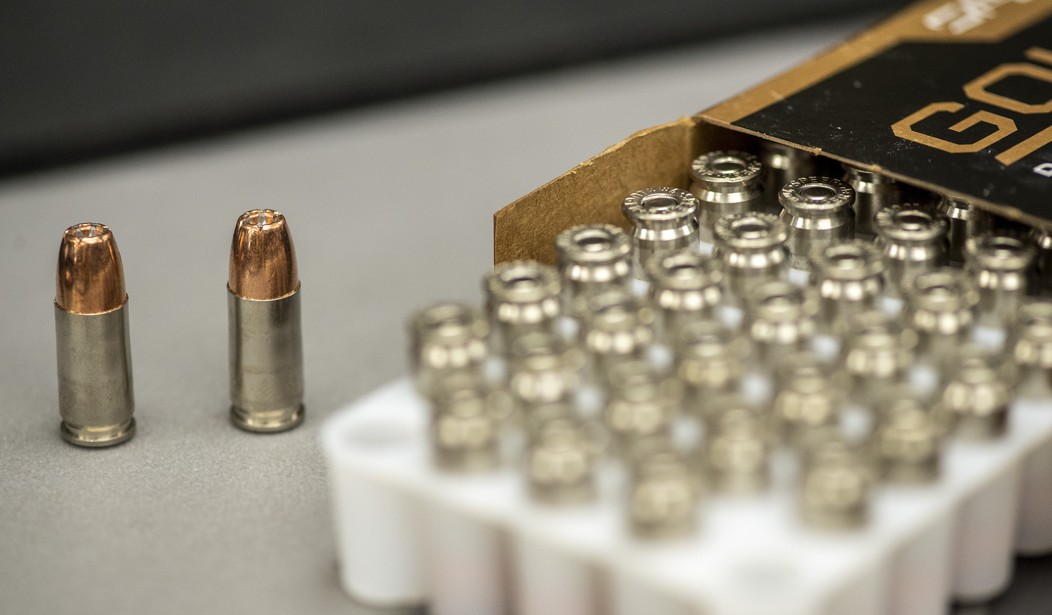
Now Democrats in Springfield have introduced a bill that promises to end sales of handgun ammunition in the state; not with an outright prohibition, but by requiring every bullet sold to have a serial number imprinted on the casing.
HB 4414, authored by Democrat Rep. Anne Stava, would require that "beginning January 1, 2027, all handgun ammunition that is manufactured, imported into the State for sale or personal use, kept for sale, offered or exposed for sale, sold, given, lent, or possessed shall be serialized."
In addition to the requirement imposed on ammo makers, the Illinois State Police would also be required to "maintain a centralized registry of all reports of handgun ammunition transactions reported to the Illinois State Police in a manner prescribed by the Illinois State Police." Gun owners would pony up for the cost of that centralized registry through a five cent tax on each and every round of "handgun ammunition" sold in the state.
While Stava's bill specifically talks about handgun ammunition, that term is broadly defined as "ammunition principally for use in pistols, revolvers, and other firearms capable of being concealed upon the person, nothwithstanding that the ammunition may also be used in some rifles."
Buying ammunition and bringing into the state would be a Class A misdemeanor, and mere possession of unserialized handgun ammunition after January 1, 2027 would be a Class C misdemeanor... with each round classified as a separate and distinct offense.
I might be missing it, but I can't find anything in the bill that outlaws the private transfer of ammunition, but given that Stava wants a centralized database of "registered" ammunition that's either an oversight on her part or mine. There are a couple of exceptions in her bill, including one that would allow valid FOID card holders or concealed carry licensees to continue to possess non-serialized ammunition for fifteen years after the bill takes effect. And of course law enforcement is also exempt from Stava's bill, so agencies could continue buying (and using) ammunition long after the supply had dried up for everyone else.
And it would dry up. No one has successfully demonstrated that serializing ammunition is technologically feasible on a large scale, and the National Shooting Sports Foundation predicts that any attempt to mandate serialized ammo would lead to a variety of problems.
Manufacturers of ammunition cannot serialize ammo as itwould force a slowdown in the production process -- the likes of which would turn one day’s worth of production into a nearly four-week effort.
• This massive reduction in ammunition would translateinto substantially lower sales and profitability and ultimately force major ammunition manufacturers to abandon the market. In turn, there would be a severe shortage of serialized ammunition and all consumers, including federal, state and local law enforcement agencies, would be faced with substantial price increases.
• Ammunition will go from costing pennies to several dollars per cartridge.
• Ammunition manufacturers could not serialize their product without hundreds of millions of dollars in capital investment to build the new factories that would be needed in order to meet the requirements of bullet serialization. At the same time hundreds of millions of dollars of existing plants and equipment, and decades of manufacturing (cost-saving) efficiencies, would be rendered obsolete.
As of right now (and unlike the RIFL Act), HB 4414 does not have a single co-sponsor. Even if the bill goes nowhere this session, though, it's evidence of the lengths that anti-gun politicians are willing to go to in order to deprive us of our Second Amendment rights. An outright ban on ammunition or gun sales wouldn't stand up in court, but politicians like Stava are hoping that judges will go along with manufacturing and sales mandates that would have the same effect by making it financially ruinous for companies to try to comply with these laws.
We'll be keeping a close eye on both bills this session, but I'd encourage Illinois gun owners to act preemptively and contact their representatives and state senator and demand they oppose these backdoor gun and ammo bans before they start moving through the legislative process.