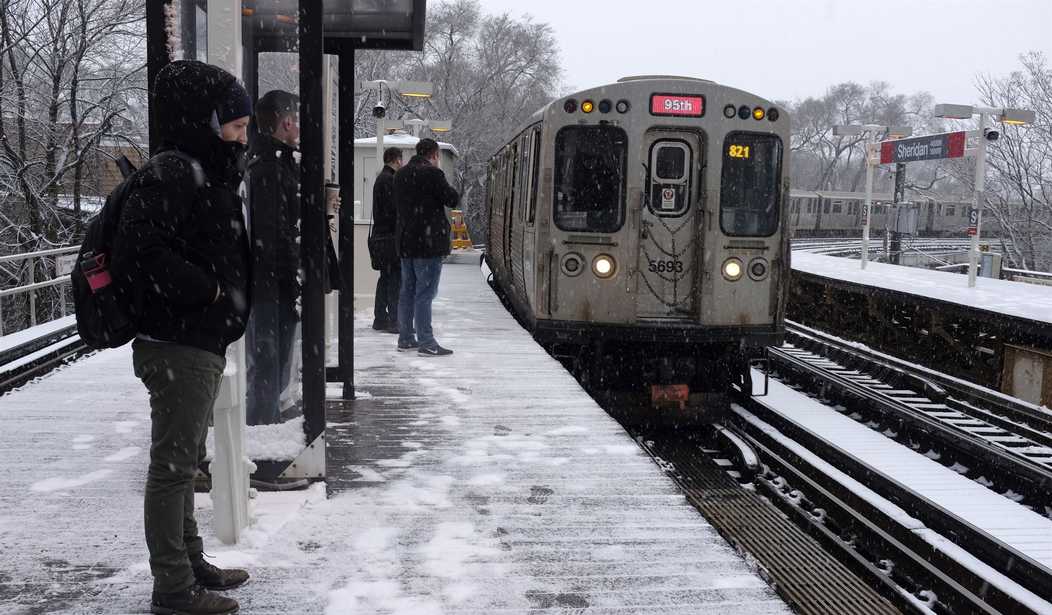
The Supreme Court once again took no action on the five different cases involving bans on so-called assault weapons and large capacity magazines in its orders released on Monday, which is frustrating enough for gun owners. To make things worse, the Court denied cert to Schoenthal v. Raoul; the challenge to the law banning concealed carry on public transportation in the state of Illinois and the Chicago Transit Authority's similar rule prohibiting lawful carry.
The denial of cert means that the ban will stay in place, but it also allows the Seventh Circuit's ridiculous rationale upholding the ban to serve as a guiding light for other anti-2A judges across the country. The appellate court had concluded that, despite the Supreme Court's comments to the contrary in Bruen, "sensitive places" can be defined so broadly that they encompass virtually all "crowded public spaces" where "vulnerable" people are likely to be present.
It's true that there is no circuit court split on the issue of banning concealed carry on public transit at the moment, which Illinois had argued made it unnecessary for the Court to intervene in this case. But as the plaintiffs argued in their final brief to the justices, "the uniformity in result is all the more reason to grant the petition, as it is worse for all the lower courts to address an issue implicating a fundamental constitutional right to get it wrong than it is for some of them to do so."
The “vulnerable population” argument is directly contrary to the “principles underlying the Second Amendment.” As this Court explained in Heller, individual armed self-defense is “the central component of the right” protected by the Second Amendment. Children and the elderly are indeed “vulnerable” for some purposes—they are more susceptible to , for instance, and less able to exert themselves physically. But every population is “vulnerable” where the threat is gunfire, and what makes “the vulnerable population of children” possibly unique in that regard is that they are unable to bear arms for their own protection. Disarming law abiding adults only serves to put them in a similar position to children and enlarge the “vulnerable”segment of the population to include anyone who is unwilling to risk committing a felony. That makes even the non-arms-bearing population more vulnerable by depriving them of presence of armed citizens to deter the likelihood of armed criminal attack today, a relationship that exists as much today as at the Founding.
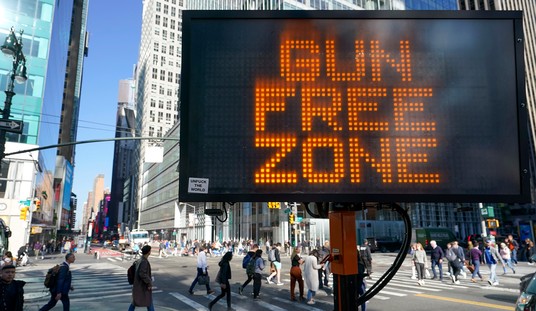
The people who depend on the Chicago Transit Authority to get around are absolutely vulnerable to violence, which is far from uncommon on CTA property. As we've documented over the past few months, robberies, stabbings, shootings, and even acts of immolation have taken place on CTA buses and trains, and at train stations as well. From a legal perspective, the justices might not consider the issue of carry bans on public transit to be ripe for review, but from a pragmatic perspective this decision to deny cert only aids the violent predators in Chicago who rightfully see the "gun-free" CTA system as a target-rich hunting ground.
I think most 2A advocates are frustrated by the Court's slow pace of taking Second Amendment cases, including bans on commonly owned arms. It's also incredibly frustrating to see their relative inaction in addressing "sensitive places" since Bruen. Yes, the justices granted cert in Wolford v. Lopez and appear likely to strike down the "vampire rule" prohibiting concealed carry by default in all publicly accessible private property, but that is an outlier law that's only in place in a handful of states to begin with. Carry bans on public transportation are more common, and have just as big an impact as the "vampire rule" where they exist, at least for those dependent on public transit to get around.
By letting the Seventh Circuit decision stand, the Supreme Court is letting a two-tiered system of bearing arms continue in many metropolitan areas: if you can afford a car, you can broadly exercise your right to bear arms. Even if you run across a "gun-free zone," so long as you have your vehicle you can lock up your gun and be disarmed only while in that "sensitive place." If, on the other hand, you can't afford a vehicle of your own or choose not to have one, then your right to carry can be curtailed throughout the entirety of your day, at least if you have to access a bus or light rail to get around.
The lack of a circuit court split shouldn't be reason enough to let that injustice stand, but apparently its enough for a majority of justices. Or... even worse, a majority of the Court actually agrees with the Seventh Circuit, despite what it held in Bruen just four years ago.
Editor’s Note: The radical left will stop at nothing to enact their radical gun control agenda and strip us of our Second Amendment rights.
Help us continue to report on and expose the Democrats’ gun control policies and schemes. Join Bearing Arms VIP and use promo code FIGHT to get 60% off your VIP membership.







Join the conversation as a VIP Member