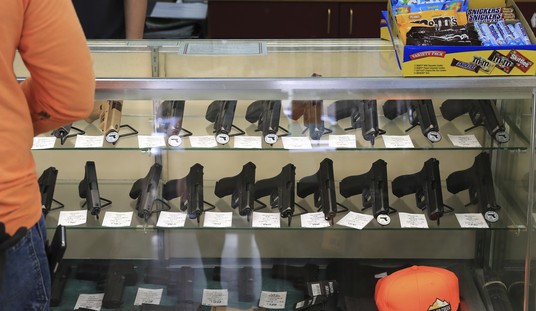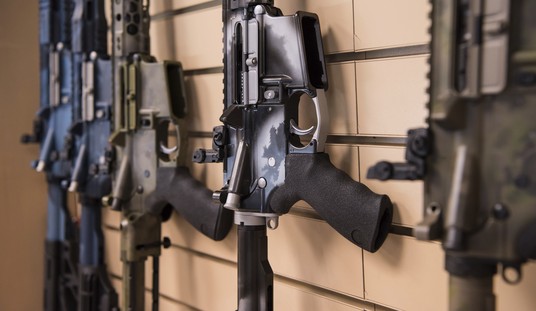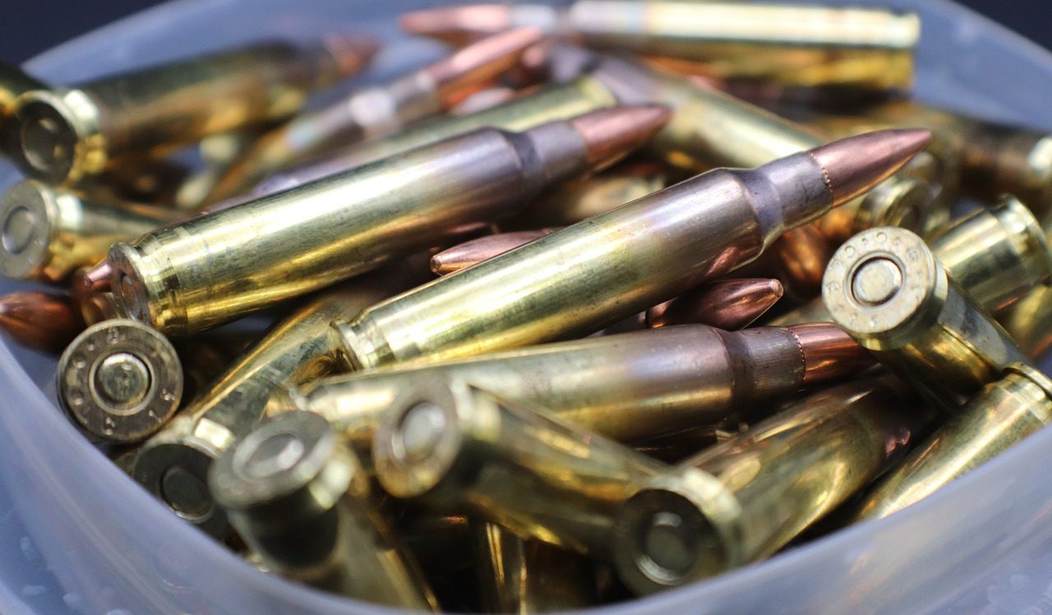
For nearly two weeks now, a strike at the Lake City Army Ammunition Plant has caused an almost complete stop to the production of ammunition, and if the strike isn't resolved soon we'll likely feel the impact at our local gun shops or online retailers.
Olin Winchester, which has a contract to run the facility, is able to sell excess ammunition not needed by the military on the civilian market, and the plant produces a significant amount of ammunition in .223 Remington, .300 Winchester Magnum, and 9mm, as well as 5.56mm NATO, 7.62mm NATO, and .50 BMG.
According to the Kansas City Star, representatives from the IAM union at the plant have met with Olin Winchester officials twice since the strike began on April 4, but the union says the two sides are still far from agreement on key issues, including wages and working conditions.
At this point, leaders said, workers with IAM — International Association of Machinists and Aerospace Workers — Local 778 are also fighting for a better work-life balance where they’re not required to work mandatory overtime in some areas of the plant.
“Members did not walk off the job because they wanted to,” said Brian Bryant, IAM Union International President, who spoke Thursday during a virtual panel of union leaders and workers. “They walked off the job because Olin Winchester gave them no other choice. No fair wages, no paid sick leave, no relief from forced overtime and no respect on the job.
“... Our members are dug in, and they’re dug in for the long haul, and as long as they’re standing strong, the IAM will be here standing with them throughout this whole process.”
About 1,350 employees are participating in the strike, which has the potential to disrupt the military's supply of small arms ammunition as well as increasing the cost of ammo for civilian buyers.
Olin Winchester has been pretty quiet about negotiations and the demands of the union, but workers who are now walking the picket line are far more eager to talk.
Travis Bradford, who has been at the Lake City facility for nearly 20 years, was also a part of Thursday’s virtual panel. He said he and “a lot of other people” have been working the overtime for 3 1/2 years or more.
“I’ve missed going on vacations with the family and all kinds of stuff,” Bradford said. “It’s kind of a blur at that point when you do nothing but work, and we want to be compensated for that, if nothing else. I mean, we’re going to be working that much overtime we’d like to at least get something for it.
“And they don’t even want to meet us half way.”
Vaughn Cochran has worked at Olin Winchester for about 10 years. In the last 3 or 4 years, he said, the company “really started hitting us with the overtime.”
At first, he said, “it was optional.” Then it turned into “we’re going to force everybody for 60 hours and on,” Cochran said. If someone takes a day off, they still need to get in their 60 hours, he and others said.
“There were multiple times that I ended up (working) 13 days in a row,” Cochran said. “And it’s like when you’re doing 13 12s it really wears on your body, and we all deserve better than that.”
Coincidentally or not, Olin Winchester's stock price has declined significantly over the past few years; from a high of almost $66 a share in May, 2022 to a little more than $26 a share this week.
If it continues, some analysts say the disruption to the civilian market could be felt by consumers. The blog Ronin's Grips Analytics reports that "Retailers and distributors, who rely heavily on bulk shipments of Winchester M193 and M855 cartridges, are facing immediate, severe inventory contractions," and opines that "[w]ithout the Lake City surplus acting as a massive stabilizing anchor, the commercial market is exposed to unprecedented supply shocks."
President Donald Trump could invoke Section 206 of the Taft-Hartley Act and seek a court order halting the strike on the grounds that it imperils national safety, but so far the White House has been mum about the work stoppage and the impact it could have on both military and civilian ammunition stocks. Even in the president did take that step, its unclear whether the returning workers would be required to produce enough ammunition for excess rounds to sold on the civilian market.
Now, this is not akin to the ammunition shortage we saw back in 2020, when virtually every ammunition manufacturer saw their inventory wiped out by customers in a matter of weeks while supply chain issues impacted the manufacturing process. By some estimates, Lake City is responsible for about 30% of .223/5.56 ammunition in the United States, but other companies may be able to ramp up production if it looks like the strike isn't going to be resolved relatively quickly. The impact is likely to be increased cost rather than outright unavailability, but that's still not great news for those of us who shoot on a regular basis.