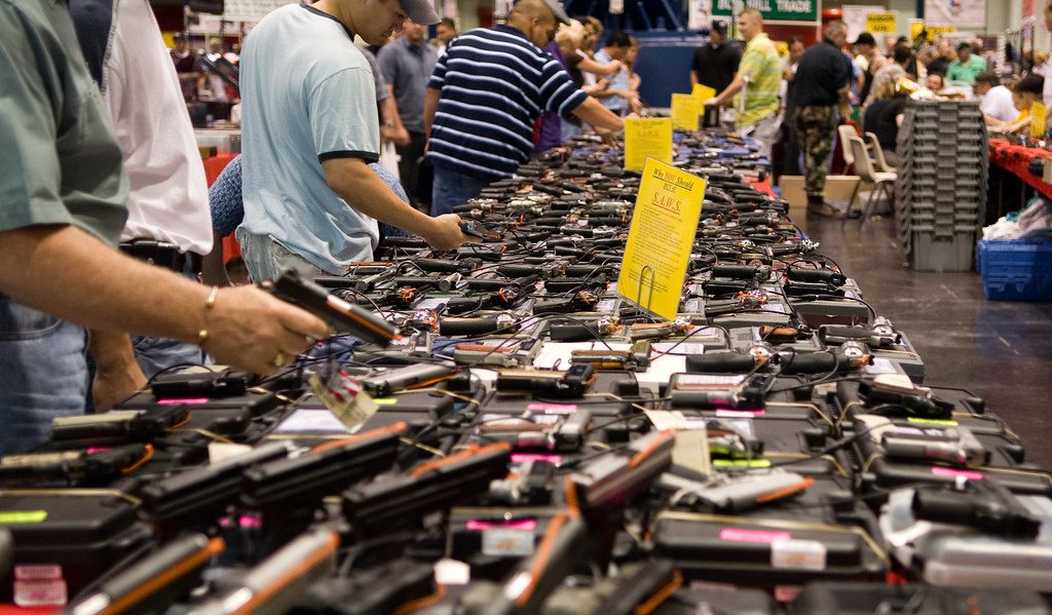
Virginia's universal background check system, which has been (mostly) on hold for nearly a year thanks to a lawsuit filed by Gun Owners of America and Virginia Citizens Defense League, will be enforced starting on July 1 after the Lynchburg circuit judge who halted the checks sided with Virginia Attorney General Jay Jones over the plaintiffs.
Jones and Virginia Gov. Abigail Spanberger had told the Virginia State Police to resume checks last month after she signed HB 1525 into law. The bill prohibits adults under the age of 21 from purchasing firearms in the Commonwealth, which Jones had argued mooted the judge's injunction since it was based on the fact that gun buyers aged 18-to-20 were treated differently than those 21 and above. Now there's one standard system in place, but at the expense of the rights of adults under 21.
Judge F. Patrick Yeatts made his decision from the bench after a hearing on Wednesday afternoon, and so far I've not seen any reports from inside the courtroom detailing what he said. In previous rulings, however, Yeatts has at least indicated that 18-year-olds are fully vested with their right to keep and bear arms under Article 1, Section 13 of the Virginia Constitution. I'm surprised that Yeatts is allowing the background checks to resume without those adults under the age of 21 being able to legally purchase firearms at all, and we're probably looking at another lawsuit challenging that provision of the law when it takes effect on July 1, if not before.
The U.S. Supreme Court has been hanging on to five age-based gun cases for several months now, and they're all listed for consideration during today's conference, which is expected to be the last of the term. The most likely outcome of the conference is that the cases will be granted, but only to vacate the lower court opinions and remand the litigation back to the appellate courts for a do-over in light of the findings in Hemani and Wolford v. Lopez. The Hemani decision came out last week, and Wolford could be released as early as today, but I'm not convinced that either case will tell the courts much about when our right to keep and bear arms kicks in.
The Fourth Circuit Court of Appeals, which has jurisdiction over federal lawsuits filed in Virginia, has previously ruled in a 2-1 decision that the nation's "regulatory tradition has permitted restrictions on the sale of firearms to individuals under the age of 21." What tradition is that? According to the panel, the modern ban on handgun sales to adults under the age of 21 is "relevantly similar to the burden imposed by the founding-era rule that contracts with individuals under the age of 21 were unenforceable."
The "infancy doctrine" is far from an exact twin of the federal prohibition on handguns sales to under-21s. It's not even a kissing cousin, despite the panel's protests to the contrary.
With respect to “how,” the infancy doctrine and § 922(b)(1) both make it exceedingly difficult for a minor to purchase a handgun from a commercial seller, and they do so in similar ways. Both subject sellers to a risk of loss if they sell a handgun to a minor. Because of that risk, sellers are far less likely to transact with a minor and, in turn, a minor’s ability to purchase a handgun is severely burdened.
Nonsense. In the past, sellers might have been forced to accept a refund and return the money of a purchase under the age of 21. Today an FFL faces criminal charges and imprisonment for selling a handgun to a 20-year-old. I don't think the "why" of these laws is similar, given that the infancy doctrine didn't apply solely to firearm purchases, and the "how" is certainly not in the same ballpark.
Now that I think about it, maybe the Hemani case does offer a little guidance to the Fourth Circuit when it comes to gun purchases for young adults. In Hemani, Justice Neil Gorsuch wrote:
Two features play a “ ‘central’ ” role in determining whether a modern law is “relevantly similar” to historical ones: the “why” and the “how”—the more closely a contemporary law mirrors a well-established historical analogue in purpose and operation, the more likely it is to be upheld.
Now, there's nothing preventing the Fourth Circuit from insisting that a general principle that minors couldn't enter into any kind of binding commercial transaction is close enough to a federal statute criminalizing gun sales to under-21s that the modern law can withstand a Second Amendment challenge, and in fact, that's probably the most likely outcome. But I don't think the Supreme Court will be inclined to agree, at least based on the analogies they rejected in Hemani.
SCOTUS could take one or more of these age-based cases now, but I think that would be highly unlikely given that the justices have sat on them for several months now without taking action. The High Court is most likely going to kick this can down the road a term or two (to borrow a phrase from Justice Kavanaugh), but that will at least allow a legal challenge to be filed against Virginia's impending gun ban for young adults in both state and federal court. Not much of a silver lining, I know, but as VCDL's Philip Van Cleave said in response to today's decision reinstating universal background checks, elections have consequences.
Bad news. The judge in Lynchburg unexpectedly dissolved his injunction against universal background checks effective July 1. So on July 1 universal background checks are back, so you’ll have to go to a gun dealer to do a private sale. This issue is NOT over for VCDL, but it is a…
— Philip Van Cleave VCDL (@VCDL_ORG) June 24, 2026
Editor’s Note: The radical Left will stop at nothing to enact their radical gun control agenda and strip us of our Second Amendment rights.
Help us continue to report on and expose the Democrats’ gun control policies and schemes. Join Bearing Arms VIP and use promo code FIGHT to receive 60% off your membership.










Join the conversation as a VIP Member