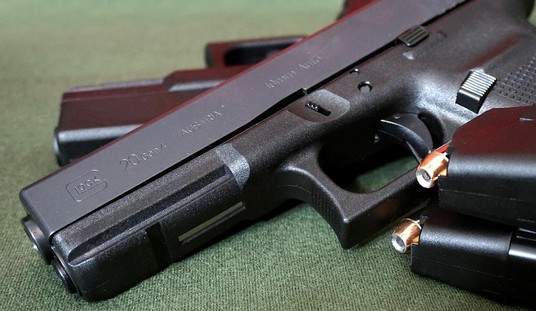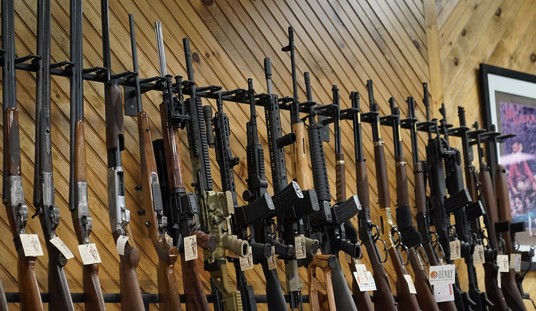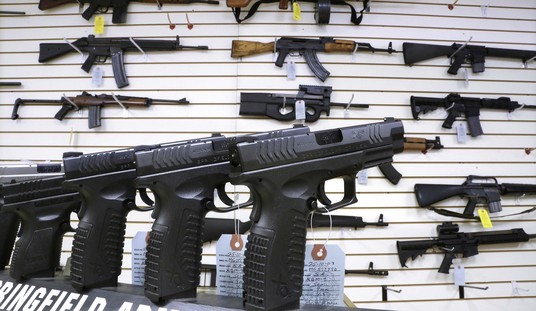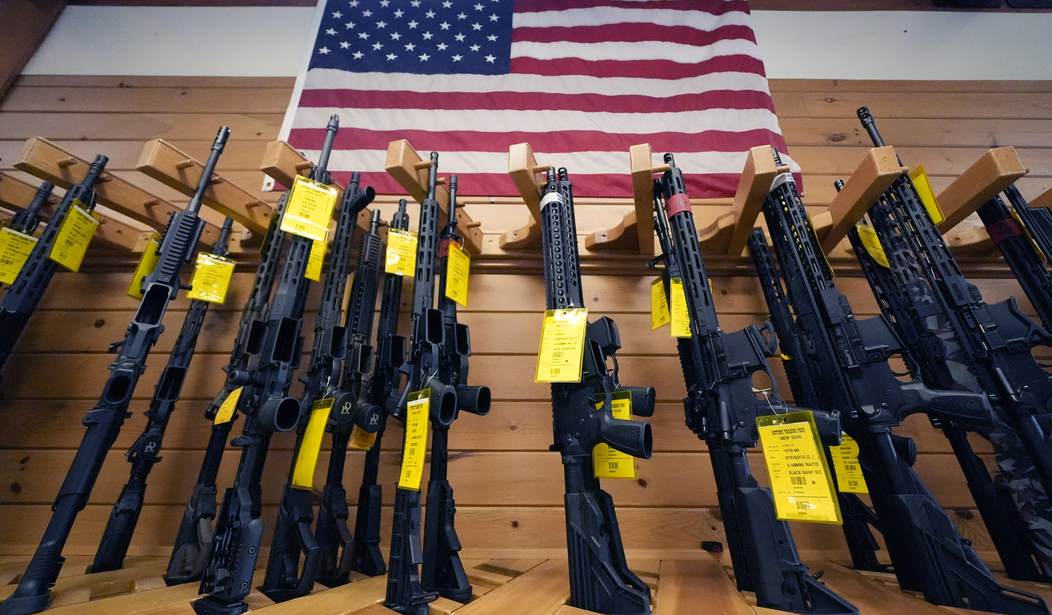
Attorneys on both sides of the fight over our Second Amendment rights are already busy drafting amicus briefs in support and opposition to the "assault weapon" bans in Cook County, Illinois and the state of Connecticut that the Supreme Court will address next term.
The argument against the bans is pretty straightforward: AR-15s and other semi-automatic rifles banned because of certain features are "arms" that are in common use for a variety of lawful purposes, and are therefore protected by the Second Amendment. The nation's regulatory history of gun ownership does not include widespread or longstanding prohibitions on an entire class of arms, so neither Cook County nor Connecticut can point to any analogous laws in place at either the time of the Second Amendment or Fourteenth Amendment's ratification.
But what about the argument in favor of upholding these bans? Some courts have held that the arms in question simply aren't protected by the Second Amendment at all, so there's no need to do any kind of historical analysis. The Court's decision in Wolford forecloses the use of that argument going forward, with Justice Samuel Alito writing for the majority that if the plain text of the Second Amendment is implicated, then the modern gun law in question is presumptively unconstitutional and must be justified by the political body that put it in place.
Everytown Law Deputy Director of Second Amendment History and Scholarship Mark Anthony Frassetto has provided a preview of the argument the gun control group will be making in defense of "assault weapon bans," and his comments are likely to be echoed by Cook County and Connecticut as well.
An Everytown lawyer gives a preview of the group's arguments in Viramontes: pic.twitter.com/UKhado3lYn
— Rob Romano (@2Aupdates) July 9, 2026
Frassetto's argument is fleshed out in a University of Alabama Law Review article entitled Mass Violence and the Second Amendment: Analogizing Historical Prohibitions on Armed Groups to Modern Prohibitions on Assault Weapons and Large-Capacity Magazines. Frassetto says there are appropriate analogues to be found; not in the form of gun bans, but in prohibitions on armed groups.
How mass killings have historically occurred differs from the present day. While today most killings of four or more people are committed by a single person with a firearm, before the twentieth century, that was often not the case. Instead, mass killings tended to be the result of violence perpetrated by armed groups. In response to group mass violence, both the common law and many state statutes prohibited armed groups, sometimes directly declaring them illegal and other times declaring armed groups unlawful assemblies or riots. Later, states would also prohibit private militia organizations, armed assemblies, and armed marches to limit the ability to assemble a force capable of causing mass violence. Today’s prohibitions on large-capacity magazines and assault weapons are aimed at the same principle: prohibiting the means of committing mass violence.
Frassetto starts with an examination of English law that, honestly, I don't think will be all that instructive for the Court. When he turns to American law, though, the problem with his analogy is quickly revealed.
The American Colonies and United States followed English common law by treating armed groups as riots or unlawful assemblies. One early American treatise, the first American edition of William Russell’s Treatise on Crimes and Misdemeanors, stated: “If a number of men assemble with arms, in terrorem populi, though no act is done, it is a riot.” This was because armed groups had “an apparent tendency [to force and violence]” and were “naturally apt to strike a terror into the people.” The first American edition of John Frederick Archbold’s Summary of the Law Relative to Pleading and Evidence in Criminal Cases stated that a riot required “circumstances, either of actual force or violence, or at least of an apparent tendency thereto, as were calculated to inspire people with terror; such as being armed, using threatening speeches, turbulent gestures, or the like.” Similarly, in 1836, in the first American edition of The Law Dictionary Explaining the Rise, Progress, and Present State of the British Law, Thomas Tomlins and Thomas Granger explained that a riot occurred “if a number of men assemble with arms, in terrorem populi, though no act is done,” and provided an example: “three come out of an alehouse and go armed.” Tomlins and Granger further clarified that only conduct with an “apparent tendency” towards violence was required, and it was “not necessary . . . that personal violence . . . be[] committed.”
In Wolford, the Supreme Court held that both the "how" and "why" of a law from yesteryear must be “relevantly similar" to the modern law in question today. As Frassetto's own examples make clear, the purpose of these laws treating armed groups as riots or unlawful assemblies was not to prevent mass murder, but to prevent "terror in the people."
The "why" is notably different from modern gun bans that are supposedly about preventing or reducing mass shootings. The "how" is much different as well. I suppose one could argue that a ban on publicly carrying an "assault weapon" or firearm equipped with a "large capacity" magazine is akin to laws forbidding groups of gun owners gathering in public, but the modern bans go much further than that by banning the sale, manufacture, and possession of these arms, in both public and private settings.
Frassetto's examples of colonial and early American laws aimed at preventing riots also show that many of these laws were contingent on other factors beyond the simple possession of weapons.
In 1756, the Massachusetts colonial legislature, horrified by the violence of the November Pope Day Riot of 1755, passed a new law to prevent “Riotous, Tumultuous and Disorderly Assemblies.” The law prohibited the assembling of groups of “Persons being more than three in Number” who were “armed, . . . with Sticks, Clubs, or any Kind of Weapons, or disguised with Vizards [sic] . . . or painted or discolored Faces, or being in any other Manner disguised” and “having any Kind of Imagery or Pageantry with them as a public[] Shew [sic] in any of the Streets or Lanes in . . . Boston.” These laws were not simply remnants of British tyranny, as they were readopted in Massachusetts in the years following the American Revolution.
Frassetto's neglects to mention that the legislature first passed a similar law in 1753, and after 1756 lawmakers adopted even more statutes along the same lines in 1758, 1763, and 1769. That suggests that, whatever the motivation, these laws were as successful at preventing Pope Day riots as "assault weapon" bans are preventing mass shootings; that is to say, not at all.
Despite the lack of an analogous "how" and "why", Frassetto insists that these anti-riot statutes are a close enough fit to bans on certain semi-automatic firearms and detachable magazines to suffice.
Like modern assault-weapon and large capacity-magazine laws, historical prohibitions on armed groups sought to prevent mass violence by taking away the means by which mass violence could be committed. Laws prohibiting armed groups and laws prohibiting the sale or possession of especially dangerous weapons or weapon accessories are obviously not identical. Semi-automatic firearms and detachable magazines did not enter the civilian market until the early twentieth century, and large-capacity magazines were rare in the first half of the century. Unsurprisingly, the Founding Era and nineteenth-century historical record lack examples of laws regulating these weapons. Governments tend not to regulate speculatively in an attempt to address problems that may occur in the future. Instead, governments regulated the mass violence threat of the day—armed groups.
But they didn't do that by banning arms. They did so by banning certain behaviors while armed.
Frassetto concludes his argument by citing Rahimi, which he says "makes clear that, as evidenced by the long history of regulating armed groups, modern regulations of assault weapons and large capacity magazines are 'consistent with the principles that underpin our regulatory tradition.'”
The prohibitions “faithfully [apply] the balance struck by the founding generation” and the generation that adopted the Fourteenth Amendment “to modern circumstances.” Rahimi also maintains the “[w]hyand how” analysis from Bruen but makes clear that it was not intended to “suggest a law trapped in amber.” As discussed above, historical restrictions on armed groups and modern restrictions on assault weapons and large-capacity magazines are adopted for the same “why”—to prevent acts of mass violence—and the same “how”—limiting the availability of the means to commit that violence.
Even if the "why" is analogous (and I don't believe that it is), the "how" is most certainly not the same, no matter how much Frassetto argues to the contrary. I can only hope that Cook Count and Connecticut adopt Frassetto's argument as their own, because SCOTUS can easily reject his tortured analogies while declaring modern day bans on commonly-owned arms unconstitutional.