The decline in violent crime across the United States is something that most of us are cheering, but for the gun control lobby it's hardly cause for celebration. This is a movement predicated on the false premise that more guns leads to more crime, after all, and while there are still more than 1,000,000 gun sales taking place each month, homicides are dropping to rates not seen in a century or more.
Presumably, at some point these declines will slow down and head in the wrong direction, and if the gun control lobby can't point to increased violence now they can at least predict that gun-involved crime will go up in the future. They tried to do that four years ago when the Supreme Court struck down "may issue" carry laws, but the crime wave they predicted has failed to materialize.
More recently, they've argued that the Trump administration's cuts to "gun violence prevention programs" is going to lead to an increase in murders. Now The Trace is out with a new piece suggesting that cuts to the federal food stamp program are going to result in a lot more shootings across the country.
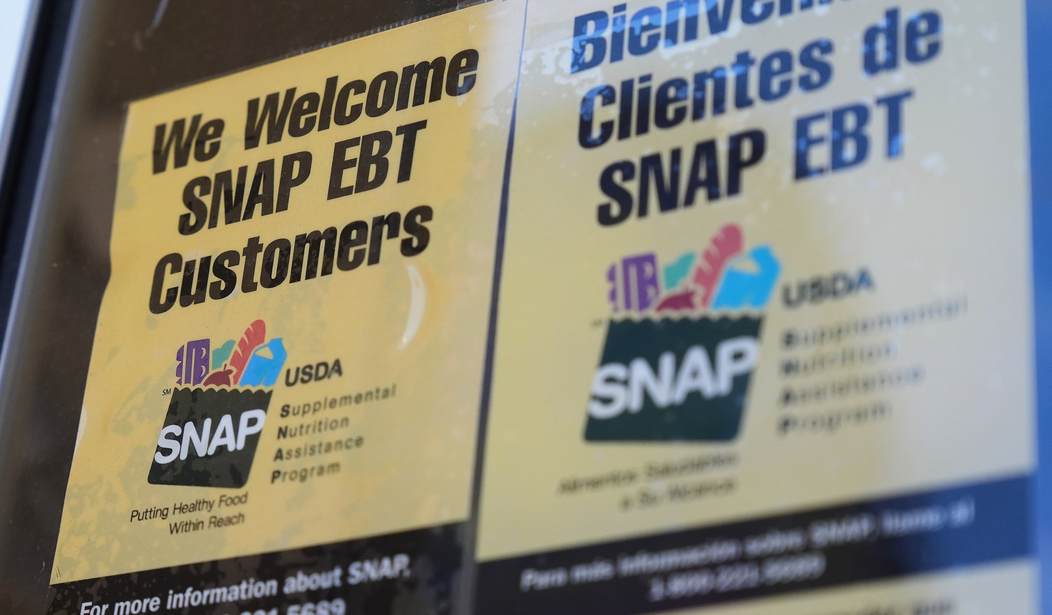
For years, research has shown that access to food stamps or SNAP, the Supplemental Nutrition Assistance Program, is associated with a lower risk of firearm injury. States that expanded SNAP programs saw lower rates of firearm-involved suicides, according to a 2024 study. The following year, an Emory University study found that every 10 percentage point increase in state-level SNAP benefits corresponded to a 4 percent decrease in firearm deaths among Black Americans.
Last year, Black and Hispanic Americans were twice as likely as white Americans to report experiencing food insecurity; those disparities show up in the emergency rooms where gun violence victims are treated. After more than three years in an Atlanta emergency room, Dr. Randi Smith, a trauma surgeon and public health researcher, noticed that many of the gunshot patients she was treating were going back into food-insecure communities. In 2020, she published a groundbreaking study of more than 1,600 gunshot patients and found that limited access to healthy food had a strong statistical association with rates of gunshot injury in Atlanta. Of 33 zip codes she studied, just five with high levels of food insecurity accounted for half of all the gunshot injuries in the dataset.“When I looked at some of the social drivers of health that led people to be injured in the first place, or that impacted their recovery, I always kept coming back to food,” said Smith, who co-authored an op-ed earlier this year in the Bulletin of the American College of Surgeons suggesting that food assistance be included in trauma recovery. “The root cause of food insecurity is probably the same root cause of gunshot wounds, which is having limited access and disinvestment in the basic needs of certain communities.”
At a macro level, this kind of makes sense. Violent crime tends to be highest in low-income areas, though even in those communities there are wide disparities in violence. Just one percent of a city's population can be responsible for more than half of its violent crime, and about 50 percent of violent crime can be found in just five percent of a city's land area.
And so far, there doesn't seem to be much evidence that a reduction in SNAP participation is leading to an increase of violence. The Trace, for example, claims there's been a 53 percent reduction in SNAP participation in Arizona since last July. According to the Crime Index, violent crime is down 3.6 percent in Arizona this year, and homicides have dropped by more than 20 percent.
Florida has seen a 17 percent decline in SNAP participation, along with a 17.8 percent decline in murders and a 17.5 percent decline in violent crime overall.
Louisiana's SNAP participation rate has fallen by 16 percent, and the number of murders has decreased by 11 percent, with a 6 percent decrease in violent crime overall.
Tennessee's SNAP participation rate has dropped by 14 percent, but murders have plummeted by 36 percent, and violent crime overall is down by 22.5 percent.
I suppose you could argue that the increase in shootings won't happen right away, but it seems to me that if food insecurity really is a cause of violence it wouldn't take too long to see the effects of these reductions in SNAP participation. Instead of a worrisome increase in shootings, though, we're seeing some substantial drops in both violent crime overall and murders specifically in states that have seen some of the largest cuts to SNAP.
It'd be easy enough for The Trace's reporters to crunch these numbers themselves, but they also wouldn't have much of a story... or at least not one they want to tell. As it turns out, you can reduce the number of people receiving SNAP benefits without causing an explosion of violent crime, and we're watching the claims of anti-gun academics get debunked in real time.
Editor’s Note: The radical Left will stop at nothing to enact their radical gun control agenda and strip us of our Second Amendment rights.
Help us continue to report on and expose the Democrats’ gun control policies and schemes. Join Bearing Arms VIP and use promo code FIGHT to receive 60% off your membership.











Join the conversation as a VIP Member