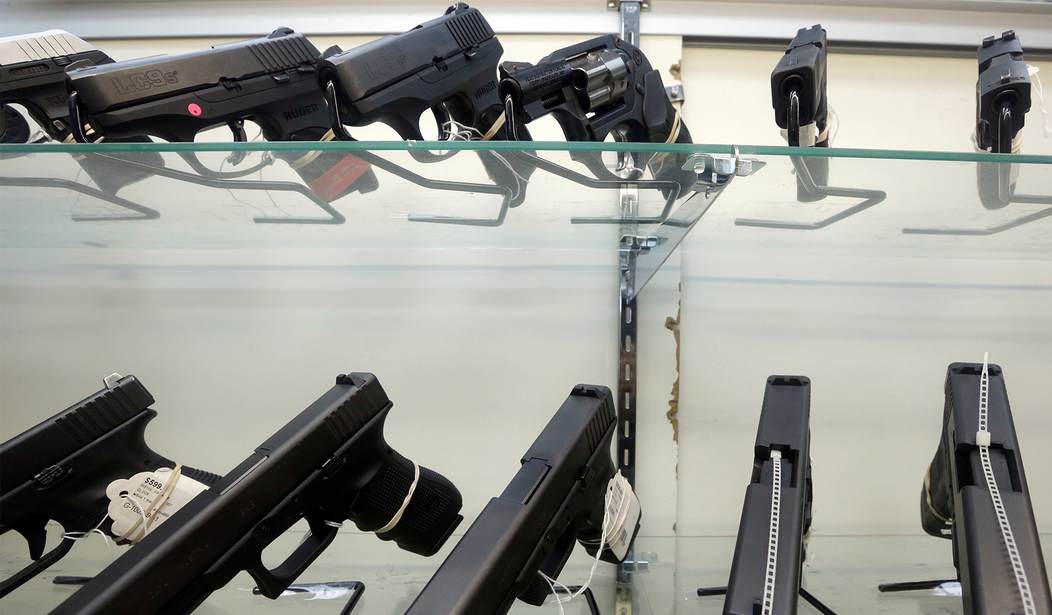
Pennsylvania is surprisingly decent on gun rights. They're not perfect, but for a state with two major metropolitan areas and a Democrat in the governor's mansion, they're pretty decent. However, it seems there's a quirk in the law, one that seems to have only been amplified as important following the Supreme Court's decision in Hemani.
See, while that ruling was definitely pro-gun, the Court included a tidbit that, well, might just create problems.
At least, that's one law professor's take on it.
As in so many other famous Supreme Court cases, the real action [in Hemani] was in a footnote—in this case, footnote 6. Subsections (g)(1) and (g)(4) of section 922 are the part of federal gun law that disarms felons and people who have been adjudicated mentally defective or committed to a mental institution. The Court noted that both “involve some manner of pre-deprivation process before an individual’s Second Amendment rights are lost. For that reason, they differ from subsection (g)(3) and nothing in the Court’s opinion “should be taken to cast doubt on them.” So the footnote shelters those two types of bans only because process comes with them.
Pennsylvania’s law puts that to the test. Under the Mental Health Procedures Act, a physician’s certification authorizes an individual’s detention for up to 120 hours, and the examining physician’s certification during that hold costs the citizen the right to possess a firearm indefinitely, until a court restores his rights. Footnote 6 forces the question whether such a person would have received “some manner of pre-deprivation process” first. Answering it takes two steps: What does the U.S. Constitution count as due process, and what does Pennsylvania’s statute provide?
Now, the author, Jonathan S. Goldstein, goes into the details of those two steps, including how Pennsylvania would defend it, and I think he makes a valid case. As I understand it, a doctor makes the request and a judge decides to grant the 120-hour hold, thus meeting the due process considerations, even if the judge's approval is little more than a rubber stamp.
That means someone who has a bad week at age 19 and considers, say, taking his own life and is placed in a psychiatric hold under a doctor's orders loses his gun rights forever, and Hemani actually makes the argument that it's constitutional.
I'm pretty sure the justices didn't have a situation quite like that in mind, and the real question has to then be whether a temporary hold counts as the degree of adjudication necessary for someone to be labeled as "mentally defective" for the rest of their lives.
I don't think it should. At an absolute, bottom-of-the-barrel minimum, there should be a process for gun rights restoration, but even that should be unnecessary because holy crap, the idea of one person having that much power over your rights is downright terrifying.
Remind me not to relocate to Pennsylvania, even if it's a lovely state.
After all, I don't want someone I care about to lose their right to keep and bear arms, and essentially their right to armed self-defense in any meaningful way, because of a temporary lapse in mental health.
Editor’s Note: The radical Left will stop at nothing to enact their extreme gun control agenda and strip us of our Second Amendment rights.
Help us continue to report on and expose the Democrats’ gun-grabbing schemes. Join Bearing Arms VIP and use promo code FIGHT to receive 60% off your membership.





Join the conversation as a VIP Member