








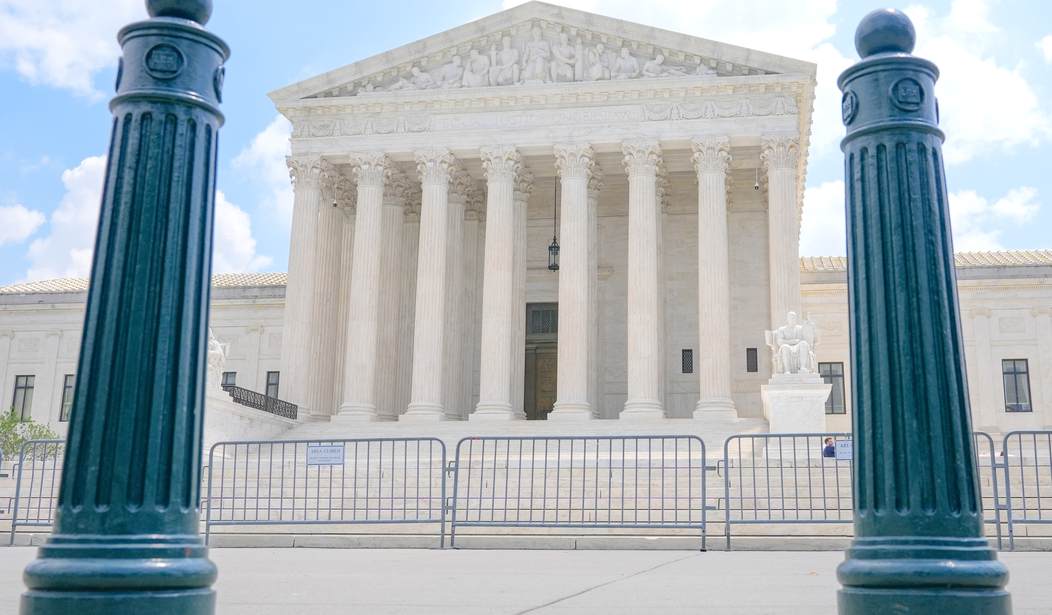
Hawaii's "vampire rule" prohibiting concealed carry on all private property open to the public was always an outlier law, with only a handful of states attempting to impose similar restrictions after the Supreme Court struck down "may issue" concealed carry licensing in Bruen back in 2022. In the wake of the Court striking down Hawaii's law in Wolford a few weeks ago, there's been some grumbling from the gun control lobby about SCOTUS supposedly making us less safe, but there's been at least as many complaints about how the Court reached its decision.
New York University law professor Daniel Harawa is one of several commentators who believe SCOTUS ignored uncomfortable parts of our history in order to rule Hawaii's law out of order. Specifically, the critics take issue with the Court's treatment of a law adopted in Louisiana at the end of the civil war that prohibited carrying arms onto plantations without the express consent of the plantation owner.
In a new column, Harawa claims the 1865 law is a "dead ringer" for Hawaii's default ban on carrying on all private property open to the public, though I'd argue the Hawaii law was far broader in both its scope and intent. The Louisiana law was limited to plantations, not all private property, and though it was written in a racially-neutral fashion it was primarily aimed at preventing newly-freed slaves from bearing arms.
It was also an outlier law, not one that was well-established or widespread. That alone is enough for the justices to have rejected the Louisiana statute as a legitimate historical analogue to Hawaii's "vampire rule," but Harawa seems convinced that the Court should have struggled more with the history behind the statute.
If history is supposed to constrain judges, the court should have explained why some history counts and why some does not. The Wolford majority offers no coherent account on this front. Indeed, the court relied on the same Reconstruction period to reinforce its understanding of the Second Amendment and its application against the states, explaining that the framers of the 14th Amendment understood that "the right to keep and bear arms was critically important for vulnerable blacks during this period." And this was not a new move. Throughout its modern Second Amendment jurisprudence, the court has weaponized the racist history of disarming Black people to justify its expansive view of the Second Amendment's scope.
Contrary to Harawa's claims, the Court did explain why this particular law didn't help Hawaii's case.
Regardless of this provision’s pedigree, it has no probative value for present purposes. As we have said, in considering the probative value of a historical analogue, we must consider whether it was widespread, well-known, and widely accepted. Because this statute was neither widespread nor widely accepted, it carries no weight.
The justices went even further, though. Hawaii cited the Louisiana law as part of a national tradition of gun regulation. The Court disagreed.
As we laid out in McDonald, the right to keep and bear arms was crucially important for vulnerable blacks during this period. And this was well-understood by the Republicans in Congress who were responsible for drafting, approving, and securing the ratification of the Fourteenth Amendment. The Republican Party Platforms of 1856 and 1860 called for protection of the right to keep and bear arms for self-defense. Unless we put history entirely out of our minds, Hawaii’s claim that this tainted artifact illuminates the original understanding of the right to keep and bear arms cannot be taken seriously.
That's not "whitewashing" history, as Harawa claims. The Supreme Court considered the Louisiana law cited by Hawaii and rightfully held that it has no bearing or legitimate connection to the original understanding of the right to keep and bear arms; a right that exists for "the people" at large.
This is also not "weaponizing" the racist roots of gun control, which seems to be Harawa's primary argument. In his column, Harawa linked back to a law review article he penned in 2023 entitled NYSRPA v. Bruen: Weaponizing Race, in which he contends that the Supreme Court "has not seemed keen on revisiting its Fourth Amendment policing doctrines that make public carry for Black people particularly precarious." In other words, bringing up the racist history of gun control while striking down modern gun laws is problematic if the Court isn't also willing to treat the Fourth Amendment as robustly.
I'm still not sure why that means the Court is "weaponizing" history, though. And it certainly doesn't mean that the justices are ignoring the racist history of gun control laws. Quite the opposite, as a matter of fact.
Harawa seems to be doing some selective reading of the Court's opinion. He brushes aside the fact that the Louisiana law was an outlier that was never beneficial to Hawaii's case so he can focus on the idea that SCOTUS is somehow ignoring uncomfortable parts of US history.
To treat those laws as too morally contaminated to engage is not simply to leave a gap in the court's historical analysis. It diminishes Black Americans' place in our constitutional history by erasing the legal harms that Black people have faced, the effects of which reverberate through today. Across the country, public institutions have softened or removed references to slavery, segregation, and racial discrimination as if they were not a part of the American tradition. There is a growing impulse to sanitize the ugliest chapters of American history. Wolford seems to reflect a similar instinct.
That's nonsense. The Court hardly sanitized the Louisiana Black Codes in its decision. And even if you accept the premise that slavery, segregation, and racial discrimination are part of the American tradition, so too are emancipation, integration, and racial equality. The Second Amendment has always protected the right of "the people" to keep and bear arms. Part of our history is the expansion of who "the people" are, and whatever the views of Americans 150 years ago, it is unquestionably true today that the color of your skin does not automatically disqualify you from being a part of the political community, which is how SCOTUS has defined "the people" when it comes to our Second Amendment rights.
I'm sympathetic to Harawa's desire to see the Court expand the Fourth Amendment's protections. He loses me, however, with statements like this:
Before Bruen came out, I wrote that no matter what happens, Black people stand to lose. Here we are. We lose because we have a Court that’s invoking race when convenient but ignoring it when not. We lose because, while itinerantly invoking racial justice, the Court is at the same time hurriedly working to dismantle race conscious protections designed to ensure Black Americans’ full and equal citizenship. We lose because the Court has stripped us of our agency, depriving Black people (and all others) of the democratic power to enact laws that best serve our interests. We lose because whatever the scope of the Second Amendment, the scope will always be more limited for Black people. So much for racial justice.
We do not have the power to enact laws that "best serve our interests" while violating our constitutional rights. And I reject the idea that the scope of the Second Amendment will always be more expansive for white Americans. There is certainly an ongoing struggle to ensure that our right to keep and bear arms can be freely exercised no matter our race, color, creed, or income, but I firmly believe that fight can be won... and decisions like Wolford move us closer to victory.
Editor’s Note: The radical Left will stop at nothing to enact their radical gun control agenda and strip us of our Second Amendment rights.
Help us continue to report on and expose the Democrats’ gun control policies and schemes. Join Bearing Arms VIP and use promo code FIGHT to receive 60% off your membership.
Join the Conversation
VIP members get the ability to comment on articles.