The Third Circuit's decision in ANJRPC isn't just another circuit court opinion. It's likely to become the focal point of the debate over "assault weapon" bans before the Supreme Court hears oral arguments this fall. If the justices ultimately invalidate these bans nationwide, the Third Circuit's reasoning could serve as the blueprint for that decision—which is why critics are already trying to dismantle it piece by piece.
One early attempt comes from Duke Center for Firearms Law Research Assistant Sarah Bloomquist, who takes issue with the "common use" test that's a part of the Supreme Court's guidance on whether or not an arm is protected by the Second Amendment. Bloomquist says that "courts are split on whether the 'common use' inquiry belongs at Bruen’s first or second step," adding that courts and litigants (but not defendants, according to her) also "disagree about exactly what 'common use' means, and how to measure it."
There should be no debate over where the "common use" inquiry takes place. In Wolford, the Supreme Court came right out and explicitly stated how the two-step inquiry works.
First, a court must determine whether the challenged law falls within the plain text of the Amendment’s language by asking whether the law applies to “the people” (i.e., all members of the political community) and restricts the “keep[ing]” (i.e., possession) or“bear[ing]” (i.e., carrying) of “Arms” (i.e., weapons customarily used for offensive or defensive purposes). If a challenged law falls within the plain text, it is presumptively unconstitutional—which means that it may violate the preexisting right that the Amendment codified.
Notice what's absent from the Court's description: any requirement that plaintiffs first prove the arm at issue is in common use before the Second Amendment's text is implicated.
Whether an object is an "arm" for purposes of the Second Amendment is a straightforward textual question. The common-use inquiry is different. It comes from Heller's explanation that the Amendment protects those arms typically possessed by "law-abiding citizens for lawful purposes" while permitting prohibitions on "dangerous and unusual" weapons. The Third Circuit didn't insert a new step into Bruen. It simply applied Heller's rule after concluding that New Jersey's law plainly burdened protected conduct.
My colleague Tom Knighton touched on Bloomquist's second question in a piece published on Monday, and it's true that SCOTUS hasn't detailed exactly what that phrase means (though I suspect they will when they issue their decision on "assault weapon bans).
One way of determining what "common use" means is by looking at what the Supreme Court described as its opposite. In Bruen, the court said that those arms that are "highly unusual in society at large” are the mirror of arms in common use. The Supreme Court has also said that arms typically possessed by law-abiding citizens for "lawful purposes" are in common use. And while the Supreme Court has held that individual self-defense is at the core of the right to keep and bear arms, it did not limit the Second Amendment's protections only to personal protection. All lawful purposes matter, not just self-defense.
Is it a numbers game? Can an arm that's typically used for lawful purposes still be "dangerous and unusual" because there aren't that many of them in circulation? I don't know that SCOTUS has given us an answer, but frankly that's irrelevant to any discussion about bans on semi-automatic rifles.
This is maybe the most infuriating argument of all due to its bad faith. The AR15 is the undisputed most popular rifle in America. In fact, it's one of the reasons antigunners have argued it should be banned! i.e. "weapons of war are flooding our streets!" Even Sotomayor… pic.twitter.com/gAYO8Ou1fs
— Kostas Moros (@MorosKostas) July 28, 2026
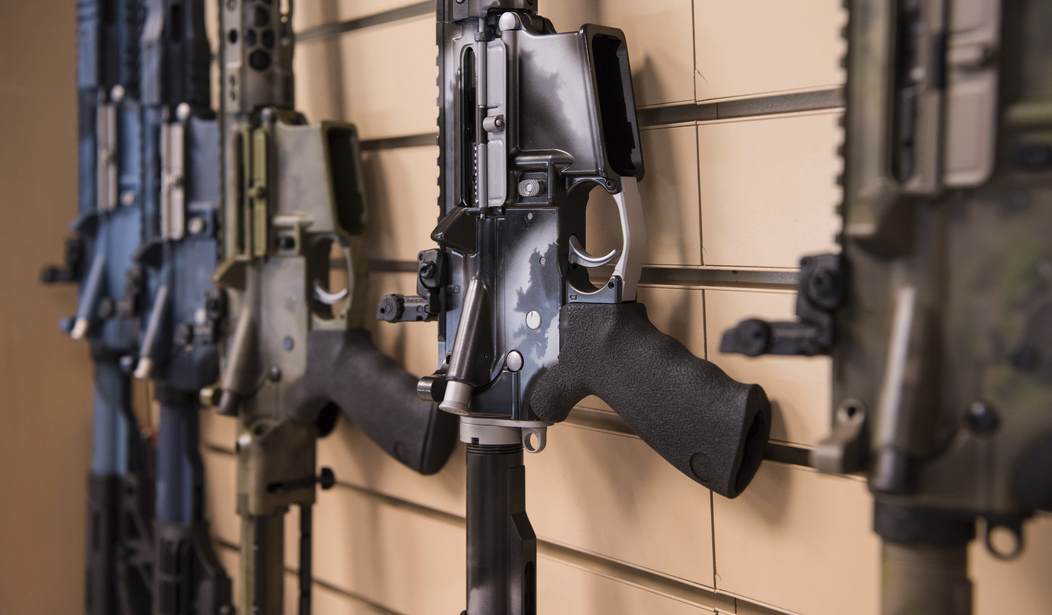
AR-15s and other semi-automatic rifles are hardly "unusual." There are tens of millions of them in the hands of lawful gun owners. They are not disproportionately used in violent crimes. In fact, they're hardly used at all for unlawful purposes.
Again, I don't think this discussion is even necessary when talking about "assault weapon" bans, but Bloomquist (and several Third Circuit judges) vehemently disagree.
This approach places heavy emphasis on circulation data, which, as Judge Chung’s partial concurrence and dissent notes, can be unreliable: the 24-million figure itself rests on a survey with a disputed “methodology and reliability,” extrapolated from just 4,665 responses drawn from a “cultivated pool of individuals.” Moreover, as Judge Krause’s dissent points out, “[c]irculation data reveals only how many units of a weapon manufacturers have pumped into the marketplace, not how many people have actually chosen to keep and bear the weapon.” That, she explains, incentivizes manufacturers to flood the market so weapons secure constitutional protection before legislators can regulate them. Fear that a weapon could become common, meanwhile, may cause legislators to pass hasty regulations, which could hinder “the development of useful technologies before their risks could be assessed.” This emphasis on circulation likewise diminishes the impact of competing data, such as the evidence New Jersey offered of semi-automatic rifles’ disproportionate criminal use. It may also undercut the democratic process. As Judge Krause’s dissent explains, the majority’s focus on circulation “disregard[s] the democratic will of the People of New Jersey."
Two points: first, firearm manufacturers don't create constitutional rights by overproducing inventory. They create bankruptcy. Krause's dissent ignores the law of supply and demand in favor of a conspiracy theory involving gun makers flooding the market at great economic risk to themselves.
Secondly, the "democratic process" doesn't matter one bit if the outcome leads to a violation of the Constitution. Does the majority's opinion in ANJRPC disregard the will of the people of New Jersey? Perhaps. But constitutional rights exist precisely to place certain liberties beyond the reach of ordinary majorities. A legislature can't vote away free speech, religious liberty, or the Fourth Amendment just because a majority supports doing so. The Second Amendment is no different, no matter how badly some judges want to treat it as a second-class right.
Bloomquist believes that the Third Circuit's opinion "ventures into unsettled waters, and ambiguities over where in the Bruen framework 'common use' belongs, and what it entails, are not going away." I disagree.
The Third Circuit's opinion uses the Supreme Court's jurisprudence dating back to Heller to navigate these waters, and any ambiguities over what it means for an arm to be in "common use" are irrelevant given the popularity of AR-15s and other semi-automatic long guns. The Third Circuit's opinion in ANJRPC doesn't break with Heller. It applied Heller's principles to New Jersey's gun and magazine ban and rightfully concluded that it is an infringement on our right to keep and bear arms.