The Second Amendment is the only enumerated right that stops at the border of the state where you live. You don't have to beg permission from Florida to exercise your First Amendment rights if you're taking your family to Disney World. You don't lose your Fourth Amendment protections when you go experience Mardi Gras in New Orleans. But if you want to keep and bear arms once you cross your state line, you need to have pre-approval from the state where you plan on carrying.
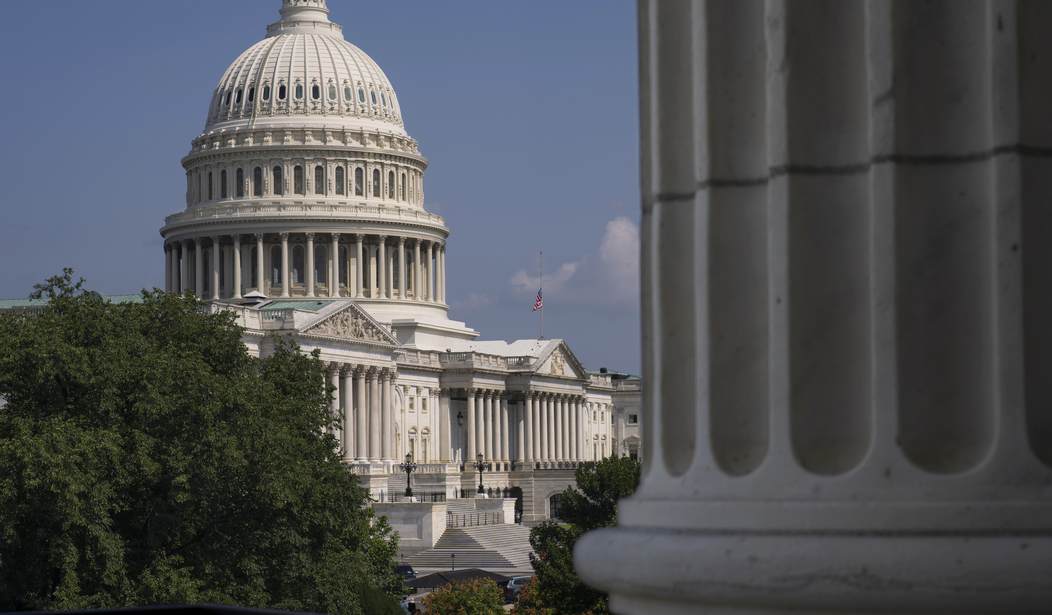
National right-to-carry reciprocity is the answer, and there are several bills in Congress that would address this problem, including HR 38, also known as the Constitutional Concealed Carry Reciprocity Act. A new bill introduced in the Senate by Montana Sen. Tim Sheehy, on the other hand, is a step in the wrong direction.
A retired Army special operations veteran is urging Congress to give qualified former special operators nationwide concealed carry privileges enjoyed by retired U.S. law enforcement officers, arguing the elite troops are uniquely trained to protect themselves and Americans.
"It needs to happen," Gavin Glasenapp, who served 20 years and 12 combat deployments in the Army, told Fox News Digital on Monday.
The Special Operations Forces Concealed Carry Act was put forward last week by Sen. Tim Sheehy, R-Mont., months after a companion bill by the same name in the House was introduced in April by Rep. Pat Harrigan, R-N.C.
"These are proven men and women," Glasenapp, the training operations manager at Delta Defense for the U.S. Concealed Carry Association (USCCA) said, adding "they're specially selected, uniquely trained."
"I can think of no better group of people to be equipped to defend themselves and others around them. In fact, that's part of our core values here at Delta Defense.
"We believe every American has the inalienable right to self-defense, and I can think of no better group that to really emulate that and really show you what that looks like."
I appreciate Glasenapp's service and I'll take him at his word when he says that he believes every American has the inalienable right to self-defense, but if that is the case then I don't see how he can square that position with support for a bill that would allow only a chosen few to exercise their right to carry in all 50 states.
Glasenapp says he can't think of a better group of people to be equipped to defend themselves and others around them than special forces. I can. It's a group called "the people," and they're the ones whose right to bear arms is explicitly protected by the Constitution. The Second Amendment doesn't exist for the "specially selected" or "uniquely trained." It exists for the ordinary American citizen.
My objections to Sheehy's bill are no different than the ones I raised when Rep. Harrigan introduced his version of the legislation back in April.
The right to keep and bear arms is a right of "the people," and whether he realizes it or not, Harrigan's bill (like the Law Enforcement Officers Safety Act that's already in place) turns that right into a privilege reserved for a chosen few. In the case of LEOSA, it's current and former police officers. Harrigan's bill would apply that same selective standard to special operators. In both cases, the framework elevates certain members of our society above we the people, and that's not how our Constitution works. I'd argue that to say that police officers and/or special operators have "earned" the ability to carry a concealed firearm in all 50 states actually undercuts the basic premise of the Second Amendment.
Does it make sense to "trust retired police officers to carry concealed nationwide"? Sure, and it makes sense to allow current and retired special operators to do the same. It also makes sense to allow every lawful gun owner to carry concealed in all 50 states, because that's what a right of the people looks like; it applies equally across the land, and not just to select individuals or groups.
I don't have a problem with law enforcement or special ops warriors carrying nationwide. My problem is a system where only law enforcement and operators have the ability to do so.
The counter argument is that this bill, like LEOSA, still moves the ball forward. Once lawmakers see that national right-to-carry reciprocity for these groups hasn't led to mayhem, the theory goes, they'll be more likely to support national right-to-carry reciprocity for the rest of us.
The problem with that argument is that we heard the same thing when LEOSA was making its way through Congress 22 years ago, and it doesn't appear to have made a lick of difference in the years since.
Like Harrigan, Sheehy is also a co-sponsor of the Constitutional Concealed Carry Reciprocity Act. I would encourage the senator, just as I encouraged the congressman in April, to stick with the legislation that recognizes the Second Amendment rights of we the people and forget about the bill that (intentionally or not) treats this right as a privilege reserved for a chosen few.
So far, most Republicans in Congress are sticking with reciprocity for all. Harrigan's bill has just six co-sponsors, compared to 189 for H.R. 38. Sheehy's companion bill will hopefully receive the same cool reception on Capitol Hill, and we can continue pushing forward for a true national right-to-carry reciprocity law.
Editor’s Note: President Trump and Republicans across the country are doing everything they can to protect our Second Amendment rights and right to self-defense, even if a few of them get a little sidetracked from time to time.
Help us continue to report on their efforts and legislative successes. Join Bearing Arms VIP and use promo code FIGHT to receive 60% off your membership.







Join the conversation as a VIP Member