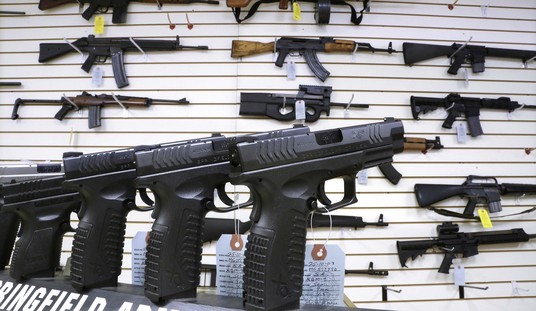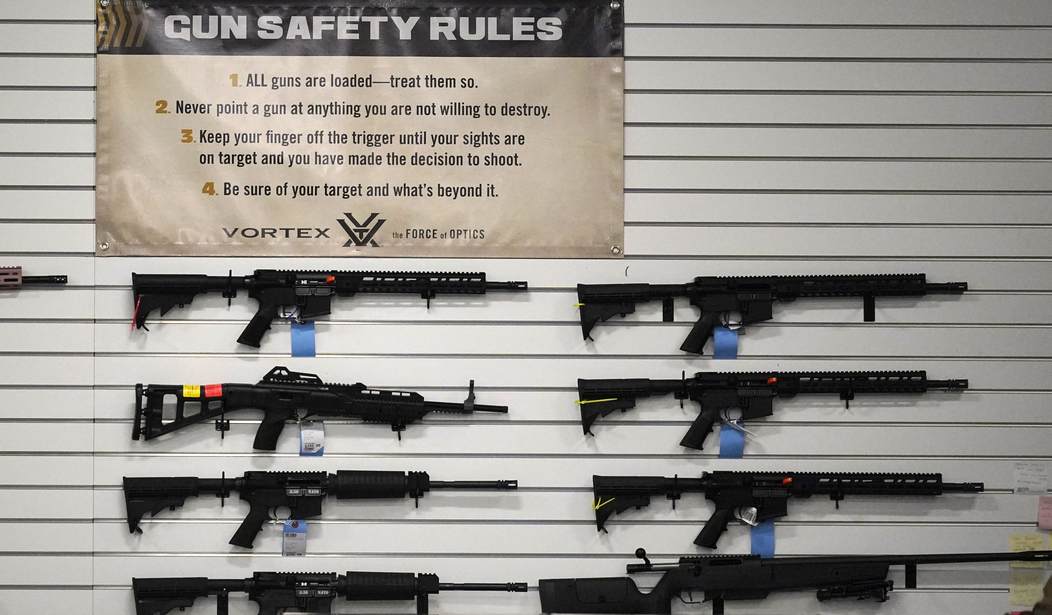
Massachusetts is one of a handful of states that has adopted a "roster" of guns that are available for sale to the general public. While the state's roster was originally aimed specifically at handguns, under the omnibus gun control law known as Chapter 135 a new roster of "Assault Style Firearms" is supposed to be created as well.
The Firearm Control Advisory Board, which is the body established by the Massachusetts legislature to come up with the makes and models covered in the new roster, recently released a draft proposal, and Gun Owners Action League executive director Jim Wallace, who is the token Second Amendment supporter on the board, says there are serious flaws with the plan.
Wallace says the law is clear that the roster is supposed to consist of "banned" firearms, with anything not on the list available for sale and to possess in the state. That is not the approach the Firearm Control Advisory Board is taking, however.
First and foremost, Section 131M does not use the term “banned” because there are no “banned” firearms under that section. There are heavy restrictions and grandfathering dates on a new classification of firearms, but no outright bans.
- The proposed roster from the sub-committee is being called the “Prohibited Assault-Style Firearms Roster.” The term “prohibited” does not appear in 131 ¾ or 131M.
- FCAB intends to publish the initial roster with the firearms enumerated in Section 121 and then add more firearms to it over time. This is incredibly dangerous since this is not a roster of approved firearms that can be added to. This is a roster of banned guns that, once published, should be complete in order to avoid potential pitfalls and confusion. Otherwise, retailers and LTC holders are going to be led to believe anything not on the roster is legal.
- The explanation of grandfathering dates is incredibly complicated and confusing – especially given that there is no legal consensus how to interpret them.
That second bullet point is particularly concerning, because it sets up a situation where anti-gun bureaucrats can continue to add in firearms that, for the moment, aren't prohibited or restricted in the state.
An “approved” list can be added to from time to time as it tells retailers what they can sell. One of the dangers of a “banned” roster being added to over time will endanger retailers and gun owners as they will likely refer to the roster to see if a particular item is listed. If not, they could sell/purchase a firearm only to have it added to the banned roster later. The draft roster contains a warning that it is not exhaustive, making it absolutely useless as the law itself contains a catch-all provision in the features test. This is not “belt and suspenders,” this is more emperor has no clothes.
Yet another legal issue is that there are no “banned” ASFs in Massachusetts. There are many semi-automatic firearms with restrictions on when they had to be owned, which the state seems to make it up as they go. This means the roster should be blank.
The draft roster proposed by FCAB is a legal nightmare for gun owners and sellers, who have no idea when or if a gun that's legal to sell and possess today will become restricted in the future.
These rosters are unconstitutional to begin with. Thankfully, there is an ongoing challenge to the state's handgun roster that's making its way through the federal court system. The DOJ's Civil Rights Division recently asked for five minutes to participate in oral arguments, siding with the plaintiffs who are suing to strike down the roster, and that could be useful as the Granata case makes its way to the Supreme Court.
The "Assault Style Firearms" roster will likely be subject to a separate legal challenge if and when it takes effect. If, as expected, SCOTUS strikes down "assault weapon" bans next term, the roster would also be dealt a serious blow. As Wallace notes, though, at the moment the draft proposal doesn't contain any actual bans, though it does put in place severe restrictions on many commonly-owned firearms.
Will that be enough for the courts to keep any "assault style" roster in place? I wouldn't think so, but I also can't see the Massachusetts legislature willingly revising their language, so we should expect even more legal challenges to Chapter 135 as more of the sweeping law takes effect.
There is one more way to wipe out the roster: repealing Chapter 135 at the ballot box. The Civil Rights Coalition has put a referendum to repeal the law on this November's ballot, and the No On 9 campaign is starting to generate some serious momentum. In a state like Massachusetts that's so hostile to the Second Amendment gun owners are still the underdog in the referendum campaign, but repeal is still the most straightforward way to get rid of these unworkable laws that could end up putting residents in legal jeopardy just for exercising their right to keep and bear arms.