Can federal railroad law override a state's Second Amendment protections? And can a company nullify the Second Amendment rights of employees through collective bargaining?
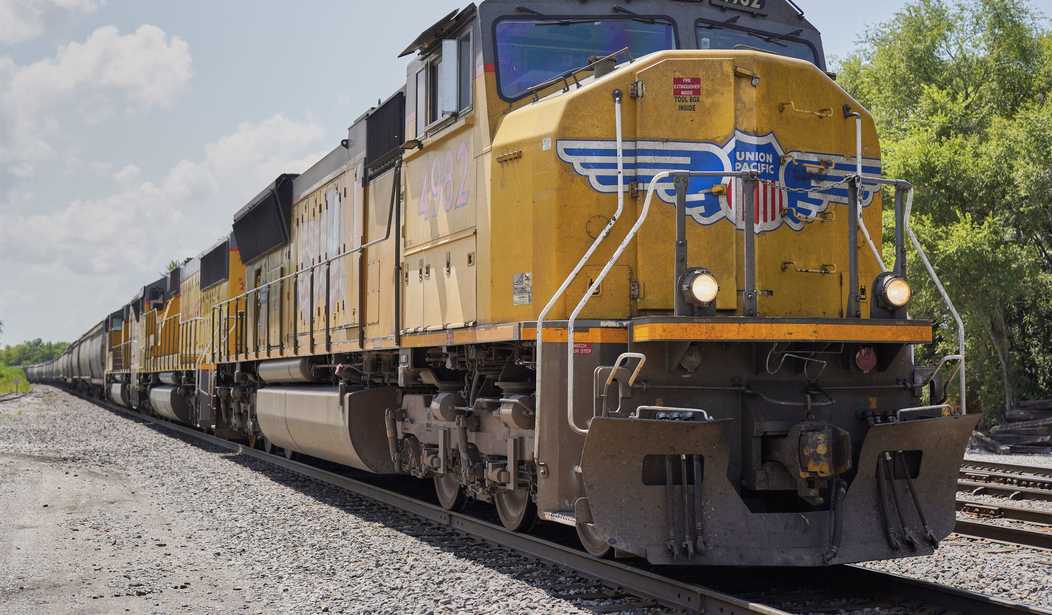
A federal judge in Arkansas has said the answer to both of those questions is "no," dealing Union Pacific a couple of blows in its attempt to get around the state's guns-in-parking-lots law.
Arkansas Code § 11-5-117 generally prohibits a private employer from preventing an employee from keeping a gun in their vehicle at work, provided the firearm is lawfully possessed, kept for a lawful purpose, stored out of sight, and inside a locked vehicle. The protection applies when the employer otherwise allows employees to park there.
Union Pacific doesn't like that law, and when employee Randy Franklin was disciplined by the company for having a gun in his locked vehicle in a company parking lot, Franklin fought back. An adjustment board eventually reduced his punishment and reinstated him, but Union Pacific declared that its zero-tolerance policy on firearms on company property would continue, and ultimately went to federal court seeking a declaration that federal law prevents Arkansas from enforcing its statute against the railroad. Franklin and a second employee filed suit of its own, and the state of Arkansas intervened as well to defend the parking lot law.
There's already been one trip to the Arkansas Supreme Court in this litigation. Union Pacific initially relied on the Federal Employers' Liability Act, arguing in part that Arkansas's employer-liability protections couldn't apply to the company and therefore the accompanying gun-parking provision couldn't either. The Arkansas Supreme Court, though, ruled that the provisions were severable and effectively put that theory to rest. Union Pacific then came back with two different federal arguments.
First, Union Pacific asserted preemption by way of the Interstate Commerce Commission Termination Act. Although ICCTA preemption can be triggered for various reasons, Union Pacific claimed ICCTA preemption for one reason only: that the “ICCTA impliedly preempts state laws that ‘discriminate against railroads.’” According to Union Pacific, “[a]s construed by the Arkansas Supreme Court . . . , Arkansas’s statutory regime discriminates against railroads by requiring them—and only them—to allow employees to bring firearms onto company property without fully protecting them from resulting civil liability.”
... The second preemption theory Union Pacific asserted in its First Amended Complaint was based on the Railway Labor Act. The First Amended Complaint alleged that Section 11-5-117 "is preempted by the RLA to the extent it would purport to allow an employee to bring a firearm onto a Union Pacific parking lot” because doing so “would violate . . . [existing] collective bargaining agreements."
Union Pacific said that the RLA prevents a state from removing this issue from the set of issues that are subject to collective bargaining between railroads and unions. And Union Pacific said that, in this particular case, the provisions of the operative collective bargaining agreement show that its employees (including Mr. Franklin) agreed to the Union Pacific rule against having firearms on Union Pacific property and thus waived any state law right to possess a firearm in Union Pacific’s parking lot.
U.S. District Judge Lee P. Rudofsky went into great detail about why Union Pacific's arguments fail, but summed up his decision with this succinct paragraph:
This is a gun-rights case. But it is not a usual one. It does not implicate the Second Amendment, at least not directly. Instead, this case asks whether federal laws concerning the operations of railroads prevent this Court from enforcing against a railroad a generally applicable gun-rights law adopted by the State of Arkansas. To cut to the chase, the answer is no.
Despite Rudofsky's ruling, Union Pacific's case will continue, as will the countersuit by Franklin and another Union Pacific employee. Rudofsky denied the railroad company's request for summary judgment, but requested that the parties take part in a status conference "to determine how they would like to proceed" following his order.
Union Pacific can keep working on this case all the live-long day if it wants. At some point, though, somebody at the railroad might want to blow the whistle on a legal strategy that's already gone off the rails twice.
Editor’s Note: The radical Left will stop at nothing to enact their extreme gun control agenda and strip us of our Second Amendment rights.
Help us continue to report on and expose the Democrats’ gun-grabbing schemes. Join Bearing Arms VIP and use promo code FIGHT to receive 60% off your membership.









Join the conversation as a VIP Member