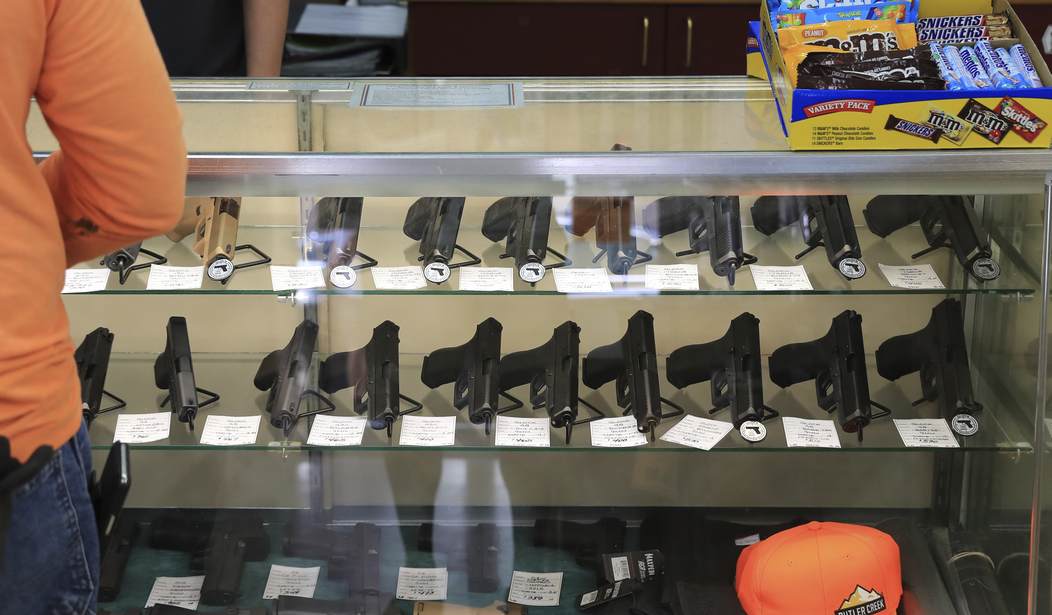
And this time it's not the state of Hawaii invoking the "spirit of Aloha" while ignoring the Second Amendment.
The Delaware Supreme Court this week overturned a lower court decision that found the state's broad ban on gun possession for adults under the age of 21 a violation of the state constitution. In doing so, the justices on the state Supreme Court also rejected the U.S. Supreme Court's "text, history, and tradition" test for gun laws, choosing instead to engage in an interest-balancing test that places the public safety interests of the state ahead of the right to "keep and bear arms for the defense of self, family, home and State, and for hunting and recreational use" as guaranteed by the Delaware Constitution.
The actual language of Article 1, Section 20 reads: A person has the right to keep and bear arms for the defense of self, family, home and State, and for hunting and recreational use. That language was adopted in 1987, less than 40 years ago, but the state Supreme Court has now eviscerated that right by pretending that language still permits banning most young adults from purchasing and possessing most firearms.
That [lower] court found the state had an important governmental interest in reducing gun violence among young adults and that the law was connected to that goal. However, it determined the law’s restrictions on handgun access, along with concerns over Delaware’s concealed-carry permitting process, created a near-total burden on the right to possess a firearm for self-defense.
The Delaware Supreme Court, however, ruled that the lower court did not give enough consideration to the law’s exceptions, arguing that reviews of firearm restrictions must consider how available exemptions are when determining the burden a law places on a constitutional right.
In their ruling, the majority said Delaware’s constitutional right to bear arms is not identical to the Second Amendment and that Delaware courts are not required to follow the federal government’s method of analyzing Second Amendment cases.
Instead, the court said Delaware will continue using its own constitution when reviewing firearm restrictions under Article I, Section 20. Under that test, the state must show an important governmental objective, demonstrate that the law is substantially related to that objective, and show that it does not burden the right to bear arms more than reasonably necessary.
The state's prohibition on gun purchases and possession for adults younger than 21 includes a carveout for those with a valid concealed carry permit, and also allows for the purchase and possession of shotguns and muzzle-loading rifles for individuals without a carry permit. That, according to the Delaware Supreme Court, makes the burden imposed on young adults "reasonable," even if it denies them access to some of the most popular arms in the country and requires them to obtain a carry license they may not need or want.
In its interest-balancing test, the state Supreme Court noted that 18-to-21-year-olds are the most common shooters and victims of shootings. Even if that is the case, though, the vast majority of young adults in the state will never be accused of committing a violent crime. Why should an overwhelming majority of young adults be punished for the actions of a small number of individuals?
If this kind of age-based discrimination is okay, what about racial discrimination? The homicide rate for black residents in Delaware is far higher than their white counterparts, so would the state Supreme Court okay a law that prohibited black residents from purchasing handguns without a concealed carry license, and prohibited their purchase of centerfire semi-automatic rifles altogether?
Of course not. Even if lawmakers pointed out that black residents are more likely to be perpetrators and victims of shootings, and that they were simply trying to balance the interest in public safety with the rights guaranteed under the state constitution, there is simply no way any of the justices would go along with a law that precluded someone from keeping and bearing arms because of the color of their skin. My guess is that those justices would indignantly (and rightfully) complain that such a law would punish scores of lawful citizens.
Why, then, should those same governmental interests in public safety allow for age to be a deciding factor in who gets to keep and bear arms without being subject to additional restrictions?
In some areas of the law the State already forbids age-based discrimination. Adults 18 and older, for instance, are protected under the Delaware Fair Housing Act. A lender can't discriminate against an 18-year-old applying for a mortgage based on their age, but now the Delaware Supreme Court has given the thumbs up for the state to discriminate against that 18-year-old if she wants to keep a handgun in her new home for self-defense.
Race and age are treated very differently under equal protection doctrine, of course. I'm not suggesting they're legally equivalent classifications, but I do believe there's a danger inherent in the court's reasoning. If statistical disparities among a demographic group are enough to diminish an individual's enumerated right, what's the limiting principle?
So what happens next? Originally, the plaintiffs in Birney raised a Second Amendment challenge as well, but agreed to stay the federal litigation while pursuing the claims in state court. I doubt that Birney could be successfully appealed to SCOTUS right now, but with the state-based lawsuit now fully adjudicated, the plaintiffs could revive their challenge on Second Amendment grounds. The Third Circuit has already held that 18-to-20-year-olds are part of "the people" who possess the right to keep and bear arms in a case called Lara v. Commissioner Pennsylvania State Police, and while that lawsuit dealt with the inability of young adults to carry a gun, not purchase or possess one, I think it would still pose a serious problem for Delaware going forward.
The Supreme Court has expressly rejected the kind of interest balancing deployed by the Delaware Supreme Court when it comes to the Second Amendment. Instead, the state would bear the burden of showing that this modern law comports with the historic tradition of gun ownership and regulation in the United States. What historical tradition permitted the government to prohibit an otherwise law-abiding adult from possessing a handgun in his own home unless he first qualified for a government-issued carry license? Delaware says an 18-year-old must demonstrate that she qualifies to carry a concealed handgun in public before she'll generally be allowed to acquire one to keep in her own bedroom for self-defense. I can't think of anything that comes close to Delaware's restrictions.
Delaware may have won the state constitutional battle, but that "victory" may very well clear the way for a federal constitutional battle fought on far more favorable terrain for the plaintiffs.