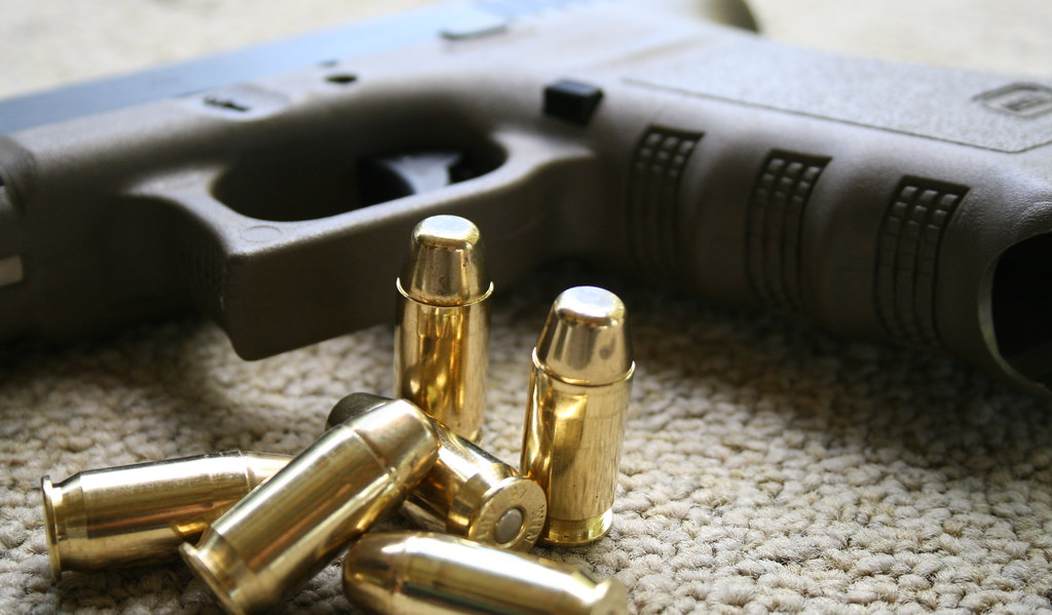
A district court judge in Maryland has denied a request for an injunction that would have halted Maryland's relatively new law prohibiting the sale of Glocks and other striker-fired handguns that the state has labeled "machinegun convertible" pistols.
In his decision, U.S. District Judge Richard D. Bennett assumed that the law implicates the plain text of the Second Amendment, which put the burden on the state of Maryland to show that the prohibition fits within the national tradition of gun ownership.
In Bennett's view, the state succeeded in that challenge by showing the law is "consistent with restrictions on excessively dangerous weapons which have been regulated in response to their criminal misuse and lethality."
Machinegun convertible pistols,which can be modified into combat weapons with the insertion of a 3D printed device,implicate technological advances our founders could not have foreseen. The State hassubmitted historic evidence supporting that SB 334 is a commensurate response to theadvances and to today’s unrelenting tide of mass shootings and gun violence.
A federal judge in Connecticut recently reached the opposite conclusion, deciding that the state is unlikely to prevail in defense of its own Glock ban. In her view, banning a particular firearm because it can be illegally modified and turned into a restricted item would place all kinds of firearms at risk. Rifles and shotguns can be turned into short-barreled firearms by sawing off a portion of the barrel, for instance, but it would be absurd to conclude that means all rifles and shotguns can be prohibited outright.
In the case of Glocks and other striker-fired pistols covered under the ban, they are not machine guns. The "switches" that can be used to modify these pistols and make them fire full-auto are already illegal to possess, and it's already illegal to modify these semi-automatic handguns. Bennett, however, contends that the semi-automatic firearms themselves are "excessively dangerous", and he can point to the Fourth Circuit's decision upholding Maryland's ban on so-called assault weapons in support of his theory.
In that lawsuit, the appellate court found that AR-15s and other semi-automatic rifles are unprotected by the Second Amendment because of "their ability to inflict damage on a scale or in a manner disproportionate to the end of personal protection," which the court believes makes them "weapons most suitable for criminal or military use."
If a semi-automatic rifle can be banned in the Fourth Circuit, it's not much of a stretch to say that semi-automatic handguns can be banned as well. Bennett cited the Fourth Circuit's “nuanced approach” for the historical analysis of Maryland’s assault weapons ban, "because it addressed an unprecedented societal concern—'horrific mass shootings'—and technological changes—'[r]apid advancements in gun technology' for weapons 'to kill as many people in as little time as possible.'"
Esssentially, that means that even though the historic laws that Maryland offered up as analogues to its modern prohibition don't have the same "why" or "how" as the Glock ban, they're still acceptable because of the flexibility offered by the "nuanced approach." The state cited gunpowder storage laws, restrictions on Bowie knives, and even 20th century regulations on short-barreled firearms in defense of the ban, and Bennett accepted virtually every one of the state's proffered analogues.
Maybe Bennett would have reached the same conclusion even if the Fourth Circuit hadn't already gutted the Second Amendment in cases like Snope v. Brown, but the appellate court's prior second-class treatment of the right to keep and bear arms certainly helped the defendants. I still find it odd that Bennett believes Glocks are excessively dangerous, given that they're in common use in many police departments across Maryland, as well as one of the most popular choices for a self-defense firearm by lawful citizens, but the same is true of AR-15s and the Fourth Circuit's already said that doesn't really matter.
So, for now anyway, the state's restrictions on commonly-owned handguns remain in effect. Criminals will continue to ignore that law, just as they ignore the law against converting these semi-automatic firearms.
Police, meanwhile, are exempt and can continue carrying the very handguns Maryland insists are "excessively dangerous."
Apparently a Glock is simply too dangerous for Marylanders to own... unless they happen to work for the government.
Editor's Note: Unelected federal judges are obstructing our right to keep and bear arms.
Help us expose out-of-control judges determined to turn our Second Amendment into a second-class right. Join Bearing Arms VIP and use promo code FIGHT to receive 60% off your membership.









Join the conversation as a VIP Member