Remember when violent crime was skyrocketing during the COVID pandemic, and everyone seemed to have their own explanation for why it was happening? Some blamed lockdowns and the disruption of everyday life. Others pointed to the riots and protests after George Floyd's death, along with the dramatic decline in proactive policing in many major cities.
University of Chicago economist Jens Ludwig has a new working paper published by the National Bureau of Economic Research that attempts to explain not only why homicides surged by about one-third between 2019 and 2021, but why they've plummeted in the years since.
His explanation is interesting, and he may be on to something. But there's one part of his argument that doesn't really add up to me.
Ludwig argues that most murders aren't committed during robberies, drug deals, or other crimes where violence is used to achieve some larger goal. Instead, they're the result of arguments that escalate into deadly confrontations.
According to Ludwig, the pandemic made those confrontations more common. People were stressed, isolated, anxious, and increasingly abusing drugs and alcohol. Their ability to make good decisions suffered, and relatively minor disagreements were more likely to turn violent.
That makes sense, or at least it doesn't ring false to me. We all remember how tense things were in 2020 and 2021, and it isn't hard to imagine those circumstances contributing to an increase in violence.
But Ludwig also believes that more people carrying guns in public helped drive the homicide spike, and that a subsequent decline in gun carrying contributed to the drop in murders.
That's where my skepticism kicks in.
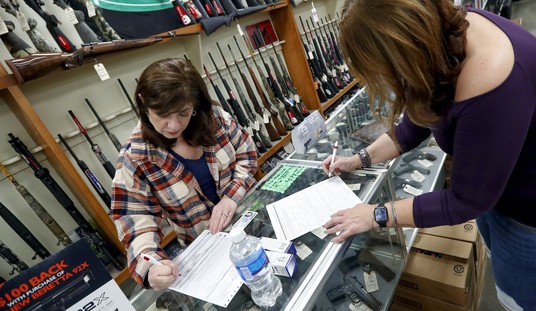
Ludwig acknowledges that there's no national database tracking how many Americans carry firearms in public. So instead of measuring gun carrying directly, he uses the percentage of police stops that result in officers confiscating a firearm.
In Chicago, that figure increased from 0.47 percent in 2019 to 0.98 percent in 2020. Ludwig also found substantial increases in California and New York City.
In New York, for example, the percentage of certain investigative stops resulting in gun recoveries reportedly jumped from about percent in 2019 to 10 percent by the middle of 2021, before declining to roughly 4 percent by the end of 2024.
Does that really prove that more people were carrying guns? Police don't generally randomly stop people on the street. They focus their attention on particular neighborhoods, suspicious behavior, and individuals they believe may be involved in criminal activity.
And when police departments dramatically reduce the number of stops they're making, as many did during the pandemic, the remaining stops may be even more targeted.
Let's say officers conduct 10,000 stops and recover 50 guns. That's a recovery rate of 0.5%.
Now suppose they conduct just 2,000 stops and recover 40 guns. Suddenly the recovery rate is 2%, even though they're actually recovering fewer firearms.
To be fair, Ludwig notes that Chicago police recovered more guns during the pandemic despite conducting fewer stops. That strengthens his argument that something significant was happening, but it still doesn't tell us how much gun carrying increased, or whether carrying itself was responsible for the rise in murders.
My biggest issue with Ludwig's analysis is that he doesn't adequately distinguish between people lawfully carrying firearms for self-defense and criminals illegally carrying guns. His New York City data, for instance, comes from the NYPD's most intrusive category of investigative pedestrian stops. Those encounters account for only about 1 percent of the department's interactions with people. I have a hard time believing those stops provide a real snapshot of licensed concealed carry.
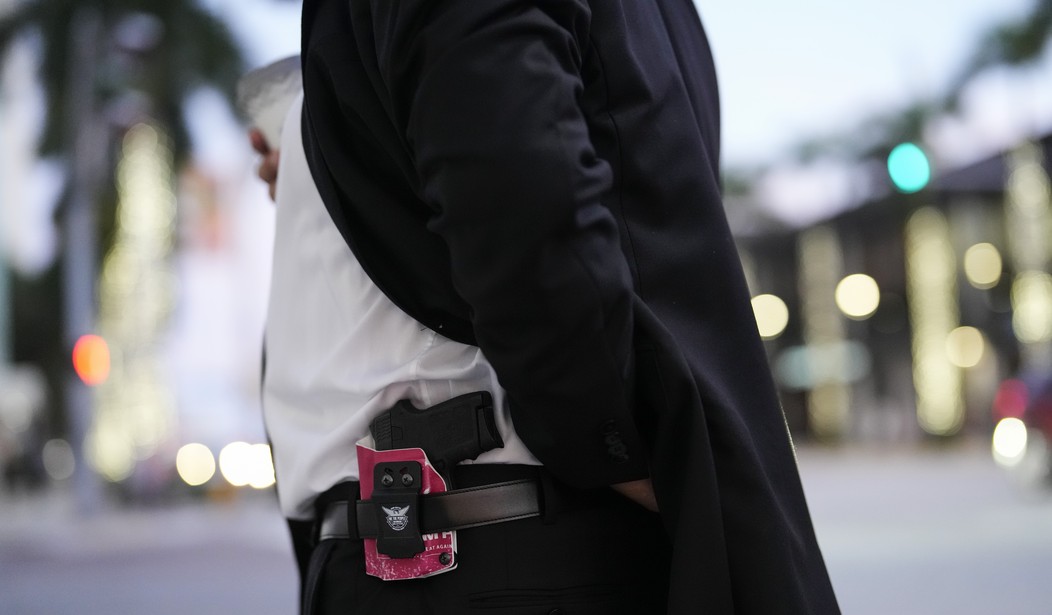
The people stopped and searched by police are not necessarily representative of the millions of Americans who legally carry handguns without ever attracting the attention of law enforcement. That's an important distinction, particularly when making assertions about "gun carrying" leading to a spike in homicides.
We've seen a dramatic expansion of permitless carry over the past several years. More than half the states now allow eligible adults to carry concealed firearms without first obtaining a government-issued permit. At the same time, homicides have fallen sharply. That doesn't prove permitless carry reduces murders, of course. But it's still clearly contrary to the idea that more lawful gun carrying inevitably produces more violent crime, including homicides.
And Ludwig's statistics don't establish that lawful carriers played any meaningful role in the pandemic homicide spike. In fact, Ludwig really makes no distinction between legal gun carrying and unlawfully carrying a firearm. But if increased gun carrying really contributed to the pandemic-era murder spike, wouldn't it make sense to examine whether Americans who were legally carrying firearms were committing more violent crimes?
Several states, including Texas and Florida, maintain records of concealed carry license revocations and criminal violations by license holders. Those records aren't perfect, and not every revocation involves a violent offense, but they could provide at least some insight into whether licensed gun owners became more prone to criminal behavior during the pandemic.
Ludwig doesn't examine that data. Instead, he relies on police gun recoveries, handgun sales, and the number of recently purchased firearms recovered in criminal investigations. None of those measures tells us whether law-abiding gun owners were suddenly more likely to commit violent crimes in 2020 and 2021.
That seems to be a pretty significant gap in his argument. If the increase in gun carrying was overwhelmingly among individuals illegally possessing firearms, that's one thing. If millions of Americans began carrying legally without any corresponding increase in criminal behavior among licensed gun owners, that's something else entirely.
Ludwig also points to the enormous increase in handgun sales during the pandemic, estimating that Americans purchased approximately 8 million handguns in 2019 and 14 million in 2020, before sales declined substantially.
Buying a handgun isn't the same thing as carrying one in public, though. Plenty of Americans purchased firearms during the pandemic for home defense, recreational shooting, or simply because they were concerned about the direction the country was heading. How many of those purchasers started carrying regularly? How many subsequently committed violent crimes? Ludwig doesn't establish those figures, and to be fair, I don't think he could if he wanted to.
Aother problem with treating declining gun sales as an explanation for declining gun carrying: guns don't disappear when sales slow down. Someone who purchased a pistol in 2020 can still carry it today. The fact that fewer Americans are buying new handguns doesn't mean fewer Americans are carrying the guns they already own.
To be fair, Ludwig himself acknowledges that the relationship between new gun sales and gun crime is puzzling, given the hundreds of millions of firearms already in circulation. I'd say that's a pretty important puzzle, and it's another reason why I haven't bought in to this theory.
I'm not suggesting Ludwig's entire argument is wrong. In fact, I think his emphasis on stress, impulsive behavior, and interpersonal conflict is one of the more compelling explanations I've seen for the pandemic-era homicide spike. It's also entirely possible that illegal gun carrying increased among individuals already involved in violent crime, who were less concerned about getting busted because of the police pullbacks in many cities.
But that's a different claim than suggesting that increased public gun carrying generally helped drive the rise in murders.
Ludwig hasn't shown that lawful concealed carriers contributed to the homicide surge, nor has he established how much of the increase was caused by more guns being carried rather than more people engaging in dangerous, violent behavior.
There's a world of difference between someone carrying a gun because they're looking for trouble and someone carrying because they want to be prepared if trouble finds them.
If we're going to understand what caused the extraordinary rise and fall in homicides, we need to recognize that distinction instead of lumping everyone who's armed into the same category. Ludwig's research is interesting, but when it comes to his conclusions about gun carrying, I think at the very least he needs to be more specific.