
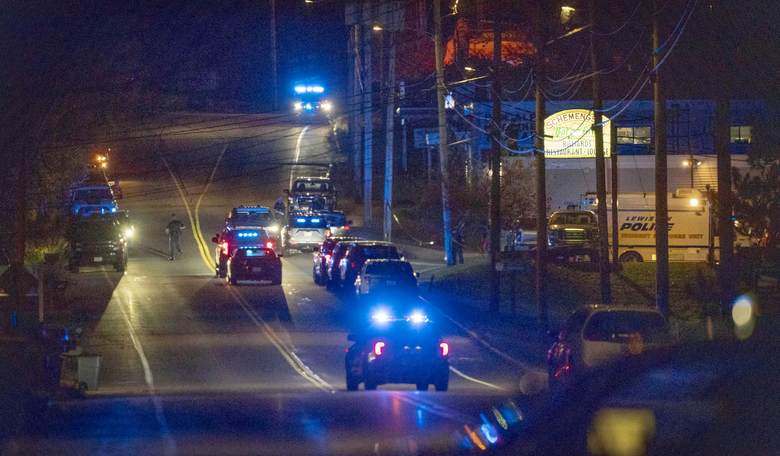
We've reported on the sharp increase in juvenile shootings in Lewiston, Maine on multiple occasions over the past few months, noting the growing frustration from residents and some officials about the revolving door in the juvenile justice system that's quickly returning many suspects to the streets, only to have them arrested again a short time later.
Though Maine has tightened its gun control laws in recent years, though these offenders are too young to legally possess a firearm to begin with, and further restrictions on lawful gun ownership aren't going to solve the problem. Juvenile justice reform is clearly needed, but a new report from Fox News suggests that immigration restrictions might be helpful too.
A New England city transformed by an influx of refugees and immigrants is now grappling with a youth gun violence crisis after police reported 35 gun-related incidents this year, 22 involving juveniles.
"I don’t feel safe. I fear for my life," Mohamed Muhumed, a Lewiston teenager, told Fox News Digital. "I saw someone get punched in the middle of the sidewalk over there. It’s crazy."
... Republican Rick LaChapelle, a former city council president who is now running for mayor, told Fox News Digital, "Our biggest problem is the system itself. The police department is doing an excellent job catching these people. We have one young man that's been arrested five times, I believe, for the same thing. He gets arrested, gets brought down to the youth center … gets released.
"It's been a one-party rule forever that has instilled the rules that there's no accountability," LaChapelle argued. "We need to change the rules of the system."
Fox News Digital reached out to Sheline to discuss his efforts to combat the gun violence, but the mayor didn't respond by the time this story was published.
No official city or police data indicates that Somali residents as a group are behind the violence nor establishes a connection to the increase.
But, LaChapelle said, "That seems to be who's being arrested right now."
A couple of Somali-American teens interviewed by Fox News pushed back on that notion, claiming that the increased violence is coming from "youth in general."
That might be true, but it could also be the case that Somalis are responsible for a disproportionate amount of juvenile violence, as appears to be the case in several cities in Minnesota.
Frankly, we shouldn't have to deal in suppositions here. If a disproportionate number of the juveniles involved in Lewiston's shootings are Somali immigrants or the children of Somali immigrants, residents deserve to know that. If they aren't, they deserve to know that too.
The answer matters because identifying the people responsible for these shootings is the first step toward figuring out how to stop them. If there are particular gangs, social networks, or ongoing feuds driving the violence, police and prosecutors need to know who is involved and what can be done to intervene before another teenager ends up wounded or dead.
It's clear that Lewiston has a serious problem with juvenile gun violence, and the existing system doesn't appear to be doing enough to stop repeat offenders. That's a failure that deserves far more attention than another round of restrictions on adults who are already obeying Maine's gun laws.
Teenagers who are engaging in criminal activity with guns need to face real consequences, and the city needs to have meaningful opportunities for intervention before their behavior escalates. Those aren't mutually exclusive goals, but those intervention efforts have to be targeted at those who are actually most at-risk of committing these crimes if they're going to be successful.
The overwhelming majority of teenagers in Lewiston aren't committing violent crimes, and that includes immigrants, the children of immigrants, and those kids whose families have been here since the time of the Pilgrims. But if a disproportionate amount of violence is coming from individual members of one community, then it's important to recognize that and tailor deterrence strategies that take fact that into account.
The broader issues with the juvenile justice system also need to be addressed, and that problem isn't limited to Maine alone. In state after state we are seeing a small number of prolific underage offenders, and something has to change to ensure that these juveniles aren't just getting repeated slaps on the wrist before they return to their life of crime.