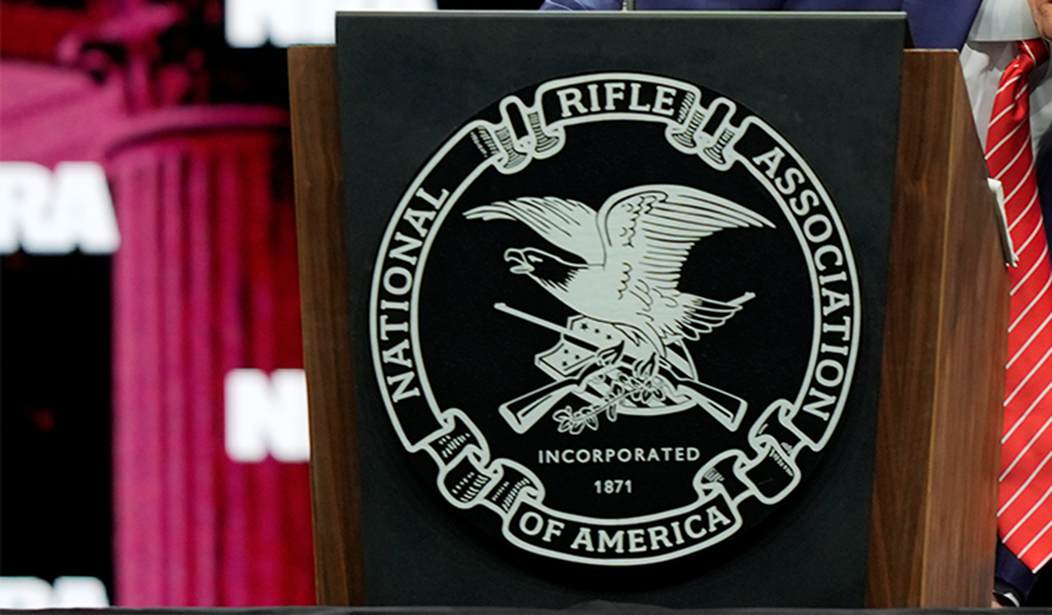

I'm sure we'll be seeing statements from groups like Gun Owners of America, Second Amendment Foundation, and National Association for Gun Rights about the elections in the days to come, but for the moment (or at least as of mid-day Wednesday) the only major Second Amendment group to offer any kind of comment is the National Rifle Association.
John Commerford, NRA-ILA Executive Director, issued the following via a press release:
“Last night’s results put progressive majorities in control of Congress and additional state houses across the country, leaving the Second Amendment rights of law-abiding Americans under direct and immediate threat. The NRA is ready to stand and fight in Congress, the courts, and in every state where those rights are at risk. This is not the time to sit idly by and lick our wounds—it’s the time to stand up, engage, organize, and join the fight to protect the Second Amendment. The only way we stop this radical gun-grabbing agenda is if gun owners get activated to defend their rights and work tirelessly to elect pro-gun politicians in 2028.”
Commerford’s statement comes on the heels of key GOP losses in pivotal states such as Texas, Michigan, and South Carolina. These losses leave Americans’ Second Amendment rights under direct threat. Candidates such as James Talarico (Texas), Abdul El-Sayed (Michigan), Peggy Flanagan (Minnesota), Katy Padilla Stout (Texas), and others have publicly vowed to promote gun control or implement outright gun bans if elected to office.
I agree with a lot of Commerford's statement. I do think that Republicans need to do a real post-mortem on what went wrong on Tuesday, but I'm not convinced that Second Amendment advocates need to reconsider their policy positions. Gun control wasn't a major issue in this election, and there's evidence that when it comes to gun policy support for the Second Amendment is the more popular position.
The elections don't seem to be about the electorate embracing Democrat policies beyond gun control either. Referendums on requiring voter ID, for instance, were overwhelmingly approved in states like Nevada, North Carolina, and Ohio, even as Democrat candidates won statewide elections.
For better or worse, I think the economy and the cost of living was the biggest issue for voters, and dissatisfaction with Trump's tariffs and the high price of gasoline (which has a ripple effect on the price of almost everything) helped to create the big blue wave. The price of oil is tied directly to the war with Iran, and that's another area where Trump and Republicans are deeply underwater (as Vice President J.D. Vance acknowledged in a lengthy post on X today).
The policies of Second Amendment activists don't need to change, but the political strategy, on the other hand, might deserve a fresh look.
Commerford's comments about working tirelessly to elect pro-gun politicians in 2028 are accurate, but I'd argue that we need to think beyond finding the strongest pro-Second Amendment Republicans to put on the ballot. Few Democrats ran as out and proud gun control activists this cycle, and there were multiple candidates who stressed their gun ownership and opposition to outright gun bans, while still supporting things like universal background checks, "red flag" laws, and magazine restrictions.
I honestly don't know if the NRA is the right vehicle, but I think it would be worth the effort in trying to recruit genuinely pro-Second Amendment liberals to run for office in two years. The Dems are already going to be fractured between more establishment types and the hardcore Democrat Socialists, so I think there's room (and opportunity) for Blue Dog Democrats who don't support gun control, particularly in purplish states or districts.
Would those candidates face an uphill battle in Democrat primaries? Absolutely. But I also think there are Democrat voters who believe in a much more robust right to keep and bear arms than their party's elected officials are willing to defend (most polls put that number at anywhere between 12 and 20 percent of Democrat voters) Those voters, not to mention the large number of independent voters who can sway many elections, deserve representation too, and right now they really only have one option: vote Republican.
That might work for single-issue voters whose single issue is the Second Amendment, but that doesn't describe most of the electorate.
Besides, even a handful of genuinely pro-2A Democrats in Congress or state legislatures could make an enormous difference, particularly when their party holds a narrow majority. A Democrat who's willing to vote against an "assault weapons" ban is worth far more to gun owners than a Republican who makes all the right promises but can't win a general election.
The goal shouldn't simply be to elect more Republicans. It should be to build a political environment where supporting the Second Amendment isn't a partisan position at all. Ideally, gun owners wouldn't have to worry about any of the candidates on their ballot, because all of them would back a robust right to keep and bear arms. That's a much bigger challenge than winning back Congress in 2028, but it could also produce a far more lasting victory for Second Amendment rights.
This isn't some radical new idea, either. There was a time when pro-Second Amendment Democrats were a significant presence in Congress, and the NRA regularly endorsed Democrats with strong voting records on gun rights. The Protection of Lawful Commerce in Arms Act wouldn't have passed in 2005 without bipartisan support. That coalition has largely disappeared, but there's no reason we shouldn't try to rebuild it.
This isn't about giving up on Republicans. It's about attempting to add to a coalition of Second Amendment supporters. The right to keep and bear arms doesn't belong to one political party, and its future shouldn't depend entirely on which party happens to be in power. We've spent decades watching gun rights become increasingly partisan, and while Republicans have generally been reliable defenders of the Second Amendment, that partisan divide has also left our rights vulnerable whenever Democrats win elections. Breaking down that divide won't be easy, but I think it's a long term fight worth having.
I'm not suggesting that Everytown and Giffords are suddenly going to lose their grip on the Democrat Party, or that a wave of pro-gun Democrats will sweep into office in 2028. But we don't need a wave. We need a few cracks in the gun control lobby's political monopoly. We need Democrats who are willing to tell their party leadership that gun ownership isn't a Republican privilege, and that defending the Second Amendment shouldn't be political suicide for a Democrat. If we can make that happen, even in a handful of districts, we'll have accomplished something that could protect our rights long after the next election is over.
We don't even have to start this experiment at the federal level. I'd look for state legislative races in competitive districts where Democrats already have a realistic chance of winning.
Find a few candidates who are genuinely supportive of the Second Amendment, offer them policy expertise, introduce them to gun owners in their districts, and help them demonstrate that opposing gun bans doesn't have to be a political liability.
Groups like the NRA wouldn't even need to endorse them over Republicans. A gun rights organization could simply recognize their positions, offer candidate education, and make clear that its support is based on policy rather than party affiliation.
Success wouldn't be easy, but it's at least worth a shot. After all, the only thing we have to lose is the next election... and we've already proven we can do that by relying on just one party to protect our Second Amendment rights.