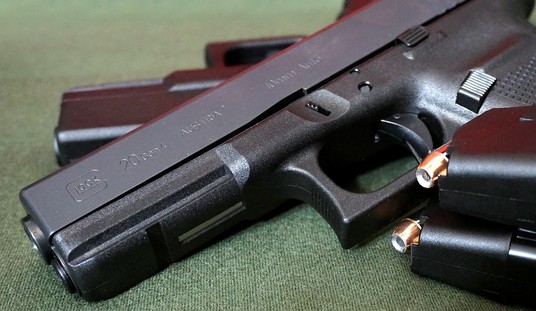

We could learn as early as tomorrow whether the Supreme Court will take up a case challenging several of Maryland's "gun-free zones," including the state's ban on lawful concealed carry in public transit. If SCOTUS grants cert to Novotny v. Moore and strikes down those prohibitions, the impact could resonate far beyond Maryland. In fact, it might finally be legal to carry a firearm for self-defense in one of Chicago's most dangerous "gun-free zones."
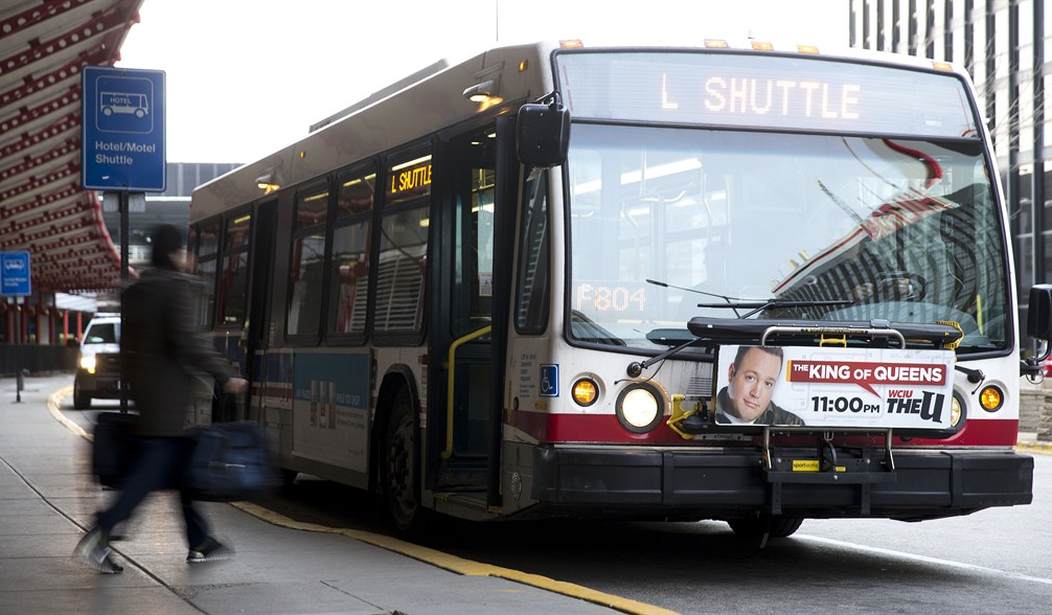
The Chicago Transit Authority has a policy forbidding concealed carry, and the state of Illinois makes it illegal to possess a handgun on public transportation as well. But as we've documented on what feels like countless occasions over the past few years, violent criminals routinely ignore that prohibition in order to carry out their crimes. The latest such incident took place last Tuesday, when a man on a CTA bus drew a gun and began to threaten the driver and passengers.
Police said Tuesday just before 8:30 p.m., a man was on a CTA bus in the 5400 block of S. Pulaski when he pulled a gun and demanded the driver not stop driving. The driver, a 35-year-old woman, did so and after a short time the man climbed out of one of the bus's windows, CPD said.
The man then ran to an unoccupied car that had been left running, got in it, and sped away.
Police said the he was taken into custody and a firearm was recovered at a later time. No injuries were reported.
CBS News reports that 36-year-old Quentin Lewis is now facing a laundry list of charges, including kidnapping and possession of a weapon by a felon.
This incident, as scary as it was for those involved, barely made the local news in Chicago. I haven't been able to find any coverage in the city's two major newspapers, and from what I can tell the local CBS affiliate and WGN were the only television outlets to report on the armed hijacking of the bus.
Part of that, I'm sure, is because no one was hurt or injured in the incident. Another possible reason for the lack of media attention, though, is that crime on CTA buses and trains is hardly unusual. Chicago police have reported a significant decrease in major crimes on CTA property this year, but we're still talking about more than 1,000 major crimes between January 1 and November 1.
Those crimes include three homicides, six shooting incidents, 28 reported criminal sexual assaults, 222 reported robberies, 110 reported aggravated assaults, and 183 reported aggravated batteries.
The CTA's trains are the most common setting for these crimes, with 376 incidents reported and another 209 incidents on platforms or in CTA stations. Buses aren't far behind, though. 247 incidents have been reported on buses this year, and an additional 144 incidents at bus stops.
Keep in mind, though, that the Illinois law and CTA policy don't just disarm patrons while they're using public transit. They can't really carry on their way to the bus stop or after they step off a train either. These "gun-free zones" have a spillover effect and render riders defenseless throughout much of their daily routines.
I'm not suggesting that the CTA would magically become crime-free if people were able to lawfully carry firearms in self-defense. But the CTA's "gun-free" status hasn't made it crime-free either, has it? There are more than three major crimes per day on Chicago's public transit network, and that's actually considerable improvement from years past.
How long before the numbers start to climb again is anyone's guess, but hopefully the Supreme Court takes up the issue of "gun-free zones" before then. Unlike the Seventh Circuit, which upheld the public transportation bans in Illinois using the argument that the Second Amendment doesn't protect bearing arms in crowded public places where "vulnerable" populations might be found, the Fourth Circuit okayed Maryland's public transit bans by citing the proprietary property doctrine, concluding that Maryland, as proprietor of public transit operated or controlled by the Mass Transit Administration, was free to ban firearms there.
That, of course, would mean that governments could ban firearms on all property under their control, which would eviscerate the right to carry. The Fourth Circuit also concluded that the ban “comports with our history and tradition,” even though it found no historical legal restrictions on the right. The court instead pointed to restrictions imposed by private railroads on “carrying loaded or improperly stored guns.”
Public transportation isn't the only questionable "sensitive place" being challenged in Novotny, and SCOTUS will hopefully grant cert and strike them all down. I can't help but pay extra attention to the public transit prohibitions, though, in large part because of the dangers that lurk on Chicago's "gun-free" trains and buses.