








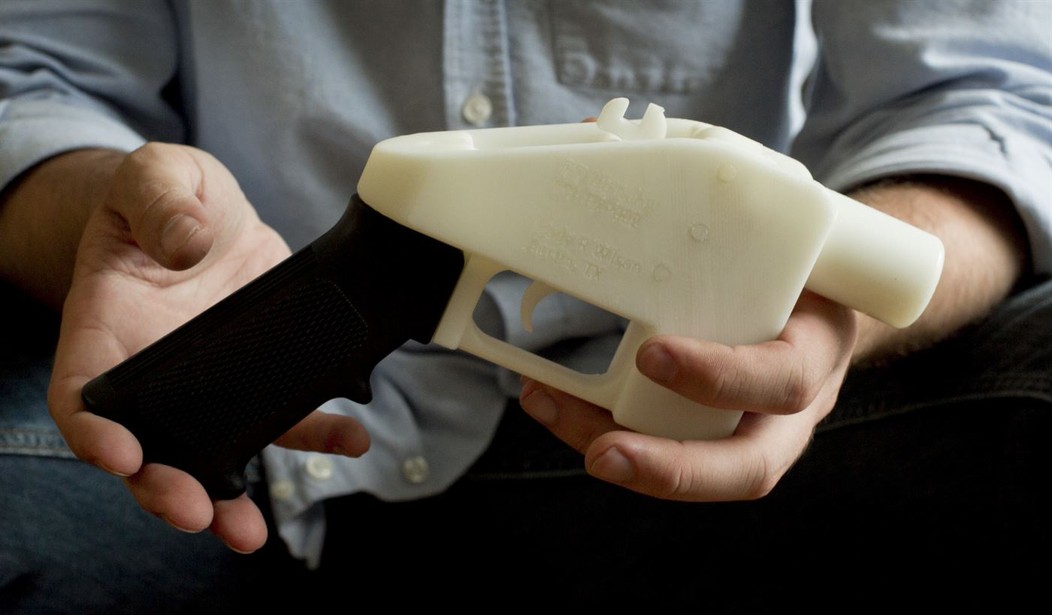
If you read a lot of my stuff, you may recall me mentioning how I'm genuinely fascinated and excited by 3D printing as a technology. The idea that I, sitting in my house, can develop, prototype, and manufacture a product without getting off my couch is amazing, and the fact that it can be used to make guns means that oppressors the world over have a big problem on their hands.
Which may be why states like New Jersey want to ban the possession of files for 3D printers that can be used to make guns. Still others want to force 3D printer manufacturers to install filters that prevent guns from being printed.
Their argument for the bans seems to stem from the fact that these files can be used for illicit purposes, and that it allows people to get around the controls already put in place to keep guns out of certain hands.
It's an interesting argument. It's not a good one, mind you, but an interesting one.
Why? Because there have been examples of speech--and the courts have long found that code is speech--that were equally problematic for the same reasons. They contained information that, if acted upon, could allow someone to commit all kinds of criminal acts and to circumvent the controls in place to prevent that.
Let's start, for example, with Mr. P.A. Luty.
For those unfamiliar with Mr. Luty, he's the man who took exception to the UK's gun laws and decided to build a submachine gun out of things you could get at a hardware store, using only the tools one might reasonably have access to. He did it, then published a text on just how one could do it themselves.
Luty was convicted of violating the UK's Terrorism Act 2000, but the text is readily available today. It's not a crime to possess it, even though it teaches you how to use readily-accessible parts, readily-accessible tools, and a lack of respect for the current law to build something that's a violation of the National Firearms Act of 1934.
It's free speech, you see, and as such, we don't penalize people for having it.
But it's also not the only example. We also have, for example, the most notorious example of free speech in books, known as The Anarchist Cookbook.
The book includes all kinds of things, up to and including how to make your own explosives. While much of the book is said to be filled with BS, the FBI concluded that the section on explosives was actually fairly legit. Even then, the FBI argued that because it didn't incite anyone to attempt anything, and was published through the mass media, it was protected speech.
Both are examples of actually dangerous speech. Both empower criminals and others with nefarious intentions to create instruments of destruction while bypassing any and all federal laws.
Meanwhile, most of the 3D printer files out there are for guns that really aren't all that different from what one might find in a traditional gun store. All that the files do is let people make the guns themselves, and not have to leave a paper trail. That's it.
Especially considering even anti-gun academia has found that higher concentrations of "ghost gun" recoveries don't translate to higher homicide rates.
Free speech must include protecting things you'd rather didn't exist. Otherwise, it's not free speech at all.
The Third Circuit, among others, needs to remember that we allow "worse" forms of speech to be sold in bookstores and kept in public libraries all around the nation. That's a good thing, too, because that's how we know we're a free society.
Editor’s Note: The radical left will stop at nothing to enact their radical gun control agenda and strip us of our Second Amendment rights.
Help us continue to report on and expose the Democrats’ gun control policies and schemes. Join Bearing Arms VIP and use promo code FIGHT to get 60% off your VIP membership.

Join the Conversation
VIP members get the ability to comment on articles.