
Creators Syndicate is the source for a lot of your favorite columnists and comic strips, as well as some of your least favorite. They're easily the big gun in that department, and as such, I'm used to thinking of them as just another part of the mainstream media ecosystem. However, they offer daily editorials from both sides of the spectrum.
And one I came across earlier brings up a solid point.
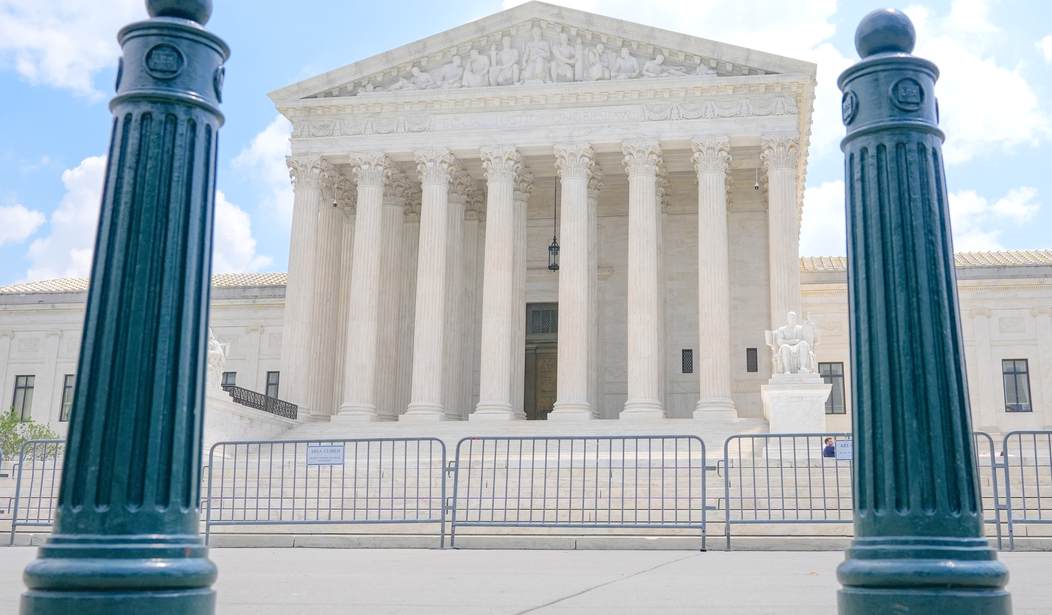
In particular, it's not just approval of recent Supreme Court decisions defending gun rights and the Court taking up assault weapon bans, but of the Court taking up gun cases at all.
The long-simmering question posed by these cases is whether the Second Amendment guarantees "the right to possess AR-15 platform and similar semiautomatic rifles." If so, other restrictions on the arms Americans are allowed to buy, such as magazine limits and California's handgun specifications, may be vulnerable to constitutional challenges.
The decided cases also have potentially broad implications. If drug use, by itself, does not justify disarming someone, what about a nonviolent felony conviction? And if Hawaii's broad restriction on public gun possession was unconstitutional, the far-reaching, location-specific bans imposed by states such as California and New York likewise seem legally dubious.
Nearly two decades after recognizing a constitutional right to arms, the Supreme Court is beginning to address lingering questions about its contours. Control-happy politicians probably will not like the answers.
It's a valid point, and while I also agree that anti-gun lawmakers are likely to be disappointed, the overall point is probably more important. There are voters today who don't remember when the Heller and McDonald decisions were handed down, but many of us of a certain age do. They were landmark decisions, to be sure, but then we hit a very long period where the Court heard nothing.
It was still better than before, though.
The Heller ruling came out in 2008. The only real Second Amendment case before that was United States v. Miller, which upheld the prohibition on short-barreled shotguns without NFA paperwork, arguing bizarrely that such weapons have no use within the militia. That was in 1939, which means we had to wait almost 70 years before the subject of gun control came back up.
So, even if you accept Miller at face value—remember that Miller had been killed before the case ended up before the Court—that didn't clear up any of the other lingering questions about gun control.
In the last few years, though, we've finally seen some questions asked. They should have been answered a long time ago, but I'm glad they weren't. If they had been, it would probably be us who experienced the disappointment. Even then, Heller and McDonald weren't the strong victories many of us hoped for. Heller gave us the concept of a firearm needing to be "in common use" in order to be protected by the Second Amendment, for example. New weapons technology that would supplant firearms on the battlefield will be initially expensive and thus unlikely to enter common use quickly, meaning they can be restricted under that doctrine.
Bruen, on the other hand, was different. It not only answered the question of whether subjective requirements for concealed carry licenses were constitutional, whether gun-free zones were constitutional, whether they're not, and other things, but also created a clear test to determine whether a law could be considered constitutional by the lower courts. Anti-gunners hate it not because it's unclear, as they try to claim, but because none of their preferred measures can survive such a test if honestly applied.
We're finally getting answers to long-held questions, and that's a damn good thing. Especially now when the Court actually understands the Second Amendment better than it would have 40 years ago.