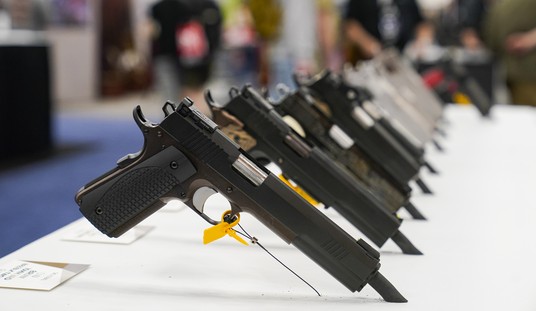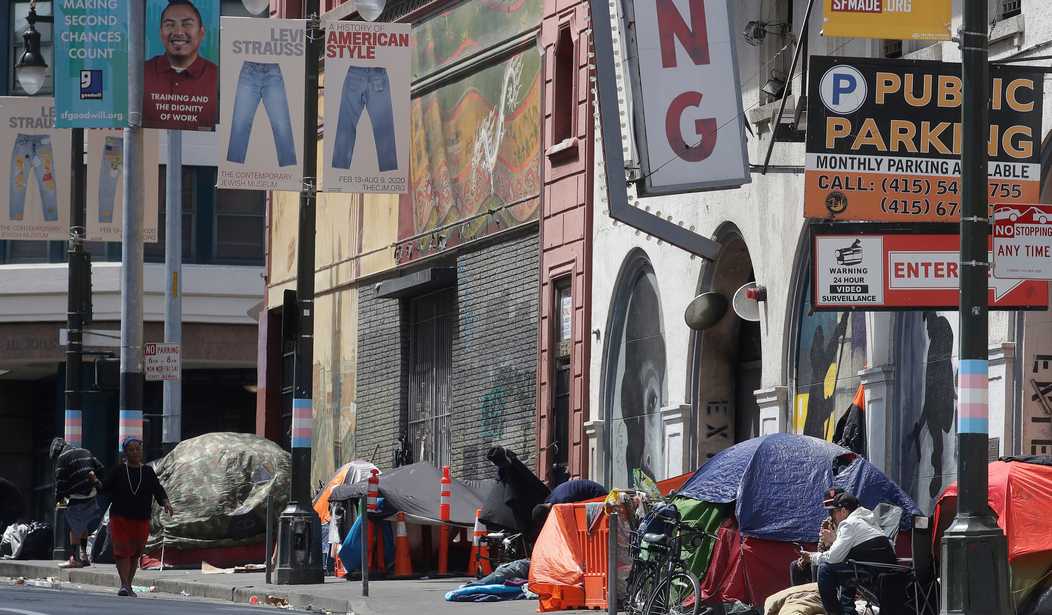
If I were going to be forced out into the streets due to circumstances, I'd make sure I held onto a firearm. Living on the streets isn't exactly a pleasant experience, and I'd want to be able to protect myself.
However, many who live on the streets aren't there because they lost their jobs and couldn't pay the rent. That happens to some, but those are the people who are homeless for a relatively finite period. Your long-term homeless often have profound mental health issues that simply can't be resolved as an outpatient, but they're generally not someone you can commit permanently.
So a recent study decided to look at red flag orders against homeless people.
Red flag laws could be a way to help people who are both homeless and in crisis, a recent study found.
The laws, also called Extreme Risk Protection Orders (ERPOs), are used to temporarily take away someone’s weapons if they are at risk of harming themselves or others.
Housing instability was one of the stressors experienced by people who committed a mass shooting between 2016 and 2020, according to a study by the National Threat Assessment Center. Although the majority of mass shooters were not experiencing homelessness at the time they committed the crime, 39% had experienced eviction, foreclosure or some other kind of instability within 20 years of their crime.
Researchers examined ERPOs issued to homeless people in California and Colorado and found that homelessness contributed to their crises. They also found that while an ERPO helped to prevent harm, it didn’t address the other struggles facing the people experiencing homelessness.
Now, this study is sympathetic to ERPOs in the first place, which I'm not. That last sentence, though, was something almost any of us might have said, because this is the least shocking thing I've heard out of a study.
The problem with red flag orders has always been that they don't address the underlying problem. If someone is talking about a mass murder plot, taking away his guns doesn't suddenly render him safe. If they're talking about taking their own life, they're not going to suddenly stop because someone removed a single means of doing it.
In this case, it's easy to say this about the homeless, who often have underlying mental health issues, but I'd argue that someone who actually intends to kill themselves probably has some underlying issues going on there, too.
Mass murderers are most definitely suffering from mental illness, even if professionals haven't identified it as of yet. Doesn't mean they shouldn't get the needle, but it does mean that there are other ways to deal with things.
See, every state in the nation has some method for committing someone involuntarily for about 72 hours. This lets professionals evaluate them and provide treatment, but it also keeps them away from all weapons and means of harming themselves or others. This has been the law for decades, and that's what a lot of us argued should be used instead of creating red flag laws.
The powers that be in these states didn't listen. They didn't care.
They needed to Do Something™, and they needed to do it quickly.
What this study found is something that applies well beyond those living on the streets. It applies to every legitimate case where someone is contemplating hurting themselves or someone else. The difference is that we're not allowed to acknowledge that fact for some reason. That's a shame, and it's going to cause a problem sooner or later. We all know it, too.
But hey, what do the powers that be in these states really care? They're performers, not statesmen and women. They have to play for the crowd, and the crowd is incredibly stupid all too often.